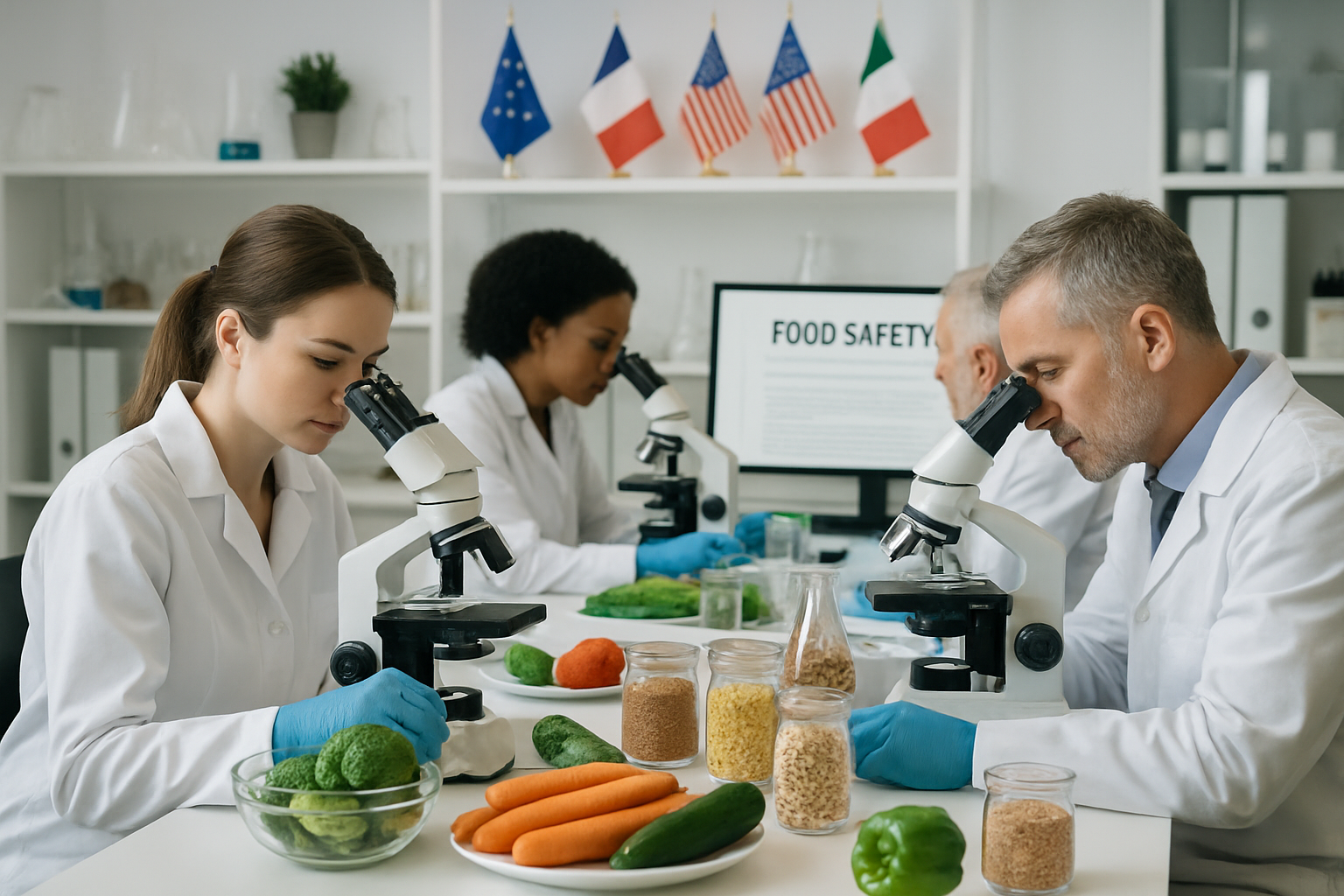
A global food safety crisis is intensifying across multiple continents as nations struggle to balance consumer protection with agricultural sustainability, revealing deep structural challenges in modern food systems that affect millions of producers and consumers worldwide.
From Europe's regulatory burden crushing meat production to Africa's declining fish stocks, the complex interconnections between food safety, agricultural policy, and supply chain resilience are creating unprecedented challenges for both developed and developing nations. Recent developments across six countries illustrate how regulatory responses to food safety concerns are creating unintended consequences that threaten food security itself.
European Beef Crisis Exposes Regulatory Burden
Sweden's meat shortage crisis has reached critical levels, with beef prices skyrocketing as domestic production fails to meet demand. According to Mikaela Johnsson, vice chairman of the Swedish Farmers' Federation (LRF), the country faces a 135% increase in agricultural regulations that have created an impossible burden for producers.
"We need to halve the regulatory burden. The current system is strangling our ability to produce safe, affordable food for Swedish consumers."
— Mikaela Johnsson, Swedish Farmers' Federation
The Swedish case exemplifies a broader European trend where well-intentioned food safety regulations are creating unintended consequences. While government initiatives have been directed at addressing the problem, LRF argues these measures are insufficient to overcome the fundamental regulatory obstacles facing producers.
This regulatory complexity mirrors challenges documented across the European Union, where recent infant formula contamination crises have led to increasingly stringent oversight that, while protecting consumers, creates operational difficulties for producers of all scales.
Argentina Strengthens Consumer Protection Amid Market Pressures
In stark contrast to Sweden's deregulation calls, Argentina's National Administration of Medicines, Food and Medical Technology (ANMAT) has intensified its oversight activities. The agency recently prohibited the elaboration, use, and commercialization of multiple products including hair care items from the Shine Hair brand, dental products, perfumes, and liquid soaps due to registration irregularities.
ANMAT's Disposition 227/2026 specifically targets products lacking proper registration data, including plant stem cells, extra hydration acid cream, hyaluronic Nutriplex, liquid keratin, and various shampoos and conditioners. The agency's aggressive stance reflects growing concerns about product safety in Latin American markets.
This regulatory tightening occurs as Argentina navigates broader economic pressures, demonstrating how food safety agencies must balance consumer protection with market accessibility—a challenge particularly acute in emerging economies where regulatory compliance costs can exclude smaller producers.
Asian Nations Pioneer Supply Chain Innovation
Malaysia and Singapore are taking distinctly different approaches to food system challenges, focusing on waste management and supply chain security rather than direct production regulation. Malaysia's Solid Waste and Public Cleansing Management Corporation (SWCorp) has approved 141 prosecution cases for littering violations since January, with CEO Khalid Mohamed announcing that 46 cases have obtained court dates.
"The court may impose fines up to RM2,000 or Community Service Orders of up to 12 hours, depending on case specifics and judicial discretion."
— Khalid Mohamed, SWCorp CEO
This waste management focus reflects a broader understanding that food safety extends beyond production to encompass the entire supply chain, including packaging, transport, and disposal systems that can harbor contamination risks.
Singapore's approach emphasizes supply chain security, with courts recently ordering telecommunications providers M1 and StarHub to block 47 illegal streaming sites. While not directly food-related, this demonstrates Singapore's sophisticated infrastructure-level regulatory capabilities that could be applied to food safety monitoring.
Traditional Fishing Communities Under Pressure
Sierra Leone's fishing industry exemplifies the challenges facing traditional food systems in developing nations. In Tombo, one of the country's largest fishing towns, small-scale fishers continue their dawn routines of landing fish from the sea, with portions sold at landing sites and the remainder taken home for family consumption.
However, this traditional system faces mounting pressures from declining wild fish populations and mistrust of farmed alternatives. Local communities who have lived off the sea for generations express skepticism about aquaculture, preferring traditional wild-caught fish despite their increasing scarcity.
This preference for traditional food sources, while culturally significant, presents challenges for food security as climate change and overfishing reduce wild fish populations. The situation illustrates broader tensions between traditional food systems and modernization efforts across developing nations.
Mexico's Public Health Emergency Signals Broader Challenges
Mexico's alarming measles outbreak, with over 700 registered cases—more than 40 times the previous year's total—demonstrates how public health crises can quickly overwhelm food safety infrastructure. The country now leads regional infection rates, highlighting vulnerabilities in health surveillance systems that also monitor foodborne illnesses.
This health crisis occurs amid broader challenges to Mexico's food systems, including climate pressures on agricultural production and supply chain disruptions affecting food distribution networks. The measles outbreak serves as a warning about the interconnected nature of public health systems that protect both human health and food safety.
Global Context: Climate and Economic Pressures Mount
These national challenges unfold against a backdrop of unprecedented global pressures. January 2026 marked the hottest month in recorded history, the 18th of the past 19 months to exceed 1.5°C above pre-industrial levels. Climate change is fundamentally altering agricultural productivity worldwide while simultaneously increasing food safety risks through changing pathogen patterns and storage challenges.
The recent European infant formula crisis involving cereulide toxin contamination across multiple brands (Popote, Babybio, Blédilait, Gallia, Guigoz, and Picot) demonstrates how sophisticated food safety systems can still fail. French and Luxembourg authorities' decision to lower permitted cereulide thresholds reflects growing scientific understanding of food safety risks, but also creates additional compliance burdens for producers.
Traditional vs. Industrial Food Systems
The contrast between Nepal's successful orange farming—where Sigana village generated 40 million rupees in sales through direct market access—and Europe's industrial food safety failures illustrates fundamental tensions in modern food systems. Traditional farming communities often demonstrate remarkable resilience and food security through direct relationships between producers and consumers, while complex industrial systems create vulnerabilities despite sophisticated safety protocols.
This dichotomy suggests that food safety solutions must acknowledge the value of traditional knowledge and local food systems while addressing legitimate concerns about large-scale food production safety.
Regulatory Harmonization Challenges
The diverse national responses to food safety challenges highlight the absence of effective international coordination. Sweden calls for deregulation while Argentina intensifies oversight; Mexico faces public health emergencies while Singapore focuses on infrastructure security; Sierra Leone maintains traditional systems while Malaysia modernizes waste management.
These varying approaches reflect different economic conditions, cultural contexts, and regulatory capacities, but the lack of harmonization creates opportunities for contaminated products to move between jurisdictions with different standards. The recent ANMAT actions in Argentina, for example, specifically mention concerns about products being advertised on online sales platforms, highlighting how digital commerce can circumvent national regulatory oversight.
Technology and Transparency
Emerging technologies offer both solutions and challenges for food safety governance. Social media has become an enforcement tool, as demonstrated by Malaysia's restaurant closure following viral video exposure of food recycling violations. However, the same platforms can spread misinformation about food safety and complicate regulatory messaging.
The French investigation into X platform's content moderation failures, while primarily focused on social media regulation, illustrates broader challenges of governing digital platforms that increasingly influence public understanding of food safety issues.
Economic Impact and Consumer Costs
The economic implications of tightening food safety regulations are substantial and unevenly distributed. Sweden's beef shortage has led to significant price increases for consumers, while regulatory compliance costs threaten to exclude smaller producers from markets. This creates potential food security risks as domestic production capacity declines.
Simultaneously, the costs of food safety failures—both economic and human—justify continued vigilance. The European infant formula crisis affected millions of families, while incidents like Colombia's recent discovery of 500kg of contaminated meat destined for metropolitan areas demonstrate the scale of potential harm from inadequate oversight.
Countries must navigate between under-regulation that risks public health and over-regulation that threatens food availability and affordability. This balance point varies significantly based on economic development, regulatory capacity, and cultural factors.
Future Implications and Solutions
The current crisis demands integrated approaches that combine traditional knowledge with modern science, local production with global coordination, and consumer protection with producer viability. Successful models like Nepal's direct-market orange farming and the ongoing African agricultural renaissance demonstrate that sustainable food systems are possible.
International cooperation initiatives, including the Norwegian Church Aid's $2.9 million agricultural transformation program in South Sudan and various Caribbean agricultural modernization efforts, provide frameworks for addressing food security while maintaining safety standards.
However, these programs require sustained funding, political commitment, and recognition that food safety cannot be separated from broader questions of agricultural sustainability, climate adaptation, and economic justice. The interconnected nature of these challenges demands equally interconnected solutions.
Looking Forward
As nations continue to grapple with balancing food safety and agricultural viability, the experiences of Sweden, Argentina, Malaysia, Singapore, Sierra Leone, and Mexico offer critical lessons. Effective food safety governance requires adaptive approaches that consider local contexts while maintaining core protective standards.
The path forward must acknowledge that food safety is not merely a technical challenge but a complex intersection of environmental, economic, social, and cultural factors. Success will require unprecedented cooperation between producers, regulators, consumers, and international institutions to build resilient food systems capable of meeting growing global demand while protecting public health.
The current crisis, while challenging, also presents opportunities to reimagine food systems that are both safer and more sustainable. The question is whether nations can overcome political and economic pressures to implement the integrated, long-term approaches that this critical challenge demands.