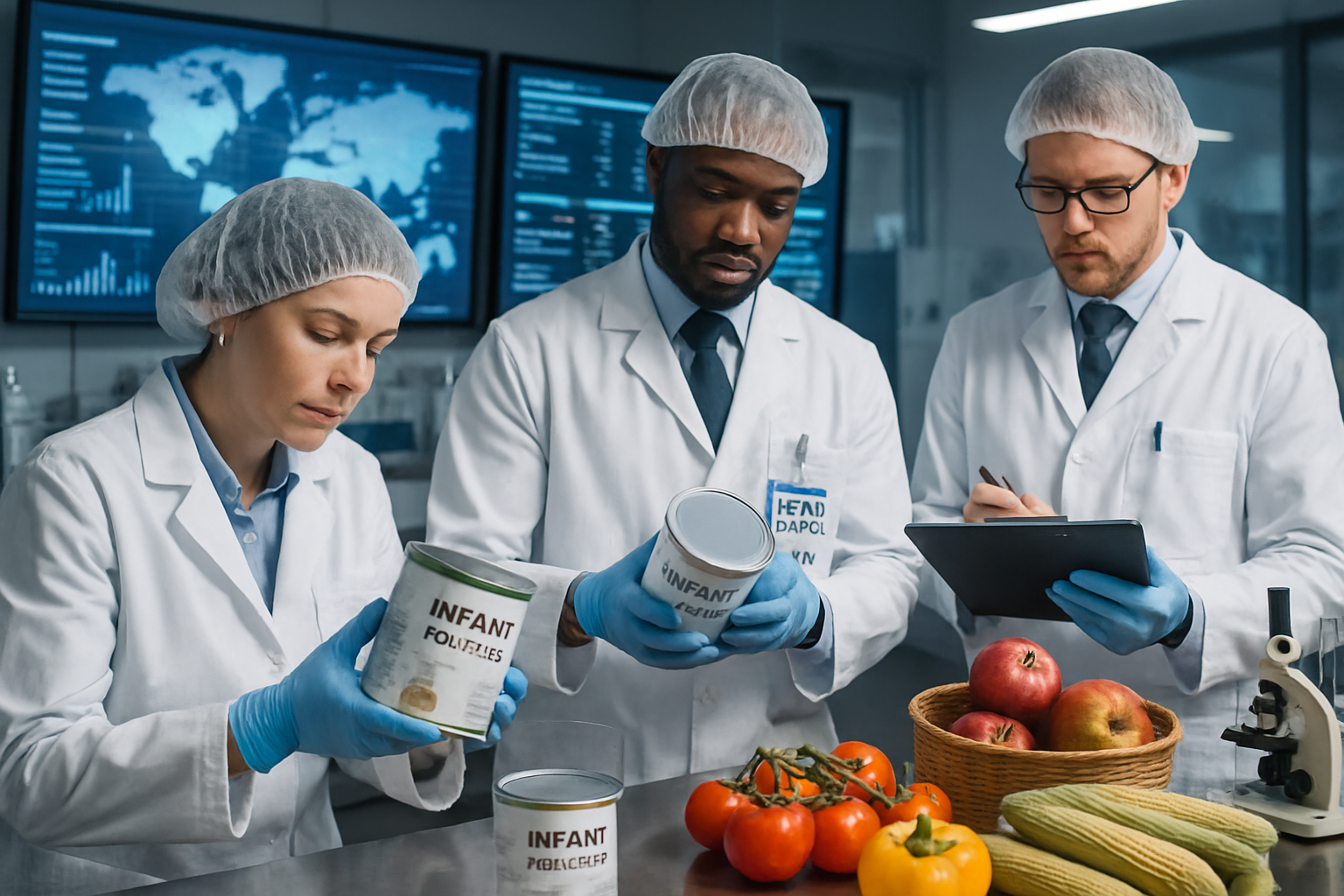
A constellation of food safety crises and agricultural challenges across multiple continents is exposing critical vulnerabilities in global food systems, with contaminated products, supply chain disruptions, and regulatory enforcement gaps creating unprecedented pressures on consumer protection and food security.
The latest developments span from Belgium's infant formula contamination crisis to Paraguay's agricultural price volatility and Vietnam's heightened street food inspections, illustrating how diverse threats are simultaneously challenging food safety frameworks worldwide.
Belgium Faces Nestlé Contamination Crisis
Belgian health authorities confirmed that five babies have been infected with cereulide toxin after consuming contaminated milk products produced by multinational food company Nestlé. The Flemish Health and Care Agency's testing of infant stool samples revealed traces of cereulide infection, though all five cases showed only mild symptoms.
This incident represents a continuation of the broader European infant formula crisis that has affected over 36 infants across multiple countries since early 2026. The cereulide toxin, produced by Bacillus cereus bacteria, is particularly dangerous because it remains heat-stable and can survive standard pasteurization processes and even boiling water used in formula preparation.
"The heat-stable nature of cereulide makes it particularly challenging for food safety protocols that rely on thermal treatment,"
— European Food Safety Authority Statement
The European Food Safety Authority (EFSA) has revised safety thresholds for cereulide, identifying previously acceptable contamination levels as dangerous to infant health. The crisis has affected multiple brands including Blédilait, Gallia, Guigoz, Picot, Popote, and Babybio from both Nestlé and Danone facilities.
Paraguay Battles Agricultural Price Crisis
Paraguay is experiencing severe agricultural supply disruptions, with tomato prices reaching unprecedented levels that have prompted the Paraguayan Chamber of Supermarkets (Capasu) to call for urgent government intervention. The organization is specifically requesting the immediate liberalization of tomato imports as an alternative to reduce prices and protect consumers from financial burden.
According to Capasu, citizens are suffering significant impact from high tomato prices for what is considered a staple product in the typical Paraguayan family diet. The chamber emphasized that supermarkets neither set prices nor produce food themselves, instead serving as price-takers who reflect the values received from their suppliers in their shelves.
The crisis highlights how supply and demand imbalances can create severe price volatility for essential food items. Capasu has maintained sensitivity to consumer needs while acknowledging the complex factors driving agricultural commodity prices beyond their control.
Vietnam Intensifies Food Safety Enforcement
As street food demand surges ahead of the 2026 Lunar New Year celebrations, Vietnam's health ministry has ordered nationwide tighter inspections, implementing a comprehensive enforcement campaign targeting unsafe food vendors. The initiative includes potential fines of up to VND3 million (US$115) for violations and mandatory product destruction for non-compliant vendors.
The timing of Vietnam's enhanced food safety measures reflects the government's recognition of increased food safety risks during periods of high demand and consumption. Street food vendors represent a critical component of Vietnam's food system, serving millions of consumers daily, making their safety compliance essential for public health protection.
The enforcement campaign demonstrates Vietnam's proactive approach to food safety governance, implementing prevention-focused strategies rather than reactive responses to contamination incidents.
Global Context and Systemic Challenges
These concurrent crises occur within the broader context of ongoing global food safety challenges that have characterized early 2026. The period has witnessed systematic failures across industrial food processing systems, local distribution networks, and regulatory oversight mechanisms.
Historical context reveals that February 2026 represents a critical inflection point in global food safety governance. Previous incidents have included major contamination events in Saudi Arabia (1,671 tons of contaminated food blocked), Mozambique (300kg unfit meat seized), and Jordan (confectionery facility closures), demonstrating the worldwide scope of food safety vulnerabilities.
The crisis is occurring during a period of unprecedented climate stress, with January 2026 marking the 18th consecutive month exceeding 1.5°C above pre-industrial temperatures. These extreme weather conditions are creating additional pressures on agricultural production systems and food processing infrastructure.
Regulatory Response Evolution
Social media platforms have emerged as unexpected enforcement tools, accelerating regulatory responses by exposing food safety violations to public scrutiny. This digital transformation of oversight has enabled faster identification of problems and more rapid regulatory interventions across multiple countries.
Enhanced molecular testing capabilities are now required for detecting heat-stable toxins like cereulide, moving beyond conventional bacterial detection methods. This technological advancement represents a significant evolution in food safety testing protocols, requiring substantial investments in laboratory infrastructure and technical training.
Economic and Consumer Impact
The convergence of these food safety and agricultural challenges is creating substantial economic implications across affected regions. Consumer confidence in multinational food corporations has declined significantly, particularly in the infant formula sector where trust is paramount for parental purchasing decisions.
Market responses have included increased insurance costs for food manufacturers, substantial investments in molecular testing technologies, and potential long-term market share losses for companies involved in contamination incidents. The economic ripple effects extend throughout supply chains, affecting retailers, distributors, and ultimately consumers facing higher prices and reduced product availability.
Paraguay's tomato price crisis exemplifies how supply chain disruptions can create severe economic pressures on consumers, particularly for essential food items that represent significant portions of household food budgets.
International Cooperation and Future Implications
The multi-national nature of these food safety challenges has highlighted the critical importance of enhanced international coordination. Cross-border food trade requires standardized safety protocols, harmonized testing procedures, and coordinated response mechanisms to prevent contamination from spreading across national boundaries.
Industry experts predict that 2026 represents a turning point requiring fundamental changes in food safety approaches. The traditional reactive model of responding to contamination after it occurs is proving insufficient for protecting consumers from increasingly sophisticated threats like heat-stable toxins.
Prevention-focused approaches integrating traditional dietary wisdom with modern safety science are emerging as more sustainable solutions. These integrated models emphasize understanding food systems holistically rather than addressing isolated contamination incidents.
Technology and Innovation Solutions
Advanced detection technologies are being developed to identify contamination earlier in production processes. Artificial intelligence applications for monitoring food safety data, predictive analytics for identifying high-risk situations, and blockchain systems for tracking food products through complex supply chains represent promising technological solutions.
Climate-adaptive food processing technologies are becoming essential as extreme weather events create additional stress on food safety systems. These innovations must account for temperature fluctuations, humidity changes, and other environmental factors that can affect food safety outcomes.
Looking Forward
The current crisis provides an opportunity to build more resilient, equitable food systems that can withstand multiple simultaneous challenges. Success will require sustained political commitment across countries, technological innovation that remains accessible to diverse economic contexts, and recognition of food security as a global public good demanding coordinated international action.
The human dimension remains central to sustainable solutions, with millions of farmers, food workers, and consumers depending on stable, fair global food systems. The crisis has demonstrated both the vulnerabilities of current systems and the potential for innovation when challenges demand coordinated responses.
As regulatory frameworks evolve to address these complex challenges, the emphasis is shifting toward comprehensive approaches that combine enhanced safety protocols, climate adaptation strategies, and international cooperation mechanisms capable of addressing the interconnected nature of global food systems.