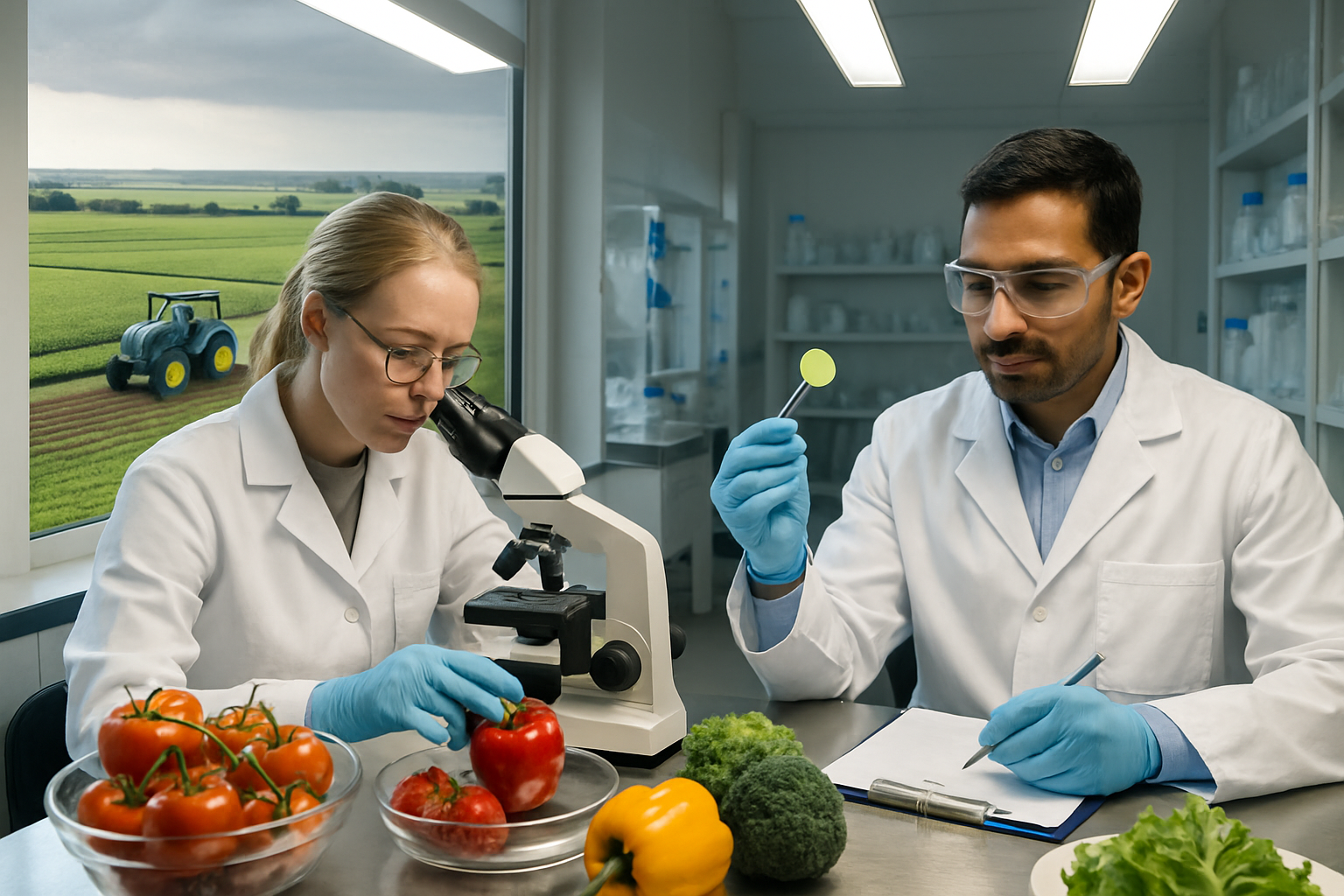
Food safety authorities across multiple continents are grappling with a wave of contaminated meat seizures and agricultural violations, even as groundbreaking farming innovations emerge from Finland to Papua New Guinea, creating a complex picture of crisis and opportunity in global food systems.
Algeria Leads Massive Contamination Seizures
Algerian authorities conducted one of their largest food safety operations this month, seizing over 13 quintals (1,300 kg) of spoiled red and white meat from the Qassab market in Blida. The joint operation by provincial police, urban environmental protection units, and trade ministry officials uncovered severe violations including inadequate hygiene conditions, improper storage, expired meat products, and contaminated dairy items including cheese and cooking oil.
The crackdown represents part of Algeria's broader commitment to food safety, building on the country's innovative approach to agricultural waste management. Researchers at the Scientific and Technical Research Center for Arid Regions in Biskra have patented "Tamr Al-Aghanm" (Date Feed), converting date waste into livestock feed - a circular economy solution that could revolutionize animal nutrition while addressing waste management challenges.
European Agricultural Innovation Breakthrough
While contamination concerns mount globally, Finland is pioneering winter raspberry cultivation that has attracted international attention. The successful trial in Kaarina demonstrates how advanced agricultural techniques can extend growing seasons and challenge traditional farming limitations. The breakthrough comes as European agriculture faces unprecedented pressure from climate change and supply chain disruptions.
This innovation represents a broader trend of technological advancement in European farming, occurring alongside significant food safety challenges that have affected infant formula production and various meat processing facilities across the continent throughout early 2026.
Pacific Agricultural Renaissance
Papua New Guinea is experiencing significant agricultural development, with corn production in Morobe Province's Markham Valley expected to generate over K5 million. The Rumion Farm demonstration in the Umi area showcases mechanized harvesting techniques that could transform traditional farming practices.
Meanwhile, East New Britain Province received new transportation infrastructure to support farmer growth, with Governor Michael Marum presenting trucks to the East New Britain Growers Association. This investment in agricultural logistics addresses a critical bottleneck that has limited farmers' ability to bring products to market efficiently.
"Infrastructure development is the foundation of agricultural success. Without proper transportation and processing facilities, even the best farming practices cannot reach their full potential."
— Agricultural Development Expert, Pacific Region
Latin American Agricultural Transformation
Ecuador's ESPAM (Escuela Superior Politécnica Agropecuaria de Manabí) is demonstrating how educational institutions can drive regional economic development. The institution helps move eleven million dollars annually through Cantón Bolívar's agricultural sector, providing technical education and research support to over 4,000 students while fostering agricultural innovation.
This model of technology parks integrated with agricultural education represents a sophisticated approach to rural development, combining traditional farming knowledge with modern scientific methods and business practices.
African Agricultural Advancement
Ghana's Cocoa Processing Company is positioning itself to leverage the African Continental Free Trade Area (AfCFTA) for continental expansion. The company, celebrating its 60th anniversary, already exports to Togo, Nigeria, and Benin, with premium Golden Tree chocolate products gaining international recognition.
According to Sales and Marketing Manager Nana Agyemang Ansong, the expansion strategy focuses on deepening the company's footprint across Africa, using West Africa as a gateway to broader African markets. This development coincides with enhanced regional trade integration and demonstrates how traditional agricultural processors can scale across continental markets.
French Authorities Sound Food Safety Alarms
France's national food safety agency has released its third comprehensive "Total Study" evaluating French exposure to toxic substances through food. The study, analyzing over 700 samples representing 90% of the French diet, reveals concerning levels of cadmium, lead, and aluminum exposure through regular food consumption.
This investigation occurs within the broader context of European food safety challenges that have included heat-stable toxin contamination in infant formula products, affecting dozens of infants across multiple countries. The French study's findings highlight systemic issues with food chain contamination that extend beyond individual product recalls to environmental and processing concerns.
Technology Integration in Modern Agriculture
The contrast between food safety violations and agricultural innovation reflects the complex transformation of global food systems. While traditional safety protocols struggle with emerging contaminants and aging infrastructure, technological advances are creating new possibilities for sustainable and efficient food production.
Finland's winter raspberry cultivation demonstrates how controlled environment agriculture can overcome traditional seasonal limitations. Similarly, Papua New Guinea's mechanized corn harvesting shows how appropriate technology transfer can boost productivity in developing agricultural economies.
Regional Trade Integration and Food Security
The African Continental Free Trade Area is facilitating new agricultural partnerships, as demonstrated by Ghana's cocoa export expansion strategy. This regional integration approach offers developing nations opportunities to build value-added agricultural processing industries rather than remaining dependent on raw commodity exports.
Ecuador's institutional model, where ESPAM generates significant economic activity through agricultural education and research, provides a template for how educational institutions can serve as regional development catalysts while maintaining focus on practical agricultural applications.
Climate Adaptation and Agricultural Resilience
The global food safety and agriculture developments occur during unprecedented climate pressures, with January 2026 marking the 18th consecutive month of temperatures exceeding 1.5°C above pre-industrial levels. This climate stress is forcing rapid adaptation in both food safety protocols and agricultural practices.
Innovative solutions like Algeria's date waste conversion to livestock feed demonstrate how circular economy approaches can address both waste management and animal nutrition challenges simultaneously. Such integrated approaches become increasingly important as climate change disrupts traditional agricultural cycles and resource availability.
International Cooperation and Knowledge Transfer
The diverse agricultural developments across continents highlight the importance of international knowledge sharing and technology transfer. Finland's raspberry cultivation breakthrough, Papua New Guinea's mechanization advances, and Algeria's waste-to-feed innovation each offer lessons applicable to similar agricultural conditions worldwide.
However, food safety failures in developed markets like France and Algeria demonstrate that technological advancement alone cannot address systemic challenges without proper regulatory enforcement, infrastructure investment, and comprehensive quality control systems.
Looking Forward: Systemic Reform Requirements
The simultaneous occurrence of food safety violations and agricultural innovations suggests that global food systems are at a critical transition point. Success in addressing both challenges requires integrated approaches that combine traditional agricultural wisdom with modern technology, enhanced international cooperation, and strengthened regulatory frameworks.
The emergence of breakthrough technologies like climate-controlled cultivation, mechanized harvesting, and waste-to-feed conversion provides tools for building more resilient food systems. However, realizing their potential depends on addressing underlying challenges of infrastructure, governance, and resource allocation that contribute to food safety violations and limit agricultural development.
As global food systems face mounting pressure from climate change, population growth, and supply chain disruptions, the need for coordinated action across safety, innovation, and sustainability dimensions becomes increasingly urgent. The developments documented across Algeria, Finland, Papua New Guinea, Ecuador, Ghana, and France provide both cautionary examples and promising models for building more resilient and equitable global food systems.