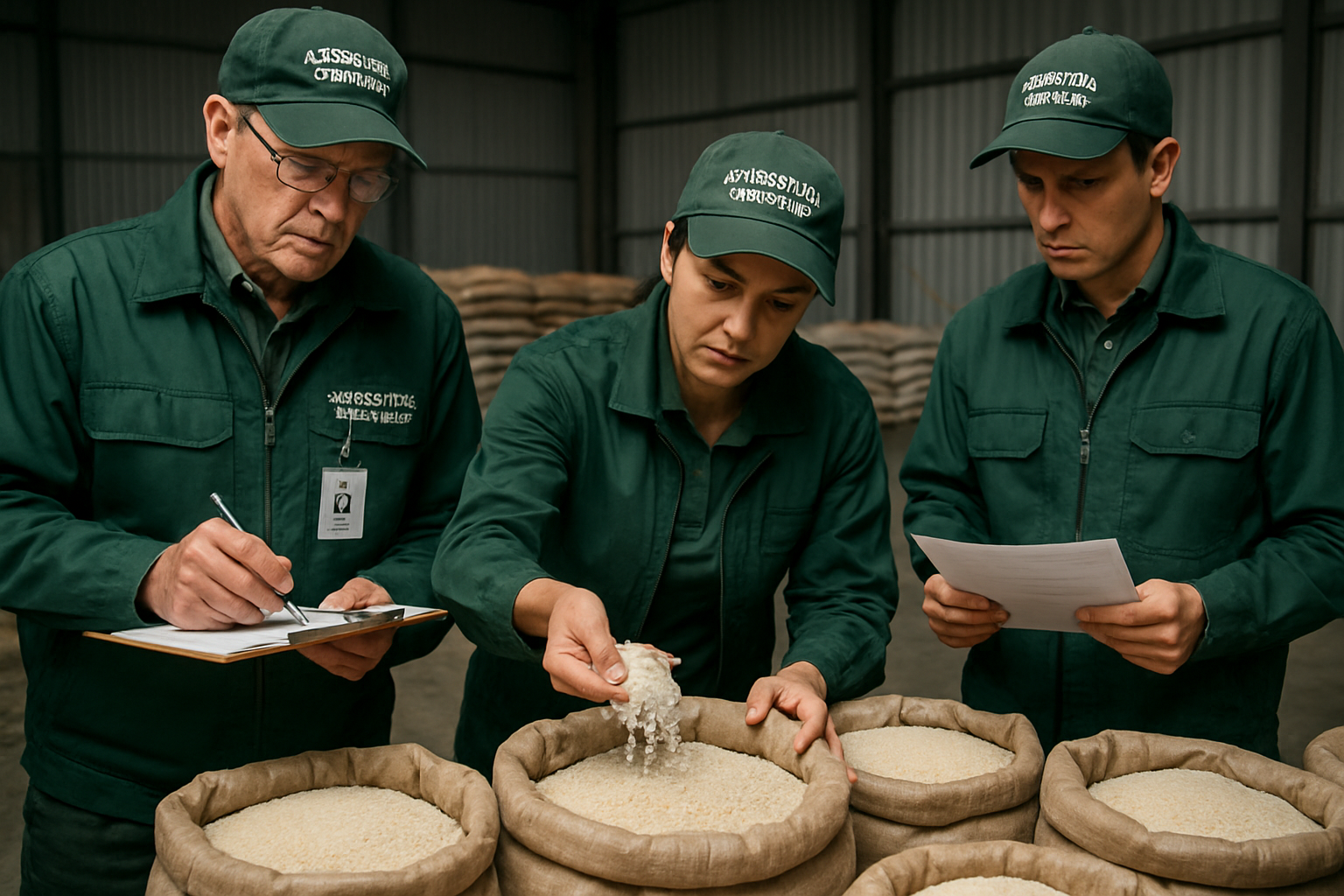
A wave of coordinated food safety actions across West Africa and South America has exposed critical vulnerabilities in global agricultural supply chains, as Bolivia's agricultural authorities seized over 9 tonnes of contaminated Argentine rice while Burkina Faso implemented unprecedented restrictions on fresh tomato exports to protect domestic processing industries.
Bolivia's Contaminated Rice Crisis
The Servicio Nacional de Sanidad Agropecuaria e Inocuidad Alimentaria (SENASAG) conducted a major enforcement operation in Montero municipality, Santa Cruz department, seizing 9.3 tonnes of Argentine rice that entered Bolivia without proper sanitary registration. The intervention at a local rice processing facility represents the latest escalation in Bolivia's ongoing battle against contaminated agricultural imports.
According to SENASAG officials, the confiscated rice lacked the mandatory sanitary registration document essential for guaranteeing the safety and legality of food products sold in Bolivia's domestic market. The agency's technical personnel also implemented preventive retention measures for additional quantities of rice lacking proper documentation to verify their true origin.
"The sanitary registration is the indispensable document to guarantee the safety and legality of food products commercialized in the national market."
— SENASAG Technical Personnel
The rice seizure follows established protocols designed to protect consumer health and maintain Bolivia's food safety standards. Officials emphasized that all agricultural imports must comply with national registration requirements, regardless of their country of origin or previous trade relationships.
Burkina Faso's Strategic Tomato Export Suspension
In a parallel development demonstrating West Africa's proactive approach to food security, Burkina Faso's government announced the immediate suspension of fresh tomato exports across the entire national territory. The decision, formalized through a joint communiqué signed March 16, 2026, by Commerce Minister Serge Gnaniodem Poda and Agriculture Minister Ismaël Sombié, represents a strategic pivot toward domestic food processing priorities.
The suspension aims to ensure adequate supply for national tomato processing facilities, with authorities halting the issuance of Special Export Authorizations (ASE) until further notice. Economic operators holding valid fresh tomato export authorizations have been granted a two-week deadline from the communiqué's signature date to complete pending transactions.
This policy shift reflects Burkina Faso's broader commitment to developing domestic agro-processing capabilities rather than exporting raw agricultural commodities. Multiple sources confirmed the government's intention to prioritize value-added processing over raw material exports as part of its economic diversification strategy.
Global Context and Climate Pressures
These enforcement actions occur during the 19th consecutive month of global temperatures exceeding 1.5°C above pre-industrial levels, creating unprecedented stress on agricultural systems worldwide. Climate change is fundamentally altering traditional farming cycles, water availability, and pest management patterns, forcing rapid adaptation across global food production networks.
The timing of both Bolivia's rice seizure and Burkina Faso's export suspension reflects the mounting pressures on governments to maintain food security amid increasingly volatile global agricultural markets. Traditional supply chain relationships are being restructured as nations prioritize domestic food security over export revenue.
Agricultural experts note that sustained warming creates optimal conditions for pathogen growth while disrupting traditional food preservation methods. This environment makes contamination incidents more likely and forces regulatory agencies to implement more stringent oversight protocols.
Pattern of Global Food Safety Challenges
The Bolivia-Burkina Faso developments are part of a broader pattern of food safety crises affecting multiple continents throughout 2026. Earlier incidents have included the devastating European infant formula contamination affecting 36+ infants across the UK, France, Luxembourg, and Greece with cereulide toxin from Nestlé and Danone products.
Additional cases have emerged across Algeria, Egypt, Saudi Arabia, and numerous other countries, with social media platforms increasingly serving as enforcement acceleration tools through viral exposure of food safety violations. Consumer confidence in multinational food corporations continues declining, with measurable shifts toward local sourcing and simplified supply chains.
The European Food Safety Authority (EFSA) is developing standardized international protocols and coordinated early warning systems to address cross-border contamination prevention. However, the scale and frequency of incidents suggest that traditional regulatory approaches may be insufficient for current challenges.
Economic and Strategic Implications
Bolivia's rice enforcement action highlights the economic complexities surrounding agricultural trade relationships, particularly with neighboring Argentina. The seizure affects not only immediate trade volumes but also longer-term commercial relationships and consumer confidence in imported agricultural products.
Burkina Faso's export suspension represents a more fundamental shift toward economic sovereignty in agricultural policy. By prioritizing domestic processing over raw material exports, the country is implementing a strategy designed to capture more value from its agricultural production while ensuring food security for its population.
Both actions reflect a broader global trend toward agricultural nationalism, where countries prioritize domestic food security over international trade commitments. This shift is accelerating due to climate pressures, supply chain vulnerabilities exposed during recent global crises, and increasing awareness of food system resilience requirements.
Technology and Traditional Knowledge Integration
Successful food safety enforcement increasingly requires sophisticated integration of cutting-edge technology with traditional agricultural knowledge and community-based management systems. Bolivia's SENASAG combines modern testing protocols with established oversight procedures, while Burkina Faso leverages both international trade mechanisms and traditional food processing expertise.
The most effective responses to current food safety challenges demonstrate synthesis between technological innovation and community ownership principles, transparent governance structures, and adaptive management systems that can respond to rapidly changing environmental conditions.
International Cooperation and Future Implications
The convergence of food safety violations and strategic agricultural policy shifts demonstrates both the vulnerability and adaptability of global food systems. Success in addressing these challenges depends on sustained political commitment, adequate funding, and unprecedented international cooperation that balances immediate crisis response with long-term resilience building.
Industry experts identify 2026 as a critical transformation turning point requiring enhanced international coordination, climate-adaptive processing technologies, and prevention-focused approaches that integrate traditional dietary wisdom with modern safety science.
As the window for building resilient and equitable food systems continues to narrow amid accelerating climate pressures, the choices made by countries like Bolivia and Burkina Faso may provide templates for global food security approaches in the decades ahead. The human dimension remains central, with millions of farmers, food workers, and vulnerable communities depending on stable and fair global food systems.
The ongoing developments in Bolivia and Burkina Faso illustrate that effective food safety and agricultural policy requires balancing immediate consumer protection needs with longer-term sustainability objectives, international trade relationships with domestic food security priorities, and technological innovation with community-based traditional knowledge systems.