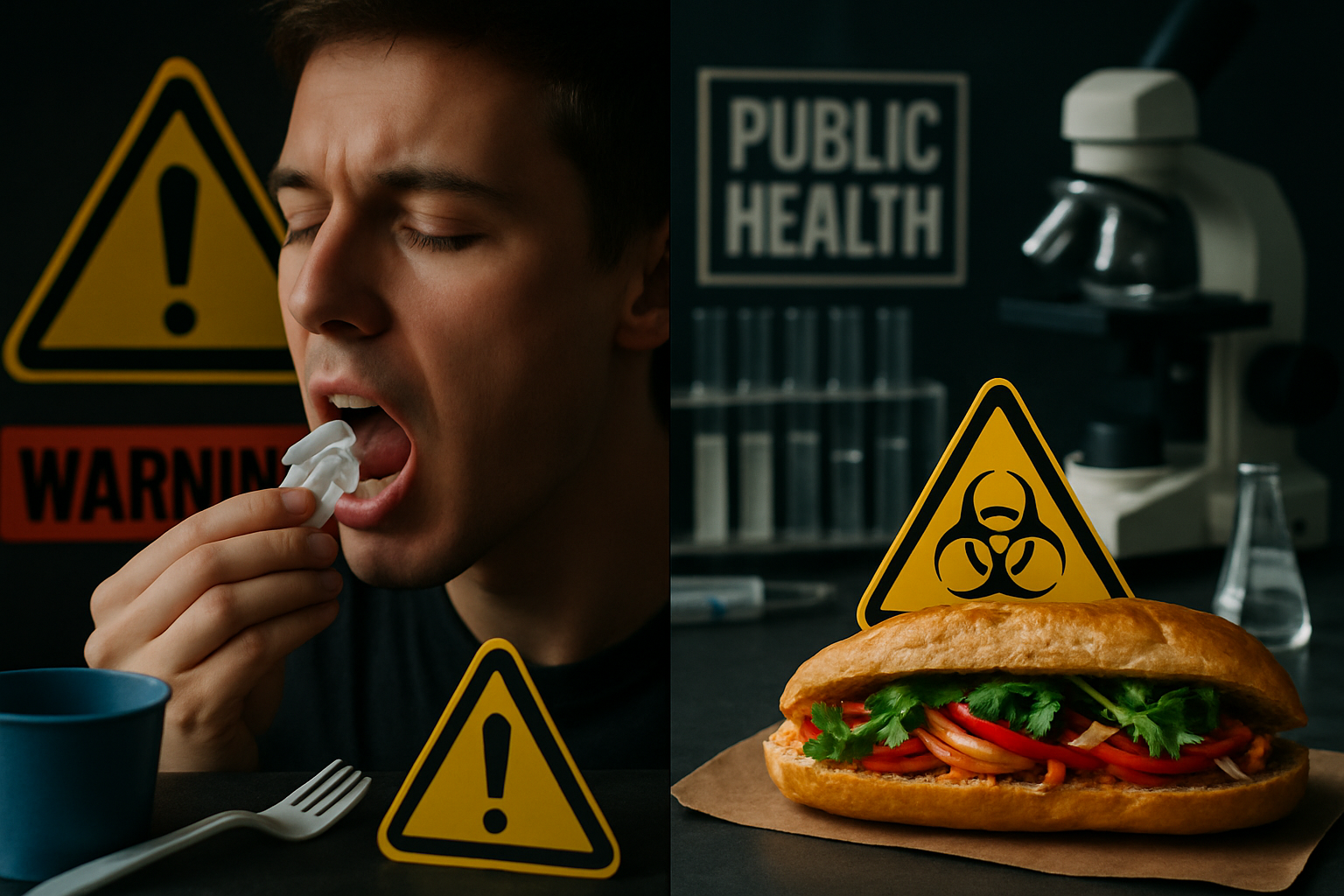
Two alarming food safety incidents have emerged from Ecuador and Vietnam, representing dangerous extremes of the global food crisis engulfing public health systems worldwide as regulatory frameworks struggle to keep pace with viral misinformation and systematic safety violations.
The first incident involves a viral "plastic eating diet" trend spreading across social media platforms in Ecuador, where health authorities have issued urgent warnings about the potentially fatal consequences of consuming plastic materials. Simultaneously, Vietnam faces its second mass food poisoning outbreak in 18 months from the same banh mi restaurant, with 71 people hospitalized after eating contaminated food from an establishment that previously sickened 149 customers in August 2024.
Ecuador's Plastic Diet Crisis: When Social Media Trends Turn Deadly
Ecuadorian health authorities are raising alarms about a disturbing viral trend called the "plastic eating diet," which promoters claim can "trick the brain" by simulating the sensory pleasure of eating without actually swallowing food. The trend involves chewing and potentially consuming plastic materials, creating serious health risks that extend far beyond simple digestive problems.
The so-called diet has gained traction on social media platforms where influencers promote the practice as a weight-loss strategy. Health experts warn that consuming any amount of plastic can lead to severe gastrointestinal blockages, toxic chemical exposure, and potentially life-threatening complications requiring emergency surgical intervention.
"This represents one of the most dangerous dietary trends we have ever encountered. Plastic consumption can cause immediate choking hazards, intestinal obstruction, and long-term toxic effects from chemical leaching."
— Ecuadorian Ministry of Health
The trend emerges amid a broader pattern of social media-driven health risks that have plagued 2026, including the Portuguese paracetamol challenge that prompted urgent medical warnings in February. These viral challenges demonstrate how digital platforms can rapidly amplify dangerous behaviors among vulnerable populations, particularly young people seeking attention or following influencer recommendations without understanding medical consequences.
Vietnam's Recurring Food Safety Nightmare
In Vietnam's Mekong Delta region, a banh mi restaurant has become the epicenter of the country's second major food poisoning outbreak in 18 months. The latest incident hospitalized 71 people with severe gastrointestinal symptoms after consuming food from the same establishment that caused 149 cases of food poisoning in August 2024.
The repeat offense at the same location raises serious questions about enforcement mechanisms and regulatory oversight in Vietnam's food service industry. Despite previous violations and mass casualties, the restaurant appears to have continued operations without adequate safety improvements or sufficient government intervention.
Vietnamese health authorities have not yet disclosed specific contamination sources, but the pattern suggests systemic failures in food handling, storage, or preparation protocols. The recurring nature of violations at this location indicates that current penalty structures may be insufficient to prevent repeat offenses that endanger public health.
Global Context: Food Safety Under Climate Pressure
Both incidents occur during February 2026, marking the 18th consecutive month that global temperatures have exceeded 1.5°C above pre-industrial levels. Climate scientists have identified this sustained warming as a critical factor amplifying food safety risks through several mechanisms:
- Optimal pathogen growth conditions in warmer temperatures
- Disruption of traditional food preservation methods
- Stress on agricultural and food processing systems
- Changes in pest and disease patterns affecting food supply chains
These environmental pressures compound existing regulatory gaps and enforcement challenges, creating a perfect storm for food safety violations. The Ecuador plastic diet trend represents the intersection of climate anxiety, social media misinformation, and inadequate health education. Meanwhile, Vietnam's repeated restaurant failures highlight how climate stress can overwhelm traditional food safety infrastructure.
The European Context: Lessons from Recent Crises
The Ecuador and Vietnam incidents follow a devastating pattern of food safety failures that have plagued 2026. Earlier this month, European health authorities dealt with widespread infant formula contamination involving cereulide toxin from Bacillus cereus bacteria, affecting 36+ infants across the UK, France, Luxembourg, and Greece.
Major manufacturers including Nestlé and Danone were forced to recall products from brands including Cow & Gate, Aptamil, and Bebelac. The crisis highlighted vulnerabilities in industrial food processing, as the heat-stable cereulide toxin survived pasteurization and boiling water, requiring enhanced molecular testing protocols beyond conventional bacterial detection methods.
These European incidents, combined with the Ecuador and Vietnam cases, demonstrate that food safety challenges span the entire spectrum from multinational corporations to local street vendors, and from traditional contamination to novel social media-driven risks.
Social Media's Role in Food Safety Enforcement and Violations
The digital age has created a paradoxical relationship between social media platforms and food safety. While dangerous trends like Ecuador's plastic diet spread virally, social media has also emerged as a powerful enforcement tool. Malaysian restaurant closures and Colombian contaminated meat arrests were accelerated by viral videos exposing violations, fundamentally transforming traditional regulatory approaches.
However, the same platforms that can expose violations also amplify dangerous misinformation faster than health authorities can respond. The plastic eating trend represents a new category of food safety threat where the danger comes not from contamination or processing failures, but from deliberately harmful behaviors promoted as beneficial.
Economic and Consumer Confidence Impact
These repeated food safety crises are creating measurable economic impacts across the global food system. Consumer confidence in multinational food corporations continues to decline, driving a shift toward local sourcing and simplified supply chains. Insurance costs are mounting for food manufacturers, while molecular testing investments have become mandatory requirements in many jurisdictions.
The infant formula sector has been particularly affected, with potential long-term market share losses as parents demand unprecedented supply chain transparency. Meanwhile, the Ecuador plastic diet trend could create liability issues for social media platforms that host and promote dangerous content.
Regulatory Response and International Cooperation
The European Food Safety Authority (EFSA) has been developing standardized protocols and coordinated early warning systems in response to the cereulide toxin crisis. These efforts are expanding globally, with the African Continental Free Trade Agreement establishing agricultural standards and Asian countries developing cooperation frameworks for climate-adaptive farming and food safety.
However, the Ecuador plastic diet trend and Vietnam's repeat violations highlight gaps in current regulatory frameworks. Traditional food safety oversight focuses on contamination and processing failures, but may be inadequate for addressing social media-driven consumption dangers or enforcing compliance at establishments with previous violations.
Prevention-First Healthcare Revolution
Industry experts identify 2026 as a critical transformation turning point toward prevention-focused approaches that integrate traditional dietary wisdom with modern safety science. Countries implementing comprehensive prevention programs report better public health outcomes and community resilience compared to reactive enforcement models.
This shift emphasizes consumer education, community engagement, and proactive monitoring systems rather than solely relying on post-incident responses. The approach recognizes that food safety challenges now span from viral misinformation to climate-amplified contamination risks, requiring holistic strategies beyond traditional regulatory frameworks.
Looking Forward: Building Resilient Food Systems
The Ecuador plastic diet trend and Vietnam's repeat food poisoning incident represent opposite ends of the modern food safety spectrum - one driven by digital misinformation, the other by traditional enforcement failures. Both cases highlight the urgent need for comprehensive food system resilience that addresses:
- Enhanced digital health literacy and platform accountability
- Strengthened enforcement mechanisms with meaningful penalties
- Climate-adaptive food processing and safety protocols
- International cooperation and standardized response systems
- Community-based prevention education programs
Success requires sustained political commitment, adequate funding, and unprecedented international cooperation to address both immediate safety threats and long-term resilience building. The window for effective action continues to narrow as climate change accelerates and digital misinformation spreads faster than regulatory responses.
The dual crises in Ecuador and Vietnam serve as stark reminders that food safety in 2026 requires addressing both ancient problems of contamination and modern challenges of viral misinformation. Only through comprehensive, internationally coordinated approaches can global food systems provide the safety and security that populations deserve in an era of unprecedented environmental and digital challenges.