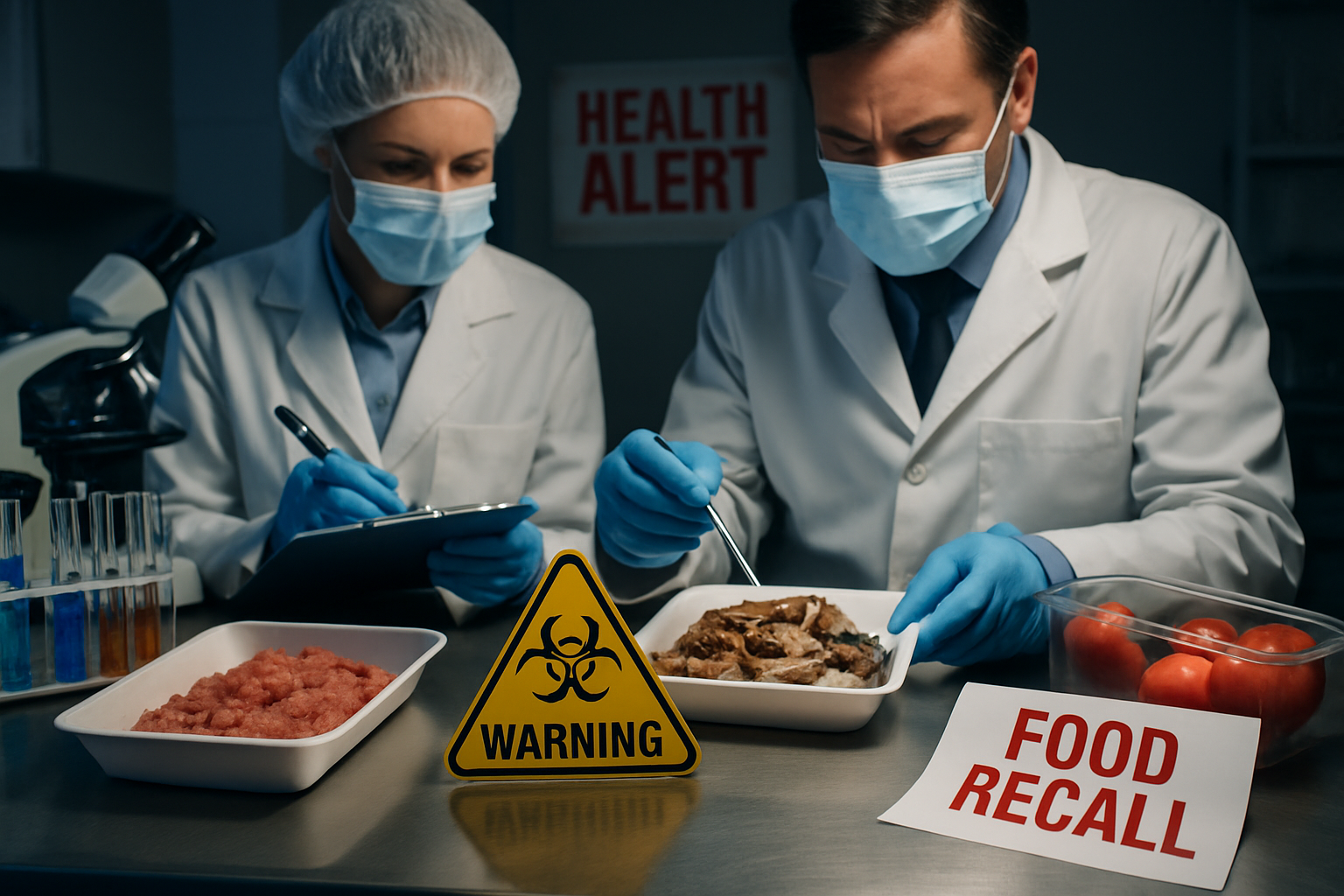
Food safety authorities across three nations have issued urgent health alerts in recent days, as contaminated seafood, foreign objects in consumer products, and widespread norovirus outbreaks expose critical vulnerabilities in global food safety systems amid the ongoing climate crisis.
The latest wave of food safety concerns spans continents, from contaminated shellfish harvesting zones in Antigua and Barbuda to rubber particles found in popular snack bars in New Zealand, while Hong Kong grapples with a surge in norovirus cases linked to raw oyster consumption ahead of Lunar New Year celebrations.
Seafood Contamination Triggers Emergency Response
In Antigua and Barbuda, health authorities have issued an immediate prohibition on harvesting, consuming, or selling fish and shellfish from the cove west of Cook's Landfill near Hermitage Bay. The Central Board of Health, working in collaboration with the Fisheries Division, moved swiftly to protect public health after environmental monitoring detected dangerous contamination levels in the marine ecosystem.
The contamination appears linked to landfill operations, with environmental assessments revealing that hazardous substances have seeped into coastal waters, creating a significant risk to marine life and human health. Local fishing communities, who depend on these waters for their livelihoods, now face economic uncertainty as authorities work to contain the environmental damage.
"This is a precautionary measure to protect the health and safety of our residents," said officials from the Ministry of Health Wellness, Environment and Civil Service Affairs. The prohibition remains in effect pending comprehensive environmental remediation and water quality restoration.
Hong Kong Battles Norovirus Outbreak
Meanwhile, Hong Kong restaurant operators are calling for greater transparency from health authorities as a spike in norovirus-related food poisoning cases threatens to derail business during the critical Lunar New Year period. The outbreak has been primarily linked to the consumption of raw oysters, prompting health officials to advise the public to avoid eating them uncooked.
Restaurant owners report a dramatic plunge in oyster demand as consumers become increasingly wary of the health risks. Many establishments are struggling with the timing, as Lunar New Year represents their peak business season, typically generating significant revenue from seafood-heavy traditional celebrations.
Industry representatives are urging authorities to provide specific information about the origins of problematic oysters, arguing that blanket warnings are damaging the entire sector when only certain sources may be contaminated. The transparency call reflects broader concerns about how health authorities communicate risks during food safety emergencies.
Norovirus: A Persistent Public Health Challenge
Norovirus, often called the "winter vomiting bug," is highly contagious and can spread rapidly through contaminated food and water. The virus is particularly problematic in shellfish like oysters, which filter water and can concentrate pathogens from polluted marine environments. The Hong Kong outbreak underscores the ongoing challenges of maintaining seafood safety in increasingly stressed marine ecosystems.
Product Recall Highlights Manufacturing Vulnerabilities
In New Zealand, food safety authorities issued an urgent recall for imported Nestlé-brand Milo Dipped Snack Bars due to the possible presence of rubber particles. The recall affects products distributed through major retail chains and represents a significant concern for consumer safety, particularly given the product's popularity among children and young adults.
The discovery of foreign objects in processed foods highlights vulnerabilities in global manufacturing and quality control systems. While the specific source of the contamination remains under investigation, the incident has prompted questions about oversight of imported food products and the adequacy of international safety standards.
New Zealand's food safety agency moved quickly to remove affected products from store shelves and advised consumers to return any purchased items for full refunds. The agency emphasized that no injuries have been reported, but the potential choking hazard posed by rubber particles warranted immediate action.
Part of a Broader Global Crisis
These incidents occur against the backdrop of an ongoing global food safety crisis that has intensified throughout early 2026. Recent months have seen widespread contamination events across multiple countries, including the European infant formula crisis that affected over 36 infants with cereulide toxin from Bacillus cereus bacteria, and various meat contamination incidents in South America and Southeast Asia.
The convergence of climate change impacts, supply chain disruptions, and aging food safety infrastructure has created a perfect storm for contamination events. January 2026 was recorded as the hottest month in global history – the 18th consecutive month exceeding 1.5°C above pre-industrial levels – placing additional stress on food production and safety systems worldwide.
Climate Change and Food Safety Interconnections
Climate change is fundamentally altering the landscape of food safety risks. Rising ocean temperatures and changing precipitation patterns are affecting marine ecosystems, potentially increasing the prevalence of harmful pathogens in seafood. Extreme weather events can overwhelm wastewater treatment systems, leading to contamination of coastal waters where shellfish are harvested.
Simultaneously, climate pressures are straining agricultural systems and food processing facilities, potentially compromising quality control measures as operators struggle to maintain production under increasingly difficult conditions.
Enhanced International Coordination Needed
Food safety experts emphasize that the current wave of contamination events highlights the urgent need for enhanced international coordination and standardized response protocols. The global nature of food supply chains means that contamination in one region can rapidly affect consumers thousands of miles away.
Recent incidents have demonstrated both the strengths and weaknesses of current food safety systems. While authorities in Antigua and Barbuda, Hong Kong, and New Zealand responded quickly to protect public health, the incidents also revealed gaps in prevention, monitoring, and international information sharing.
The World Health Organization has called for strengthened global food safety networks, despite facing funding constraints that limit its ability to coordinate international responses. The organization emphasizes that investment in prevention is far more cost-effective than responding to widespread contamination events after they occur.
Technology and Traditional Methods
Addressing current food safety challenges requires sophisticated integration of cutting-edge technology with traditional safety knowledge. Advanced molecular testing is needed for detecting heat-stable toxins and emerging pathogens, while social media platforms are increasingly serving as early warning systems for food safety violations.
However, technology alone cannot solve systemic problems. Effective food safety also requires robust regulatory frameworks, adequate funding for oversight agencies, and international cooperation mechanisms that can respond rapidly to cross-border contamination events.
Economic and Social Implications
The economic impact of food safety crises extends far beyond immediate cleanup costs. In Hong Kong, restaurant operators report significant revenue losses during what should be their most profitable season. In Antigua and Barbuda, fishing communities face uncertain futures as they await environmental remediation. New Zealand's recall affects consumer confidence in imported products and highlights potential vulnerabilities in international trade relationships.
These incidents also underscore the disproportionate impact of food safety crises on vulnerable populations. Small-scale fishers, restaurant workers, and low-income consumers who rely on affordable food options often bear the greatest burden when contamination events disrupt food supplies or require expensive alternatives.
Looking Forward: Building Resilient Food Systems
As the frequency and severity of food safety incidents increase, experts are calling for fundamental reforms to build more resilient food systems. This includes diversifying supply chains to reduce dependence on vulnerable regions, investing in climate-adaptive food processing technologies, and developing rapid response mechanisms for emerging contamination threats.
The current crisis may serve as a catalyst for comprehensive food safety reform, forcing governments and industry to address long-standing vulnerabilities that have been exposed by climate change and global supply chain pressures. Success will require sustained political commitment, adequate resource allocation, and unprecedented international cooperation.
Prevention-focused approaches that integrate traditional dietary wisdom with modern safety science offer the most promising path forward. This includes supporting local food systems that reduce contamination risks through shorter supply chains, while simultaneously maintaining the global cooperation necessary to address transnational food safety challenges.
The events of recent weeks serve as a stark reminder that food safety is fundamentally a global public good that requires coordinated action across borders, sectors, and levels of government. As climate change continues to reshape the conditions under which food is produced, processed, and distributed, the urgency of building resilient food safety systems has never been greater.