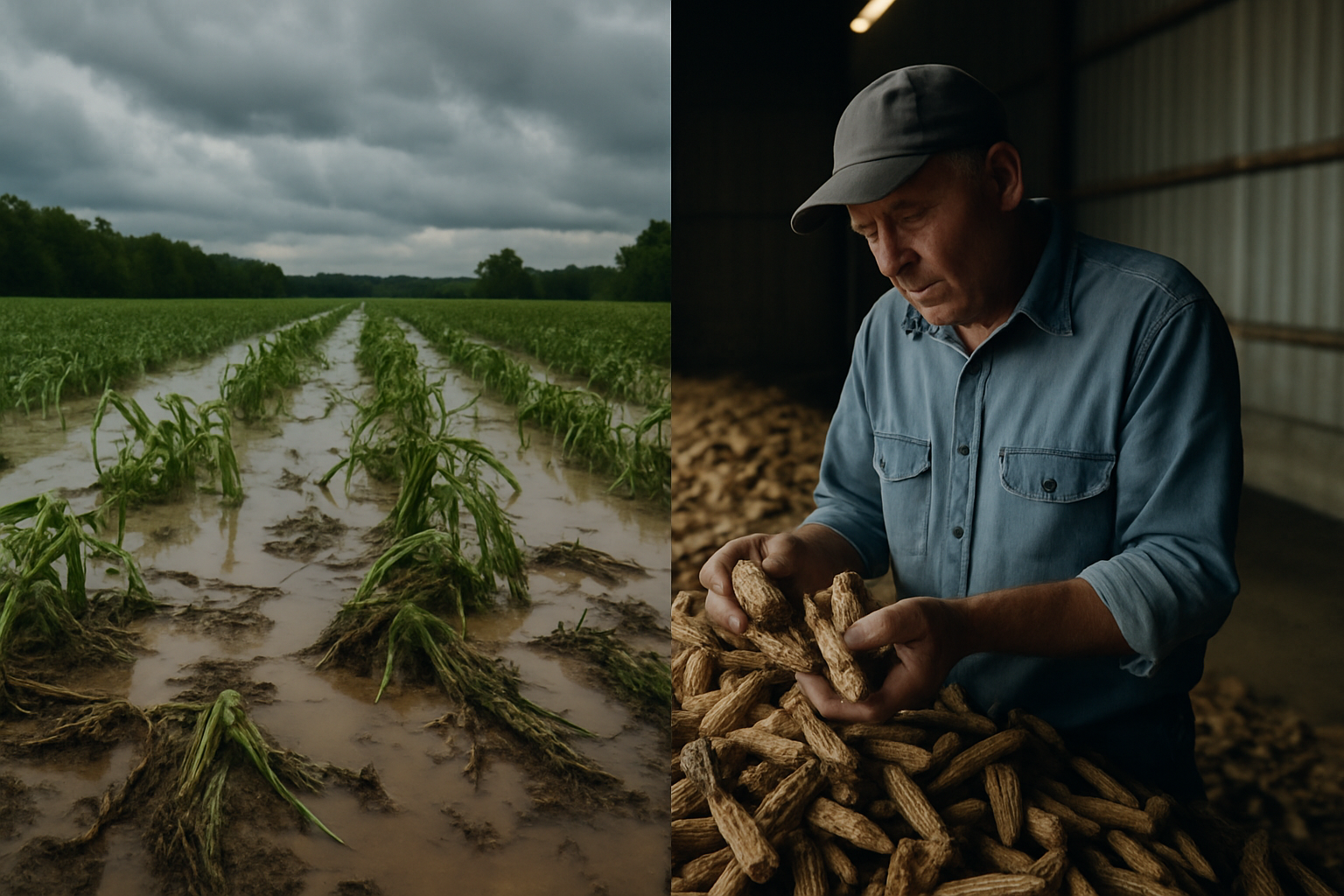
Agricultural systems across three continents are under unprecedented strain as extreme weather events, supply chain disruptions, and regulatory challenges converge to create a deepening global food security crisis in early 2026.
From Algeria's flood-ravaged farms to the Philippines' struggle with food inflation pressures, the interconnected nature of modern agricultural systems is being tested by a cascade of simultaneous challenges that threaten food production, distribution, and safety on a global scale.
Algeria Floods Devastate Agricultural Infrastructure
Algeria's Ministry of Agriculture and Rural Development announced the launch of comprehensive damage assessment operations following devastating floods and strong winds that have swept across multiple provinces. The ministry has deployed specialized technical teams to agricultural service directorates nationwide to conduct systematic evaluations of losses sustained by farmers and livestock breeders.
The damage is particularly severe for greenhouse operators and farmers with flooded fields, representing a critical blow to Algeria's agricultural sector already facing pressure from climate variability. This assessment comes as part of a broader pattern of extreme weather events affecting agricultural production across North Africa, with experts noting the increasing frequency and intensity of such events.
"The systematic assessment of agricultural losses demonstrates the severity of the crisis facing Algeria's farming communities. The focus on greenhouse operations and flooded fields indicates the diverse nature of the damage."
— Agricultural Analysis, Based on Ministry Reports
Philippines Battles Rising Food Inflation Pressure
In the Philippines, the Department of Agriculture (DA) is actively pursuing "supply fixes" as the specter of food inflation looms over the archipelago nation. The acknowledgment of inflationary pressure signals growing concern about food affordability and access for Filipino consumers.
This development occurs within the context of broader Southeast Asian agricultural challenges, where supply chain vulnerabilities exposed during the pandemic continue to create price volatility. The Philippines' food security strategy must navigate complex trade-offs between supporting domestic producers and ensuring affordable food access for consumers.
The DA's focus on supply-side interventions suggests recognition that production disruptions, rather than demand factors, are driving current inflationary pressures. This approach aligns with regional trends toward strengthening local agricultural systems while maintaining strategic import capabilities.
Tanzania's Regulatory Crisis Threatens Food Safety
While not directly agricultural, Tanzania faces a significant public health challenge that intersects with food security concerns. A new study reveals that 61% of all alcohol consumed in the country is illicit, resulting in estimated government revenue losses of 1.026 trillion Tanzanian shillings annually due to uncollected taxes.
This regulatory failure extends beyond alcohol to broader food safety and quality control systems. The prevalence of unregulated products indicates systemic challenges in Tanzania's regulatory framework that could affect other food products and agricultural inputs, potentially undermining consumer confidence and public health.
Similar studies in neighboring Kenya and Uganda revealed comparable trends, with illicit alcohol accounting for 60% and 67% of consumption respectively, suggesting regional regulatory enforcement challenges that extend beyond individual countries.
Global Context: A Perfect Storm for Food Security
These developments occur against the backdrop of an extraordinary global agricultural crisis documented throughout February 2026. Historical context from recent months reveals a cascading series of challenges:
Climate Extremes and Agricultural Impact
January 2026 was recorded as the hottest month in global history, marking the 18th of the past 19 months exceeding 1.5°C above pre-industrial levels. This climate volatility is manifesting in simultaneous extreme events affecting agricultural regions worldwide.
Storm Leonardo devastated Iberian Peninsula agriculture, with Spain's Grazalema receiving 526 liters per square meter of rainfall – nearly its entire annual average. Agricultural losses in olive groves and citrus farms have been extensive, while Portugal deployed 1,975 military personnel for emergency response.
Meanwhile, Northern Europe faces the opposite extreme, with Estonia recording its coldest winter in 25 years, straining energy systems and affecting agricultural operations. This climate volatility – extreme heat globally paired with regional Arctic conditions – demonstrates the unpredictable nature of current weather patterns affecting food production.
Supply Chain Vulnerabilities Exposed
Recent food safety crises have exposed critical vulnerabilities in global food supply chains. The European infant formula contamination crisis, affecting brands including Nestlé and Danone products with cereulide toxin, demonstrates how industrial food processing failures can have international consequences.
The UK Health Security Agency confirmed 36 infants suffered toxin poisoning across England, Scotland, Wales, and Northern Ireland, while Greece reported similar incidents with 36 affected infants. These contamination events, involving heat-stable toxins that remain dangerous even after cooking, highlight systemic failures in food safety protocols.
Agricultural Development Initiatives Show Promise
Despite these challenges, coordinated international agricultural development efforts are underway. The Norwegian Church Aid launched a $2.9 million agricultural transformation program in South Sudan, while Kenya's Nguruman irrigation scheme rehabilitation benefits over 10,000 farmers following 2024 flood damage.
African agricultural renaissance projects demonstrate sophisticated integration of traditional knowledge with modern technology. Algeria's groundbreaking "Tamr Al-Aghanm" innovation converts date waste into livestock feed, while Rwanda has identified 417,000 hectares of undeveloped irrigation potential for enhanced food security.
Regional Integration and Cooperation Efforts
International cooperation on food security challenges is intensifying. The Inter-American Institute for Cooperation on Agriculture (IICA) has strengthened regional engagement across Latin America and the Caribbean, while Ghana's Pearl Nkrumah emphasizes the critical role of efficient payment systems for African agricultural trade.
The Zero Hunger Trust Fund marked its 10th anniversary with planned activities in Saint Vincent and the Grenadines, representing unprecedented coordination of agricultural cooperation initiatives across three regions amid global climate pressures.
Financial Architecture for Agricultural Resilience
Access Bank Ghana's managing director and Ghana Stock Exchange chairman Pearl Nkrumah called for a single African currency to enable seamless agricultural trade. This financial infrastructure development recognizes that effective payment systems and enabling platforms are crucial for agricultural trade success.
These South-South cooperation initiatives signal a shift toward agricultural self-sufficiency strategies amid global supply chain vulnerabilities and climate adaptation needs.
Critical Minerals and Agricultural Technology
The intersection of critical minerals shortages and agricultural technology presents additional challenges. EU auditors warn that China's control of 60% of global production and 90% of refining capacity for lithium, cobalt, and rare earth elements threatens not only renewable energy goals but also agricultural technology development.
Modern agricultural systems increasingly depend on sophisticated technology for precision farming, automated equipment, and climate monitoring systems. Supply chain disruptions in critical materials could affect the agricultural sector's ability to modernize and adapt to climate challenges.
Looking Forward: Integrated Approaches Required
The convergence of climate extremes, supply chain disruptions, food safety failures, and regulatory challenges requires comprehensive, integrated responses. Success stories from recent months demonstrate that solutions exist but require sustained coordination and investment.
Caribbean agricultural modernization efforts in Barbados emphasize climate-smart agriculture and youth investment, while Mexico's Sembrando Vida program supports indigenous farmers. These initiatives provide models for combining traditional knowledge with modern technology to build resilience.
The current crisis tests global food systems' capacity to maintain food security amid increasing volatility. Early 2026 developments suggest that countries and regions that invested in climate adaptation, diversified supply chains, and strengthened regulatory frameworks are better positioned to navigate these challenges.
However, the scale and simultaneity of current challenges require unprecedented international cooperation, technology transfer, and financial support for vulnerable agricultural systems. The coming months will be critical for determining whether global food security architecture can adapt to the new reality of climate-driven agricultural volatility.