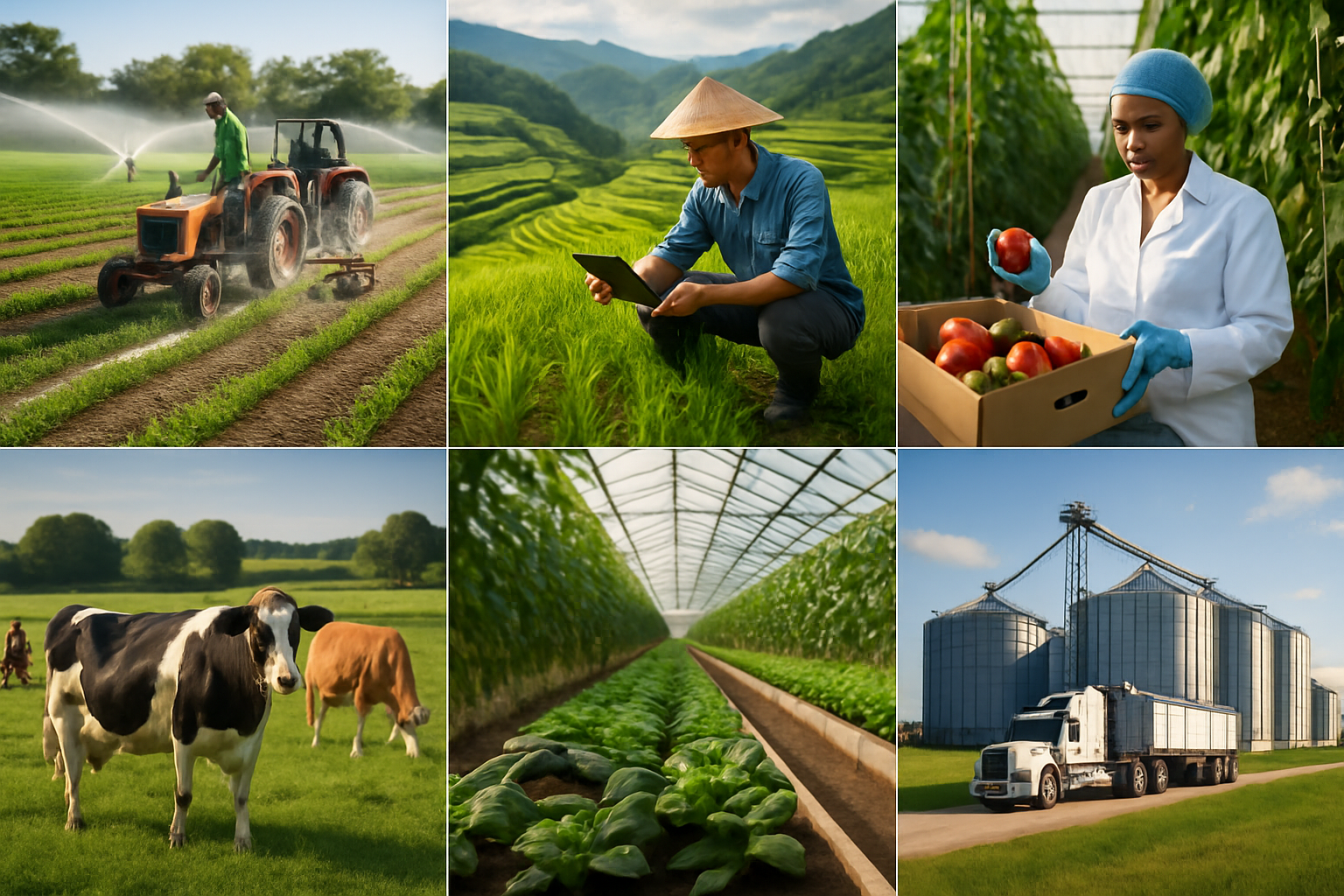
Agricultural systems worldwide are undergoing unprecedented transformation as farmers and governments adapt to mounting climate pressures, with innovations emerging from Algeria's Saharan oases to Saint Vincent's experimental agriculture, while economic pressures threaten food security across multiple continents.
An investigation across eight nations reveals a complex tapestry of agricultural adaptation during the 20th consecutive month of global temperatures exceeding 1.5°C above pre-industrial levels. From Algeria's remarkable date harvest achievements to the Philippines' mounting agricultural losses, the global food system demonstrates both extraordinary resilience and concerning vulnerabilities.
Algeria's Agricultural Triumph in Desert Conditions
Ouargla province has achieved an exceptional date harvest of 920,142 quintals during the 2025-2026 agricultural season, according to Fatiha Boubekri, head of Production Organization and Technical Support at the Agricultural Services Directorate. The harvest includes 377,154 quintals of premium Deglet Nour dates, 424,606 quintals of Ghars varieties, 10,462 quintals of white Deglet varieties, and 107,920 quintals of other species.
This represents a significant increase compared to the previous season, demonstrating remarkable agricultural adaptation to increasingly challenging Saharan conditions. The success builds on Algeria's innovative "Tamr Al-Aghanm" program, which converts date waste into livestock feed—a circular economy approach that has gained international attention for its environmental efficiency.
"This harvest demonstrates that agricultural innovation can thrive even under extreme climate conditions when traditional knowledge meets modern techniques."
— Fatiha Boubekri, Agricultural Services Directorate
Food Safety Concerns Across Continents
Meanwhile, Bosnia and Herzegovina faces food safety challenges as experts warn about the dangers of reusing cooking oil. Repeated heating can eliminate nutritional value and create health risks when oil begins to smoke, with changes in color, smell, and texture indicating degradation. The guidance reflects broader European concerns about food safety during a period of heightened scrutiny following multiple contamination incidents across the continent.
These safety concerns extend beyond Europe. Egypt's livestock distribution program has reached 45,353 beneficiaries with 526,760 cattle, while implementing strict biosecurity measures. The comprehensive approach demonstrates how food security initiatives must balance production expansion with safety protocols during climate-stressed conditions that create optimal pathogen growth environments.
Technology-Traditional Knowledge Synthesis
The most successful agricultural adaptations demonstrate sophisticated integration of cutting-edge technology with traditional farming wisdom. In Algeria, biosecurity combines veterinary science with generations of livestock management expertise. Bulgaria's dairy cooperation initiatives with Estonian producers represent growing South-South knowledge transfer, moving beyond traditional North-South aid relationships.
This technology-tradition synthesis has emerged as superior to purely technological solutions that ignore local contexts. Countries implementing comprehensive approaches report better community resilience, reduced social service demands, and enhanced economic competitiveness through sustainable rural development.
Economic Pressures Threaten Agricultural Viability
The Philippines faces potentially catastrophic agricultural losses, with the Department of Agriculture estimating P75 billion in damages if support for rice, corn farmers, and fisherfolk affected by Middle Eastern conflicts is not provided. Undersecretary Asis Perez warned lawmakers that the agency is preparing as if "a catastrophe is about to happen," with approximately P37 billion needed for farm input subsidies during the critical May-July period.
The crisis reflects how geopolitical tensions cascade through global agricultural supply chains. Many fishers have reduced or stopped operations due to soaring fuel prices, while traders have ceased purchasing farmers' harvests, creating impossible economic choices for rural communities thousands of miles from conflict zones.

Regional Innovation Success Stories
Liberia's agricultural sector demonstrates promising developments through Sankofa Farm's practical training initiatives targeting vegetable producers across Bong County. CEO Nyamah Dunbar welcomed journalists and stakeholders for hands-on sessions, representing locally-driven capacity building that respects traditional practices while incorporating beneficial innovations.
Rwanda's agricultural resilience efforts show remarkable progress as the country implements systematic land protection measures in Africa's most densely populated nation. New initiatives aim to preserve remaining agricultural land from relentless urban development while maintaining food production capacity under extraordinary population pressures.
New Zealand's agricultural sector continues providing stability despite global volatility, though adaptation challenges remain as traditional farming cycles become less predictable. The country's sophisticated agricultural infrastructure provides a model for climate-responsive farming systems that maintain productivity while building resilience against environmental variability.
Climate Change as Agricultural Catalyst
The sustained warming period—with January 2026 marking the hottest month in recorded history—has fundamentally altered traditional farming cycles, water availability, and pest management patterns worldwide. However, rather than solely presenting challenges, these conditions have catalyzed unprecedented innovation across agricultural communities.
Saint Vincent and the Grenadines exemplifies this adaptive capacity through Agriculture Minister Israel Bruce's recent Nigeria visit, where observations of Giant African Snail management revealed potential economic opportunities from what was previously considered purely a pest control problem. The EC$7 million allocated for snail eradication may transform into revenue generation through innovative approaches discovered through international cooperation.
South-South Cooperation Emergence
A significant trend across multiple regions shows developing nations increasingly sharing expertise through peer partnerships rather than traditional North-South aid dependencies. This approach proves more culturally appropriate and economically sustainable, respecting local autonomy while facilitating beneficial international partnerships.
The African Continental Free Trade Agreement has enabled agricultural partnerships across national boundaries, creating shared value chains and collective responses to food security challenges that individual nations cannot address independently. Similar regional cooperation frameworks are emerging in the Caribbean, Latin America, and Asia.
Implementation Challenges and Success Factors
Despite remarkable innovations, significant implementation challenges remain. Funding sustainability presents critical concerns for developing nations where immediate economic pressures override long-term environmental considerations. Technical capacity building requires sustained education, training, and institutional investment beyond initial technology deployment.
Climate change disrupts project timelines, requiring adaptive management approaches that can respond to rapidly changing conditions. Success factors consistently include community ownership of development processes, transparent governance structures, sustained political commitment transcending electoral cycles, and international cooperation that respects local autonomy while providing technical and financial support.
"The window for building resilient, equitable food systems is narrowing rapidly, but the tools and knowledge exist for comprehensive responses when political will, community engagement, and international cooperation align effectively."
— International Agricultural Development Expert
Strategic Global Significance
The agricultural developments across these eight nations provide diverse, complementary templates for addressing global food security challenges. Algeria's desert agriculture success, the Philippines' crisis management needs, Liberia's capacity-building initiatives, and other regional innovations offer different pathways toward agricultural resilience.
This diversity provides resilience against single-solution dependencies while offering multiple adaptation pathways suited to different national circumstances, resource availability, and cultural contexts. The emerging patterns suggest that successful food security requires comprehensive approaches integrating immediate crisis response with long-term resilience building.
Economic Multiplier Effects
Agricultural innovations function as comprehensive economic engines extending far beyond farm-level improvements. Successful programs create employment in transportation, processing, packaging, and technical services while generating export revenue and strengthening rural economic foundations.
These multiplier effects include infrastructure development, market access enhancement, and sustainable rural employment opportunities that reduce urban migration pressures. Countries implementing comprehensive agricultural protection demonstrate greater economic resilience and attract sustainable investment in agricultural technology, processing capabilities, and export development.
Future Implications and Decisive Choices
The convergence of climate pressures, supply chain vulnerabilities, and economic instabilities creates what experts describe as a "perfect storm" for global food security. However, the innovative capacity demonstrated by farming communities and governments provides cautious optimism for building sustainable, resilient systems capable of withstanding accelerating climate change while preserving cultural traditions and ensuring prosperity.
The choices made during this critical period may determine food security trajectories for decades ahead, making coordinated international action more urgent than ever. The human dimension remains central—millions of farmers, food workers, and vulnerable communities depend on stable, fair global food systems that balance immediate humanitarian needs with long-term sustainability.
Success depends on sustained international cooperation, enhanced multi-sector coordination, and increased financial commitments that recognize food security as essential infrastructure for human prosperity and planetary sustainability during this critical climate action decade.