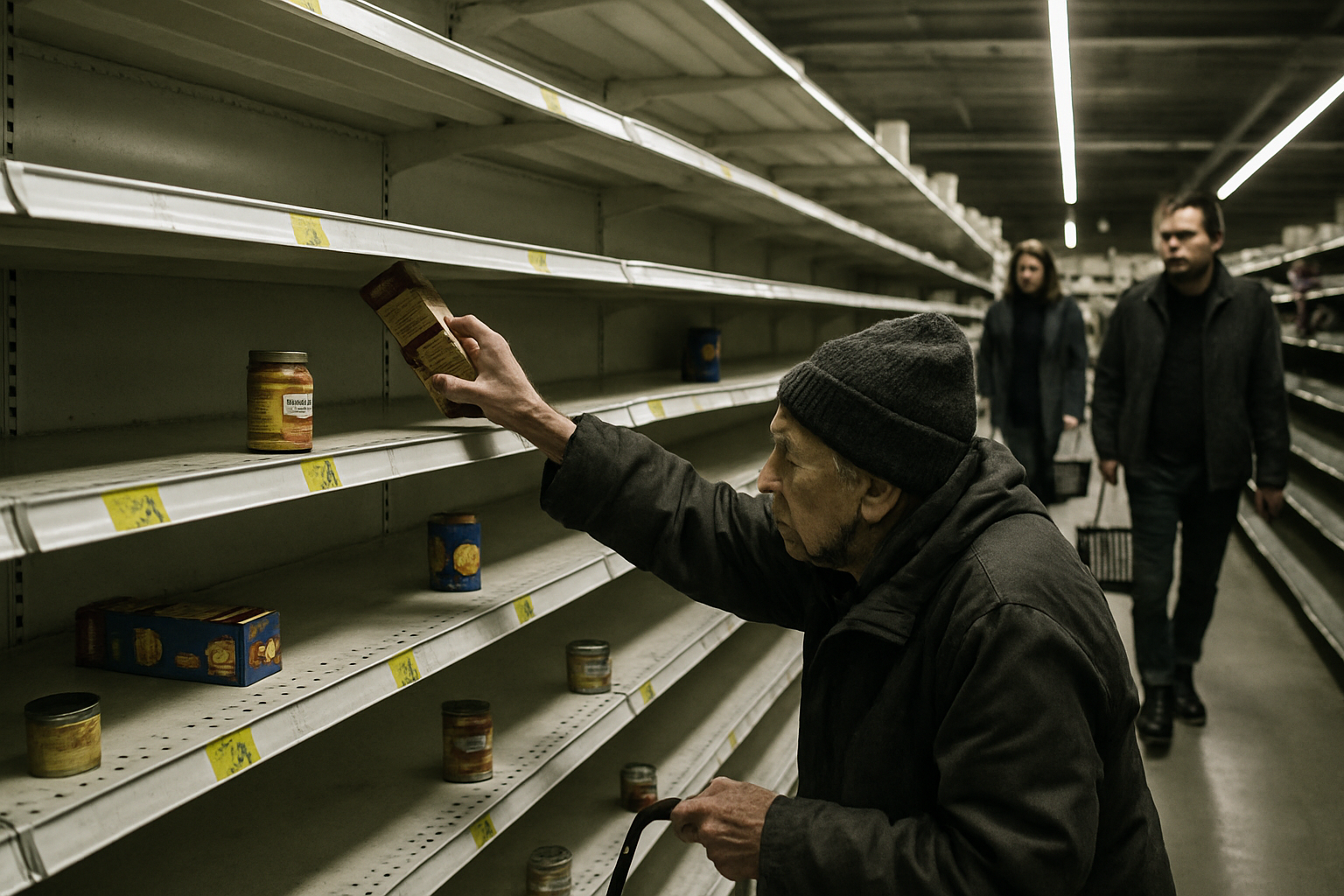
A deepening global food security crisis is threatening millions worldwide as supply chain disruptions and soaring food prices create a perfect storm of challenges, with Portugal reporting record-high grocery costs and international organizations scrambling to establish humanitarian corridors for essential goods.
The latest data from Portugal reveals a stark escalation in the ongoing food affordability crisis. According to consumer protection organization Deco Proteste, the essential food basket of 63 monitored products has reached a new peak of over €260, marking a €1.37 increase in just one week. This represents the highest level recorded by the organization's tracking system, highlighting the relentless upward pressure on basic food costs across Europe.
UN Pushes for Humanitarian Food Corridor
As global food prices continue their alarming trajectory, the United Nations is intensifying efforts to establish a humanitarian corridor through the Strait of Hormuz to facilitate the flow of fertilizer and other essential goods. The proposed plan, obtained exclusively by FRANCE 24, represents a critical intervention to address the mounting crisis affecting agricultural supply chains worldwide.
The humanitarian corridor initiative faces significant diplomatic hurdles, with several countries yet to approve the proposal despite the urgent need for action. The Strait of Hormuz, a vital chokepoint for global commerce, has been effectively blocked since the outbreak of the Iran conflict, severely disrupting the flow of agricultural inputs and driving up costs across the food production chain.
Escalating Cost of Living Crisis
The Portuguese data underscores a broader European trend that has seen food prices surge across the continent. The monitoring of 63 essential products by Deco Proteste has become a crucial barometer for understanding the real-world impact of international supply chain disruptions on ordinary families. The weekly increase of €1.37 may seem modest in isolation, but it represents a continuous erosion of household purchasing power that is forcing millions to make difficult choices about their dietary needs.
The crisis extends far beyond Europe's borders. Based on extensive reporting from Planet News correspondents, similar patterns are emerging across multiple continents. In Asia, rice farmers are abandoning crops due to unsustainable fuel and fertilizer costs stemming from the Iran war fallout. African nations are experiencing unprecedented challenges with basic commodity supplies, while Latin American countries grapple with volatile food markets that swing between abundance and scarcity within weeks.
Climate Change as Crisis Multiplier
The current food security challenges are occurring during an unprecedented period of climate instability. April 2026 marks the 20th consecutive month that global temperatures have exceeded 1.5°C above pre-industrial levels, creating what experts describe as a "threat multiplier" that amplifies existing vulnerabilities in food systems.
"We're witnessing the convergence of multiple crisis factors – supply chain disruptions from geopolitical tensions, climate-induced agricultural stress, and energy price volatility – creating a perfect storm for global food security."
— Dr. Elena Rodriguez, International Food Policy Institute
The sustained warming is fundamentally altering traditional farming cycles, water availability, and pest management systems worldwide. Traditional preservation methods are proving inadequate for rapidly changing environmental conditions, requiring new approaches to food processing and storage that many developing nations struggle to implement.
Supply Chain Vulnerabilities Exposed
The ongoing crisis has exposed critical vulnerabilities in global food supply chains that were previously hidden by the relative stability of international trade. The Strait of Hormuz disruption affects approximately 40% of global seaborne oil transit, creating cascading effects throughout agricultural systems that depend on petroleum-based inputs.
Natural gas prices have surged 24% in Europe and 78% in the United States, directly impacting fertilizer production costs. This surge comes at a critical time when farmers worldwide need to make decisions about spring planting and fertilizer applications, with many forced to reduce inputs or abandon plantings entirely due to prohibitive costs.
Major shipping companies including Maersk and MSC have suspended operations in the Persian Gulf, leaving over 150 oil and LNG tankers stranded with billions of dollars in cargo value. These disruptions create particular challenges for agricultural supply chains, which require precise timing for seasonal operations and have limited flexibility to absorb delays.
Regional Impact Variations
While the crisis is global in scope, its impact varies significantly across different regions based on local production capacity, import dependencies, and economic resilience. European nations with diversified food systems and stronger domestic production are showing greater resilience to global pressures, but even these countries are experiencing notable price increases.
Developing nations face particular challenges, as they often lack strategic food reserves and have limited fiscal capacity to subsidize food costs for vulnerable populations. The combination of higher import prices and reduced domestic production capacity creates a double burden that threatens to push millions into food insecurity.
Innovation and Adaptation Responses
Despite the challenging circumstances, innovative responses are emerging worldwide. South-South cooperation initiatives are gaining prominence, with developing nations sharing agricultural expertise through peer-to-peer partnerships that bypass traditional aid dependencies. These collaborations are proving more culturally appropriate and economically sustainable than conventional development assistance.
Technology integration with traditional agricultural knowledge is showing particular promise. Successful adaptations demonstrate sophisticated synthesis of cutting-edge techniques with established farming wisdom and community-based management systems. This approach proves superior to purely technological solutions that ignore local traditions and community needs.
Economic Multiplier Effects
The food security crisis is creating broader economic implications that extend far beyond agriculture. Rising food costs contribute to inflationary pressures affecting monetary policy across multiple countries. Supply chain disruptions impact transportation, processing, and retail industries, while reduced agricultural productivity threatens export revenues for commodity-dependent economies.
Consumer confidence in multinational food corporations is declining, driving a measurable shift toward local sourcing and simplified supply chains that offer greater transparency and traceability. This trend is creating new opportunities for local producers while challenging established global food distribution networks.
Prevention-Focused Transformation
Industry experts increasingly identify 2026 as a critical transformation turning point requiring enhanced international coordination and prevention-focused approaches that integrate traditional dietary wisdom with modern safety science. The shift from reactive crisis management to proactive resilience building is demonstrating superior cost-effectiveness in protecting vulnerable populations.
Countries implementing comprehensive agricultural protection programs are showing greater resilience to global supply shocks. These programs typically combine strategic stockpiling, supply chain diversification, local production enhancement, and international cooperation agreements that respect local autonomy while providing technical and financial support.
Looking Forward: Critical Action Window
The window for building resilient and equitable food systems is narrowing rapidly as environmental pressures intensify and population growth increases agricultural resource demands. The convergence of climate change, supply chain vulnerabilities, and geopolitical tensions creates what researchers describe as a "perfect storm" for global food security.
Success in addressing these challenges depends on sustained international cooperation, enhanced coordination across multiple sectors and scales, and increased financial commitments that recognize food security as essential infrastructure for human prosperity and planetary sustainability. The tools and knowledge exist for comprehensive responses, but their effectiveness requires unprecedented speed and coordination matching the scale of the environmental and economic challenges.
As the humanitarian corridor proposal makes its way through diplomatic channels and European consumers grapple with record food costs, the choices made during this critical period may determine global food security trajectories for decades ahead. The human dimension remains central to any sustainable solution – millions of farmers, food workers, and vulnerable communities depend on stable and fair global food systems that can withstand the pressures of an increasingly unstable world.