February 2026 has witnessed a confluence of agricultural crises that threaten global food security, with Argentina experiencing its lowest beef consumption in two decades, Kenya launching emergency fertilizer programs to combat widespread hunger, and Ghana slashing cocoa prices to align with plummeting international markets.
The interconnected nature of these challenges reflects a broader systemic crisis affecting food production and pricing worldwide, occurring during what climate scientists confirm was the 18th consecutive month of temperatures exceeding 1.5°C above pre-industrial levels.
Argentina's Beef Crisis: A 20-Year Low
Argentina, traditionally one of the world's largest beef producers and consumers, faces an unprecedented crisis as domestic meat consumption plummets to levels not seen since the early 2000s. According to the Cámara de la Industria y Comercio de Carnes de la República Argentina (Chamber of Industry and Commerce of Meat of the Argentine Republic), the convergence of low production levels and sustained exports has dramatically reduced meat availability for the domestic market.
This development occurs amid Argentina's broader economic transformation under President Javier Milei, whose administration has pursued aggressive export-oriented policies. The crisis illustrates the complex trade-offs between earning foreign currency through agricultural exports and maintaining domestic food security. Argentina's historic role as a major beef supplier has been central to both its economy and cultural identity, making this shortage particularly significant.
Kenya's Emergency Response to Food Insecurity
Kenya's government has launched the 2026 Long Rains National Fertiliser Subsidy Programme, a critical intervention as 3.3 million citizens face acute food insecurity amid prolonged drought conditions. The initiative represents a proactive approach to supporting farmers during the crucial planting season, when access to fertilizers can determine the success of entire agricultural cycles.
"The government recognizes that without immediate support during the planting season, millions more could face severe food shortages in the coming months."
— Kenyan Agriculture Officials
This emergency program builds on Kenya's broader agricultural development initiatives, including the ongoing rehabilitation of the Nguruman irrigation scheme, which benefits over 10,000 farmers in Kajiado West sub-county. The integrated approach of combining immediate fertilizer support with long-term infrastructure development reflects lessons learned from previous food security crises.
Ghana's Cocoa Sector Under Pressure
Ghana's decision to slash farmgate cocoa prices represents a dramatic shift in one of West Africa's most important agricultural sectors. The price reduction aligns with declining international cocoa markets, where global demand has softened amid economic uncertainty and changing consumer preferences.
The move signals the government's attempt to encourage more competitive pricing and stimulate international demand, but it comes at significant cost to local farmers who have already faced mounting challenges from climate change, aging cocoa trees, and rising production costs.
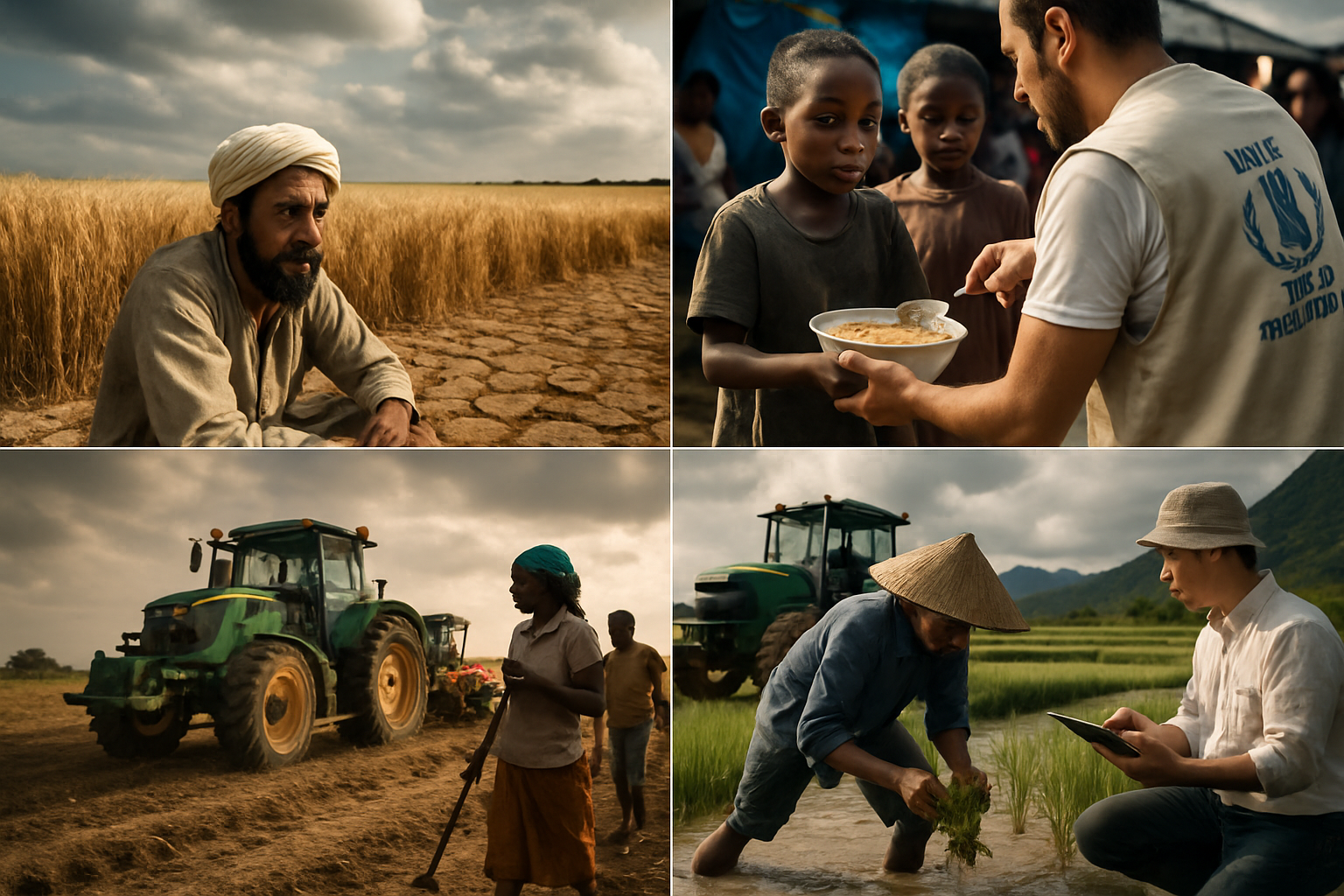
This crisis builds on earlier warnings from COCOBOD CEO Dr. Randy Abbey, who acknowledged "very difficult times for farmers" due to mounting economic pressures, rising production costs, and climate-related risks that have severely impacted farmer incomes and output levels.
Climate Change as the Underlying Driver
These agricultural challenges unfold against the backdrop of accelerating climate change. January 2026 marked the hottest month ever recorded globally, continuing a devastating trend that has seen 18 of the past 19 months exceed 1.5°C above pre-industrial levels. This persistent warming is disrupting traditional agricultural cycles and creating unprecedented stress on food systems worldwide.
The climate impact extends beyond temperature records. Extreme weather events have become increasingly common, from the flooding that devastated Spanish agriculture with over 526 liters per square meter of rainfall during Storm Leonardo, to the prolonged droughts affecting East Africa's agricultural regions.
Supply Chain Vulnerabilities Exposed
The simultaneous crises across different continents and agricultural sectors reveal the fragility of global food supply chains. What emerges is a picture of interconnected vulnerabilities where local production challenges quickly translate into international market pressures.
The situation has been further complicated by energy price surges, with natural gas prices rising 24% in Europe and 78% in the United States, increasing production and distribution costs throughout the food chain. These energy costs affect everything from fertilizer production to transportation, creating cascading effects across agricultural systems.
Innovation and Adaptation Strategies
Despite the challenges, agricultural communities and governments are developing innovative responses. Kenya's fertilizer subsidy program demonstrates proactive policy intervention, while broader regional initiatives show promise for building resilience.
Recent successes include Zimbabwe's donation of 370 metric tonnes of maize to Malawi, demonstrating regional solidarity and South-South cooperation. Such initiatives provide templates for addressing food security through collaborative approaches rather than relying solely on traditional North-South aid relationships.
Technical innovations are also emerging. Algeria's development of "Tamr Al-Aghanm," which converts date waste into livestock feed, represents the kind of circular economy thinking needed to maximize agricultural resource utilization. Similarly, Finland's breakthrough in winter raspberry cultivation demonstrates how controlled environment agriculture can overcome seasonal limitations.
International Response and Coordination
The global nature of these challenges has prompted renewed international cooperation efforts. The Norwegian Church Aid's $2.9 million agricultural program in South Sudan and various regional initiatives across Africa demonstrate how international partnerships can provide both immediate relief and long-term capacity building.
However, experts warn that current international responses remain insufficient for the scale of the challenge. The intersection of climate change, economic pressures, and geopolitical tensions requires more coordinated and sustained global action.
Looking Forward: The Need for System-Wide Transformation
The convergence of crises in Argentina, Kenya, and Ghana represents more than isolated agricultural challenges—it signals the need for fundamental transformation in how global food systems operate. The current model, which prioritizes short-term market efficiency over long-term resilience, appears increasingly inadequate for the climate realities of the 21st century.
Success in addressing these challenges will require integration of traditional agricultural knowledge with modern technology, enhanced international cooperation, and recognition that food security is a global public good demanding coordinated action. The human dimension remains central—millions of farmers and food workers depend on stable, fair global food systems for their livelihoods.
As February 2026 demonstrates, the window for building more resilient and equitable food systems is narrowing rapidly. The crises unfolding across continents provide both a warning and an opportunity for the sustained political commitment and technological innovation necessary to feed a growing world population amid accelerating climate change.