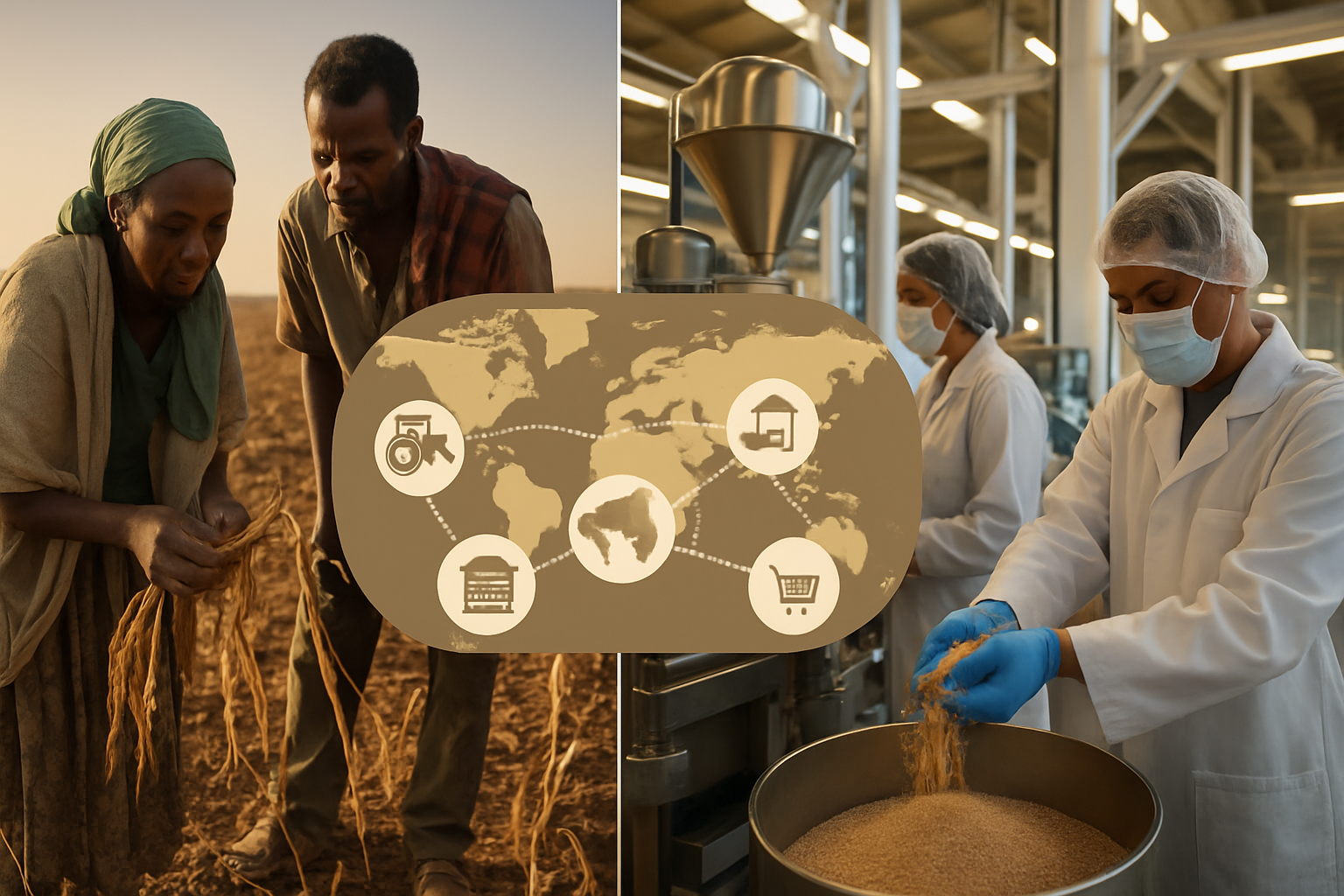
A perfect storm of supply chain disruptions, rising agricultural input costs, and climate pressures is threatening global food security as nations from Ethiopia to Guyana grapple with unprecedented challenges to their agricultural systems, according to a new comprehensive report from the International Fund for Agricultural Development (IFAD).
The crisis is exposing critical vulnerabilities in global food production systems, with countries across Africa facing severe fertilizer shortages and skyrocketing input costs while Middle East conflicts disrupt key trade routes. Simultaneously, agricultural innovation initiatives in the Caribbean and Jordan demonstrate resilience strategies that could provide blueprints for addressing the growing crisis.
Ethiopia and Africa Face Agricultural Emergency
Ethiopia finds itself at the epicenter of a growing agricultural crisis as global fertilizer and fuel supply disruptions reverberate through rural economies across sub-Saharan Africa. The latest IFAD report warns that countries throughout the region are experiencing rising input costs, supply bottlenecks, and mounting pressure on small-scale producers as Middle East conflicts disrupt established trade routes.
The situation has become particularly acute as conflicts in the region have upended key supply chains that African farmers have traditionally relied upon for fertilizers and agricultural inputs. With small-scale producers forming the backbone of food production across Ethiopia and neighboring countries, the impact extends far beyond individual farms to encompass entire rural economies and food security networks.
"How quickly international crises can turn into local food and livelihood emergencies demonstrates the interconnected nature of our global food systems."
— IFAD Report, 2026
The crisis comes at a particularly challenging time for African agriculture, as farmers were already adapting to climate change impacts and working to modernize production systems. The additional burden of input shortages and cost increases threatens to undermine years of progress in agricultural development across the continent.
Jordan Maintains Food Security Despite Regional Turmoil
In stark contrast to the challenges facing Ethiopia, Jordan has emerged as a model of agricultural resilience during the current crisis. Minister of Agriculture and Deputy Head of the Supreme Food Security Council, Dr. Saeb Abdul Halim Al-Khreisat, confirmed that the kingdom's food security situation remains stable and strong according to international indicators, despite the challenging regional conditions and global supply chain disruptions.
Jordan's success stems from a balanced approach that combines domestic production with strategic import management. Rather than relying entirely on imports despite limited natural resources, the kingdom has implemented clear policies aimed at diversifying supply sources and strengthening domestic production capabilities.
This strategic approach has enabled Jordan to maintain food security even as neighboring regions experience significant agricultural disruptions. The country's success demonstrates that with proper planning and diversified supply strategies, nations can maintain food security even during periods of international instability.
Guyana's Agricultural Innovation Offers Hope
While many regions struggle with agricultural challenges, Guyana is demonstrating how strategic investment in agricultural infrastructure can transform rural economies and enhance food security. The commissioning of a new $58.5 million agro-processing facility at Canal Number One Polder in Region Three represents a major advancement in agricultural development for the Caribbean nation.
The facility is designed to convert raw agricultural produce into value-added goods, significantly increasing farmers' incomes while reducing post-harvest losses and supporting small businesses throughout the agricultural value chain. This approach addresses multiple challenges simultaneously: farmer profitability, food waste reduction, and rural employment creation.
The agro-processing plant exemplifies how targeted infrastructure investment can create cascading benefits throughout agricultural systems. By enabling farmers to process their products locally rather than selling raw commodities, the facility helps capture more value within the domestic economy while reducing dependence on volatile export markets for unprocessed goods.
Climate Change Compounds Agricultural Challenges
The current agricultural crisis is unfolding against a backdrop of accelerating climate change impacts. Recent climate data shows continuing disruptions to traditional growing seasons, with irregular rainfall patterns and temperature extremes complicating farming cycles across multiple regions.
These environmental pressures create additional stress on farmer-trader relationships and supply chain operations, where yield and quality disruptions can trigger escalating disputes and market instabilities. Traditional farming agreements based on historical climate patterns no longer reflect current environmental realities, requiring new approaches to risk management and agricultural planning.
Climate adaptation has become essential for agricultural sustainability, with successful initiatives demonstrating the need for sophisticated integration of modern technology with traditional farming knowledge. The most effective approaches combine cutting-edge agricultural science with community-based management systems that respect local expertise while incorporating beneficial innovations.
Supply Chain Vulnerabilities Exposed
The current crisis has exposed critical vulnerabilities in global agricultural supply chains that extend far beyond immediate production challenges. The interconnected nature of modern food systems means that disruptions in one region can quickly cascade through international networks, affecting food availability and prices in markets thousands of miles away.
Fertilizer shortages exemplify these vulnerabilities, as production and distribution systems dependent on specific regional inputs face significant disruptions when geopolitical conflicts affect key supply routes. The situation demonstrates how agricultural systems designed for efficiency during stable periods can become fragile when faced with unexpected disruptions.
Recovery from such disruptions requires longer-term resilience strategies rather than quick fixes. Unlike weather-related challenges that follow predictable patterns, supply chain disruptions caused by conflicts and geopolitical tensions can persist indefinitely, requiring agricultural systems to develop alternative input sources and more diversified supply networks.
South-South Cooperation Emerges as Key Strategy
One of the most significant developments emerging from the current crisis is the growing importance of South-South cooperation in agricultural development. Countries with similar challenges are increasingly sharing expertise, technologies, and resources through peer-to-peer partnerships rather than relying solely on traditional North-South aid relationships.
This approach has proven more culturally appropriate and economically sustainable than conventional development assistance, as it builds on shared experiences and mutual understanding rather than one-way technology transfer. Regional integration frameworks are enabling agricultural partnerships across national boundaries, creating shared value chains and collective responses that individual nations cannot achieve independently.
The effectiveness of these partnerships demonstrates that developing nations can serve as solution providers for each other, leveraging indigenous knowledge and innovative governance approaches to address common challenges. This represents a fundamental shift in how international agricultural development cooperation is organized and implemented.
Economic Development Through Agricultural Innovation
Successful agricultural initiatives consistently demonstrate that modern farming development functions as a comprehensive economic development engine that extends far beyond farm-level improvements. The most effective programs create sustainable rural employment, enhance food security, and generate economic benefits throughout entire regions through transportation, processing, and international trade networks.
Countries implementing comprehensive agricultural protection strategies demonstrate greater economic resilience and attract sustainable investment in agricultural technology, processing capabilities, and export development. The multiplier effects include improved infrastructure, enhanced market access, and strengthened economic systems that support entire rural communities.
This broader economic impact explains why agricultural investment has become recognized as essential infrastructure for human prosperity and planetary sustainability, rather than simply a sectoral concern. The success of agricultural development initiatives depends on their ability to create comprehensive economic ecosystems rather than isolated production improvements.
Implementation Challenges and Success Factors
Despite the promising innovations emerging from various regions, significant implementation challenges remain for scaling successful agricultural interventions. Funding sustainability represents a critical concern for developing nations facing immediate economic pressures that can override long-term agricultural investments.
Technical capacity building requires sustained educational investment, institutional development, and knowledge transfer that extends well beyond initial technology deployment. Climate change continues to disrupt project timelines, requiring adaptive management approaches that can respond to rapidly changing environmental conditions.
The most successful initiatives consistently demonstrate several key success factors: community ownership of development processes, transparent governance structures, sustained political commitment that transcends electoral cycles, and international cooperation that respects local autonomy while providing necessary technical and financial support.
The Path Forward: Building Resilient Food Systems
The current crisis represents both a significant challenge and a critical opportunity for building more resilient and equitable global food systems. The window for implementing effective solutions is narrowing rapidly as environmental pressures intensify and population growth increases demands on agricultural resources.
The tools and knowledge exist for comprehensive responses to current challenges, as demonstrated by successful initiatives across multiple continents. However, success depends on sustained political commitment, adequate funding, and enhanced coordination between immediate crisis response and long-term resilience building efforts.
Food security must be recognized as a global public good that requires unprecedented international cooperation and coordination. The choices made during this critical period will likely determine food security trajectories for decades ahead, making coordinated international action more urgent than ever before.
As the international community grapples with these interconnected challenges, the examples of agricultural innovation and resilience emerging from countries like Guyana and Jordan, combined with the lessons learned from current struggles in Ethiopia and other affected regions, provide both warnings and hope for the future of global food security. The path forward requires balancing immediate humanitarian needs with long-term sustainability goals, ensuring that short-term solutions contribute to rather than undermine lasting food security for the world's most vulnerable populations.