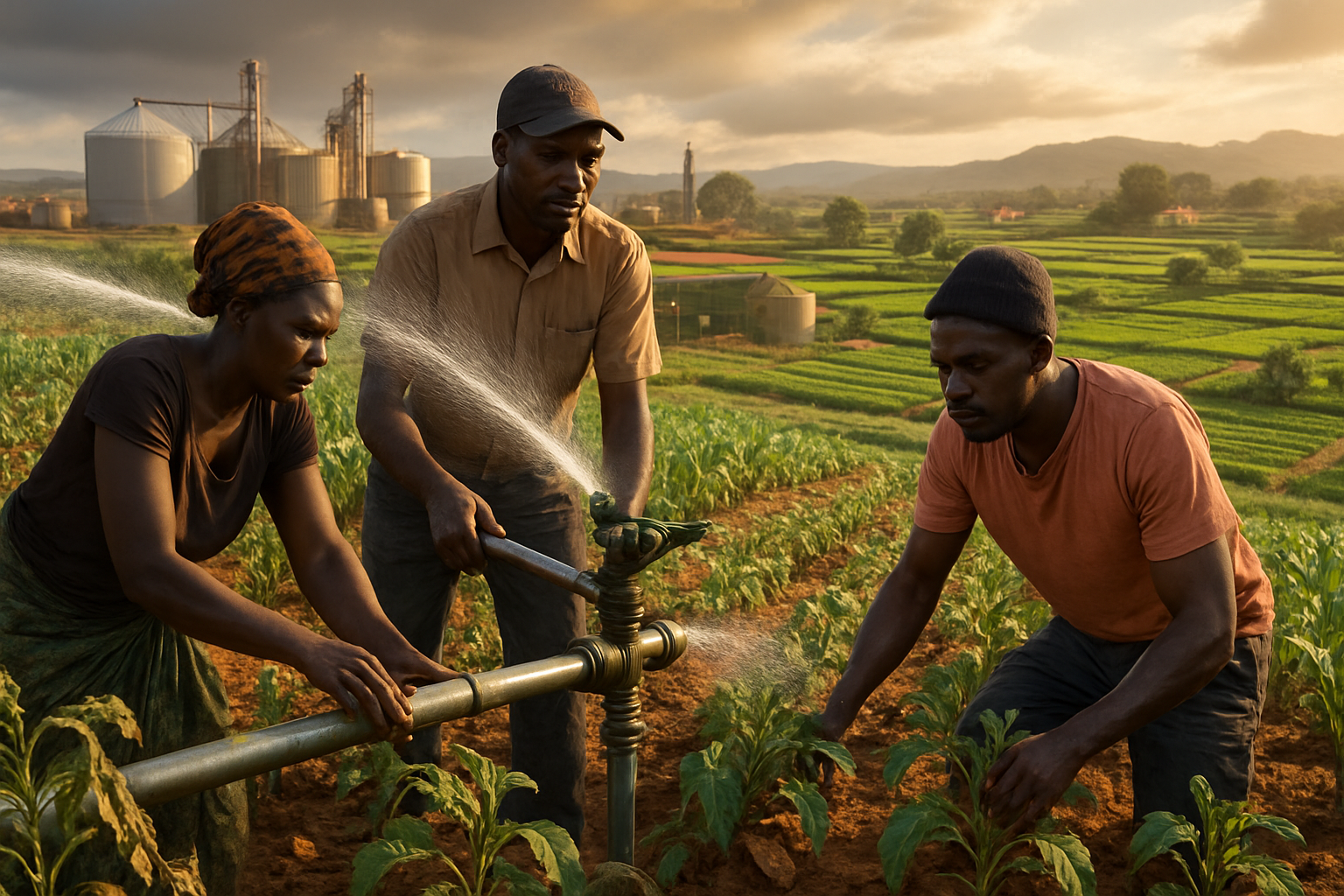
As the world endures its 20th consecutive month of global temperatures exceeding 1.5°C above pre-industrial levels, a convergence of agricultural crises, supply chain disruptions, and climate pressures is creating what experts describe as the most complex food security challenge in modern history.
The crisis spans continents and encompasses diverse challenges, from Burkina Faso's ambitious food sovereignty campaign to India's fertilizer supply disruptions caused by Middle East conflicts. Each nation's struggle illuminates different facets of a global system under unprecedented strain.
Burkina Faso's "Battle of the Plate" for Food Sovereignty
In West Africa, Burkina Faso President Captain Ibrahim Traoré has launched what he calls the "bataille de l'assiette" (battle of the plate) as part of the country's third National Days of Patriotic Engagement and Citizen Participation (JEPPC 2026). The initiative explicitly targets food sovereignty as a cornerstone of national dignity.
"Imperialism is not just a question of history books or dominant media. It is also present in our plates. As the father of the August 83 Revolution said, the grains of rice, corn, millet imported that we eat, that is imperialism."
— Captain Ibrahim Traoré, President of Burkina Faso
Traoré's message echoes the philosophy of Thomas Sankara, drawing explicit connections between food independence and political sovereignty. The campaign promotes the slogan "Mon assiette, ma fierté" (My plate, my pride), emphasizing domestic agricultural production and reduced reliance on food imports.
India's Fertilizer Crisis Amid Geopolitical Turmoil
Meanwhile, in South Asia, India faces severe challenges to its agricultural foundation. As the world's second-largest fertilizer consumer after China, India depends heavily on imports from the Gulf region, much of which passes through the volatile Strait of Hormuz.
The ongoing Middle East conflicts have severely disrupted shipping routes, creating acute shortages during crucial planting seasons. Prime Minister Narendra Modi's government has implemented emergency measures to ensure fertilizer supplies reach farmers, but analysts warn that current stocks may prove insufficient if conflicts persist.
The crisis is particularly acute for nitrogen fertilizers such as urea, which India consumes nearly 40 million tons annually. These fertilizers are crucial for major food crops including rice and wheat, which cannot absorb adequate nitrogen directly from the air. Supply disruptions threaten not only immediate harvests but could trigger broader food price inflation affecting India's 1.4 billion population.
Climate Change as Crisis Multiplier
The agricultural challenges unfold against an unprecedented climate backdrop. January 2026 marked the hottest month in recorded history, extending a streak of 20 consecutive months above the critical 1.5°C threshold. This sustained warming is overriding natural climate patterns, including La Niña cooling effects, fundamentally altering farming cycles worldwide.
The climate crisis functions as a "threat multiplier," exacerbating existing vulnerabilities in global food systems. Traditional growing seasons are becoming unreliable, water availability is increasingly unpredictable, and pest and disease patterns are shifting rapidly. These changes force farmers to adapt techniques developed over centuries within just a few seasons.
Supply Chain Vulnerabilities Exposed
The convergence of crises has exposed critical vulnerabilities in global food supply chains. The Strait of Hormuz closure affects not just energy supplies but fertilizer production and agricultural machinery operations worldwide. Natural gas prices have surged 24% in Europe and 78% in the United States, directly impacting fertilizer manufacturing and food processing costs.
From Australia's fuel-starved rural communities to European farmers facing unprecedented input costs, the interconnected nature of modern agriculture is creating cascading effects far from the original disruption points. Small-scale farmers, who form the backbone of food production in many developing nations, are particularly vulnerable to these sudden cost increases.
Innovation and Adaptation Strategies
Despite the challenges, innovative responses are emerging worldwide. Technology-traditional knowledge integration is proving most effective, combining cutting-edge precision agriculture with indigenous farming wisdom.
Examples include Kenya's Nguruman irrigation scheme rehabilitation benefiting over 10,000 farmers, Algeria's pioneering date waste-to-livestock feed conversion programs, and Finland's breakthrough winter raspberry cultivation techniques. These initiatives demonstrate how agricultural adaptation can succeed when modern technology respects and builds upon traditional ecological knowledge.
South-South Cooperation on the Rise
A notable trend is the emergence of South-South cooperation in agricultural development. Developing nations are increasingly sharing expertise through peer partnerships rather than relying solely on traditional North-South aid relationships. These arrangements often prove more culturally appropriate and economically sustainable.
Zimbabwe's donation of 370 metric tonnes of maize to Malawi exemplifies regional solidarity in food security. Similarly, Bolivia-India agricultural partnerships and various African Continental Free Trade Agreement initiatives are creating shared value chains and coordinated responses to challenges that individual nations cannot address alone.
Economic Implications and Market Transformations
The food security crisis is generating significant economic ripple effects. Consumer confidence in multinational food corporations is declining, with measurable shifts toward local sourcing and simplified supply chains. Insurance costs are mounting for food producers, while molecular testing infrastructure investments become mandatory to detect heat-stable toxins that conventional bacterial screening methods miss.
Agricultural development is increasingly recognized as an economic engine extending far beyond farm-level improvements. Successful programs create sustainable rural employment, support transportation and processing networks, and generate export revenue that benefits entire regional ecosystems.
The Path Forward: Integration and Cooperation
Industry experts identify 2026 as a critical transformation turning point requiring unprecedented international coordination. The most effective approaches integrate climate-adaptive processing technologies with prevention-focused strategies that incorporate traditional dietary wisdom alongside modern safety science.
Success factors consistently identified across different contexts include sustained political commitment transcending electoral cycles, community ownership of development processes, transparent governance, and international cooperation that respects local autonomy while providing technical and financial support.
A Narrow Window for Action
The convergence of climate pressures, supply chain vulnerabilities, and economic instabilities has created what experts describe as a "perfect storm" for global food security. The window for building resilient, equitable food systems is narrowing rapidly as environmental change accelerates and population growth increases demands on agricultural resources.
However, the tools and knowledge exist for comprehensive responses. The challenge lies in implementing solutions rapidly enough and at sufficient scale to match the pace of accelerating environmental change. The human dimension remains central—millions of farmers, food workers, and vulnerable communities depend on stable, fair global food systems.
The choices made during this critical period may determine food security trajectories for decades ahead, making coordinated international action more urgent than ever before. As Captain Traoré's "battle of the plate" and similar initiatives worldwide demonstrate, food sovereignty is increasingly recognized not just as an agricultural issue, but as a fundamental question of national dignity, environmental sustainability, and human prosperity in an interconnected world facing unprecedented challenges.