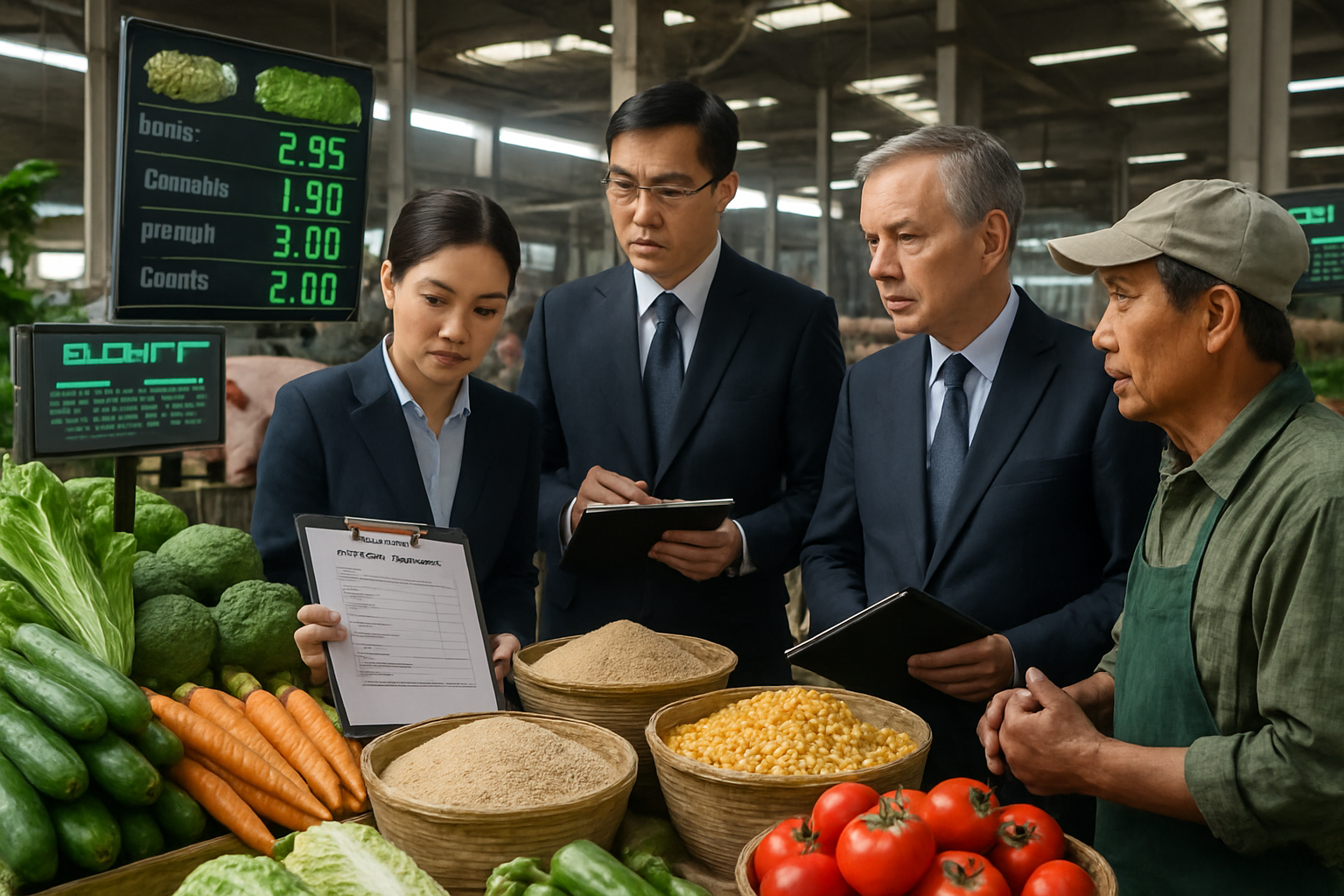
A coordinated wave of agricultural and food security initiatives across Burkina Faso, Kuwait, and Oman in February 2026 signals a strategic shift toward proactive resilience building as nations grapple with mounting food system pressures and the persistent challenge of climate adaptation during the 18th consecutive month of global temperatures exceeding 1.5°C above pre-industrial levels.
The synchronized efforts represent a sophisticated understanding that food security requires both immediate interventions and long-term structural reforms, combining traditional agricultural knowledge with modern supply chain management and strategic market oversight.
Burkina Faso's Agricultural Resilience Program Expands
In Ouagadougou, Secretary General Gaoussou Sanou of the Ministry of Agriculture launched the seventh support mission of the West Africa Food System Resilience Programme (PRSA-BF) on February 17, 2026. The World Bank-supported initiative has achieved remarkable success, reaching more than 544,000 people as of February 15, 2026.
The program, officially launched in 2022, represents a comprehensive approach to agricultural transformation that extends far beyond simple food distribution. Dr. Éric H. Abiassi, the World Bank representative, and national coordinator Salif Tentika emphasized the initiative's focus on environmental and social safeguards while building sustainable agricultural capacity.
"This program provides an opportunity for stakeholders to analyze progress across different areas while ensuring compliance with environmental and social safeguard measures,"
— Gaoussou Sanou, Secretary General, Ministry of Agriculture, Burkina Faso
The PRSA-BF initiative demonstrates the evolution from emergency food aid to systematic agricultural development, addressing the root causes of food insecurity through farmer training, improved seed varieties, and climate-resilient farming techniques. This approach has proven particularly effective in West Africa, where traditional farming practices are being enhanced rather than replaced by modern agricultural science.
Kuwait Intensifies Market Oversight Ahead of Ramadan
Kuwait's Ministry of Commerce and Industry announced the successful completion of comprehensive market inspections across consumer goods markets, finding no cases of monopoly practices or artificial price increases as the nation prepares for Ramadan. The initiative reflects a proactive approach to maintaining price stability during periods of increased consumer demand.
Commercial control teams conducted extensive field inspections at shops selling essential consumer products under direct ministerial guidance, demonstrating strong government commitment to consumer protection. The monitoring revealed strong retailer compliance with approved pricing mechanisms, a development welcomed by shoppers who have experienced price volatility in other markets.
However, inspectors did identify violations related to product weight shortages, issuing 12 violation reports to businesses that failed to meet weight standards. This attention to detail demonstrates Kuwait's comprehensive approach to market integrity, addressing not only pricing but also product quality and consumer value.
The success of Kuwait's price monitoring system provides a template for other nations facing similar challenges during peak consumption periods. The combination of regular inspections, clear pricing guidelines, and swift enforcement appears to have created an effective framework for maintaining market stability.
Oman's Comprehensive Supply Chain Coordination
Markets and shopping centers across Oman demonstrate exceptional readiness for Ramadan through coordinated efforts between government entities and private sector players. The comprehensive approach has secured supplies, stabilized prices, and ensured smooth market operations during the critical pre-Ramadan period.
The Ministry of Agriculture, Fisheries and Water Resources reported impressive import statistics, with 129,875 live animals imported since early February 2026, including 9,456 cattle and 120,419 sheep. Additionally, 88 import permits were approved, reinforcing supply chains to meet anticipated Ramadan demand.
The ministry's coordination with fish marketing firms, transporters, and retailers has established robust contingency plans for maintaining fish availability throughout Ramadan. This comprehensive planning approach demonstrates the sophisticated supply chain management required for food security in modern economies.
Businesses have moved proactively to manage anticipated demand surges by increasing inventories, diversifying import sources, and streamlining supply chains. This private sector response, combined with government coordination, creates a resilient food system capable of meeting seasonal demand variations.
Global Context: Climate Pressures and Agricultural Innovation
These February 2026 developments occur within the broader context of unprecedented global climate challenges. January 2026 marked the hottest month in recorded history, representing the 18th consecutive month of temperatures exceeding 1.5°C above pre-industrial levels. This sustained warming pattern has disrupted traditional agricultural cycles worldwide, forcing rapid adaptation strategies.
The coordinated response across Burkina Faso, Kuwait, and Oman reflects lessons learned from previous food security crises documented in early 2026, including cocoa sector challenges in Ghana, agricultural recovery programs in Ecuador, and livestock development initiatives across multiple African nations.
Technology-Traditional Knowledge Integration
The success of these initiatives demonstrates the critical importance of integrating modern technology with traditional agricultural knowledge. Burkina Faso's PRSA program respects existing community structures while introducing contemporary business development practices. Kuwait's monitoring system leverages digital tracking capabilities while maintaining traditional market relationships. Oman's supply chain coordination combines modern logistics with established trading partnerships.
This synthesis represents a matured understanding that agricultural development cannot succeed through top-down technology transfer alone, but requires careful integration with local knowledge systems and community ownership principles.
Economic Development and Regional Cooperation
The economic implications extend beyond immediate food security improvements. Burkina Faso's program creates sustainable rural employment and strengthens agricultural value chains. Kuwait's price stabilization protects consumer purchasing power while supporting producer incomes. Oman's comprehensive supply management demonstrates how strategic import coordination can enhance food security without compromising domestic agricultural development.
These initiatives contribute to broader regional integration efforts, including the African Continental Free Trade Agreement (AfCFTA) objectives and Gulf Cooperation Council coordination mechanisms. Success in food security cooperation often serves as a foundation for broader economic partnerships.
Implementation Challenges and Success Factors
Despite significant achievements, these programs face common challenges that affect agricultural development initiatives worldwide. Funding sustainability remains a critical concern, particularly for developing nations where immediate economic pressures can override long-term planning considerations.
Technical capacity building requires sustained investment in education, training, and institutional development. Climate change continues to disrupt project timelines, requiring adaptive management capabilities that can respond to rapidly changing environmental conditions.
The diversity of approaches across these three nations provides resilience against single-solution dependencies, offering multiple adaptation pathways that can be modified based on local conditions and resource availability.
Strategic Significance for Global Food Security
The combination of immediate crisis response capabilities, strategic market interventions, and long-term infrastructure development demonstrated across these three initiatives provides comprehensive approaches to addressing multiple food security dimensions simultaneously.
These models could be adapted and scaled to similar contexts worldwide, contributing to the development of resilient global food systems capable of serving growing populations amid accelerating environmental change. The window for building such resilient, equitable food systems is narrowing rapidly, making these February 2026 experiments crucial for global food security planning.
The success of these diverse development pathways – from community-based agricultural training in Burkina Faso to sophisticated supply chain management in Oman – demonstrates that flexibility, innovation, and strategic thinking have become essential for navigating complex global agricultural markets while maintaining food security for vulnerable populations.
As the international community continues to grapple with the interconnected challenges of climate change, population growth, and economic instability, these February 2026 initiatives provide valuable templates for proactive resilience building rather than reactive crisis management.