Four nations are pioneering revolutionary approaches to food security through cutting-edge agricultural technology, strategic partnerships, and innovative farming practices, as global food systems face unprecedented challenges during the 19th consecutive month of temperatures exceeding 1.5°C above pre-industrial levels.
From nano fertilizers boosting crop yields in Malawi to strategic trade partnerships addressing supply chain vulnerabilities, countries are demonstrating remarkable adaptability in addressing mounting food security concerns amid global uncertainties including geopolitical tensions and climate disruption.
Nano Technology Revolutionizes African Agriculture
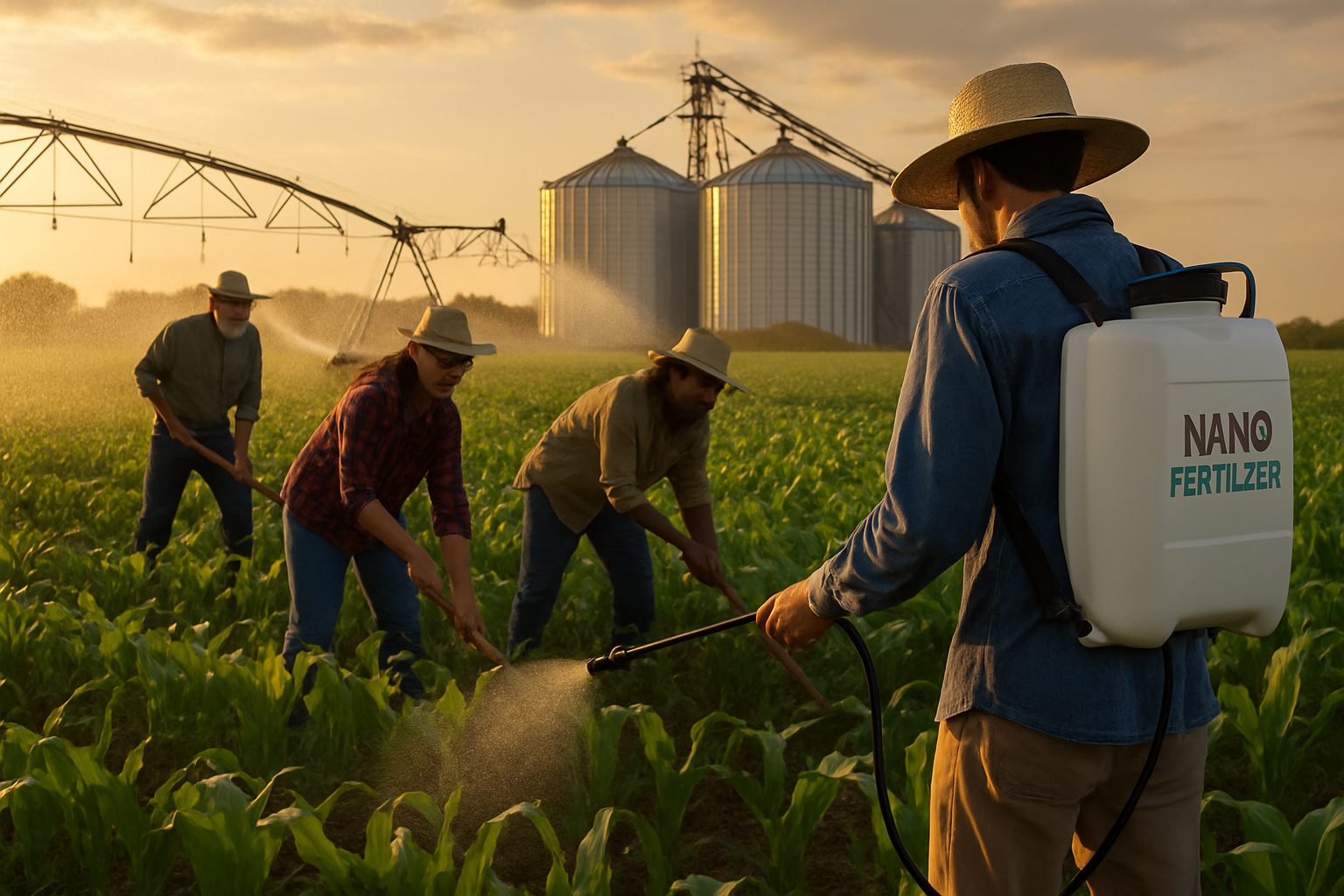
In the highlands of Mzimba, Malawi, farmer Samson Munthali represents a quiet revolution transforming African agriculture. After more than two decades of struggling to harvest fewer than ten 50-kilogram bags of maize from his two-acre farm, Munthali is experiencing his first truly encouraging farming season thanks to groundbreaking nano fertilizer technology.
"It was a struggle. I was just farming because I wanted to have something to sustain me in terms of food," Munthali explained to reporters at his John Munthali Village farm in Traditional Authority Kampingo Sibande. The transformation has been dramatic enough to draw fellow farmers to admire his healthy crops, marking a significant departure from years of disappointing harvests.
The nano fertilizer breakthrough represents a sophisticated technological advancement addressing multiple agricultural challenges simultaneously. Unlike conventional fertilizers, nano-scale nutrients provide enhanced precision in plant uptake, reduced environmental runoff, and improved cost-effectiveness for smallholder farmers who have historically been excluded from agricultural modernization programs.
Supply Chain Vulnerabilities Exposed
Meanwhile, geopolitical tensions are revealing critical vulnerabilities in global food supply chains. Maritime disruptions caused by conflicts with Iran are affecting not only oil markets but also food security in Gulf Arab states, highlighting the interconnected nature of global food distribution systems.
These supply chain challenges underscore findings from comprehensive agricultural investigations across multiple continents, where experts have identified recurring patterns of disruption affecting food availability from the Americas to Southeast Asia. The convergence of climate change, geopolitical instability, and economic pressures creates a perfect storm threatening global food security.
"The situation demonstrates how quickly local conflicts can cascade into regional food security challenges, particularly affecting vulnerable populations who depend on reliable food imports," — International Food Security Expert
Strategic Agricultural Partnerships Emerge
Egypt is pioneering innovative approaches to food security through strategic international cooperation. The General Union of Producers and Exporters of Horticultural Crops, under the Ministry of Agriculture and Land Reclamation, has launched comprehensive initiatives improving potato production and seed quality through Dutch partnerships.
This Egyptian-Netherlands collaboration represents a sophisticated model of South-South and North-South cooperation combining advanced Dutch agricultural technology with Egyptian agricultural expertise and favorable growing conditions. The partnership addresses both immediate food production needs and long-term agricultural sustainability through improved seed varieties and enhanced cultivation techniques.
The timing of such initiatives proves crucial as global food systems face mounting pressures. Historical analysis reveals that countries implementing proactive agricultural partnerships during crisis periods demonstrate greater resilience and food security outcomes compared to nations pursuing purely domestic strategies.
Economic Implications and Market Dynamics
The Democratic Republic of Congo is addressing food security from an economic perspective through wage policy reforms. The implementation of a new minimum wage of 21,500 Congolese Francs represents efforts to enhance purchasing power for workers, directly impacting food accessibility for urban populations.
This economic approach highlights the multifaceted nature of food security challenges, where agricultural production advances must be accompanied by policies ensuring populations can afford adequate nutrition. The relationship between wages, food prices, and accessibility creates complex policy challenges requiring coordinated approaches across agricultural, economic, and social sectors.
Climate Adaptation Strategies
All four initiatives emerge within the context of unprecedented climate challenges. January 2026 marked the 19th consecutive month of global temperatures exceeding 1.5°C above pre-industrial levels, creating agricultural system stress worldwide that requires immediate adaptation strategies.
The nano fertilizer technology in Malawi provides climate resilience through enhanced nutrient efficiency during irregular rainfall patterns. Egyptian-Dutch partnerships focus on developing drought-resistant and climate-adaptive crop varieties essential for maintaining productivity under changing environmental conditions.
Historical data from similar climate transition periods demonstrates that countries investing in agricultural adaptation during crisis periods achieve better long-term food security outcomes compared to nations pursuing reactive approaches after crises develop.
Technology-Traditional Knowledge Integration
A critical success factor across these initiatives involves sophisticated integration of cutting-edge technology with traditional agricultural knowledge. Malawi's nano fertilizer application builds upon generations of farming wisdom while introducing scientific precision. Egypt's partnership program respects established cultivation practices while incorporating advanced breeding techniques and precision agriculture methods.
This synthesis approach has proven more effective than purely technological solutions that ignore local farming traditions and community structures. Agricultural development experts increasingly recognize that sustainable food security requires approaches combining modern science with traditional ecological knowledge and community-based management systems.
International Cooperation Frameworks
The convergence of these developments reflects broader patterns of enhanced international cooperation in addressing food security challenges. Unlike traditional North-South aid relationships, emerging partnerships emphasize mutual benefit, technology sharing, and capacity building that strengthens agricultural systems in all participating countries.
Regional integration frameworks, including the African Continental Free Trade Agreement, are enabling agricultural partnerships across national boundaries, creating shared value chains and collective responses to food security challenges that individual nations cannot address independently.
Economic Development Beyond Farming
These initiatives demonstrate how agricultural development functions as an economic development engine extending far beyond farm-level improvements. Nano fertilizer technology creates employment in biotechnology sectors while supporting rural incomes. Strategic partnerships generate export opportunities and foreign currency earnings. Wage policies enhance urban food accessibility and consumer purchasing power.
The economic multiplier effects include enhanced rural employment, improved transportation networks, expanded processing capabilities, and increased international trade opportunities that strengthen entire economic systems rather than just agricultural sectors.
Implementation Challenges and Opportunities
Despite promising developments, significant implementation challenges remain across all initiatives. Funding sustainability presents ongoing concerns for developing nations where immediate economic pressures often override long-term agricultural investments. Technical capacity building requires sustained educational investment, institutional development, and knowledge transfer that extends beyond initial technology deployment.
Climate change disrupts project timelines and agricultural cycles, requiring adaptive management approaches that can respond to rapidly changing environmental conditions. Success depends on sustained political commitment, community engagement, international cooperation, and recognition of food security as a global public good requiring coordinated action.
Future Implications
The convergence of these innovations during March 2026 represents a critical juncture for global food security. The combination of technological breakthroughs, strategic partnerships, economic reforms, and climate adaptation strategies provides templates for scaling interventions globally through community empowerment, international cooperation, and technology-traditional knowledge integration.
Success in these pioneering initiatives could determine whether agricultural innovation keeps pace with accelerating climate change while serving growing global populations. The window for building resilient, equitable food systems continues narrowing rapidly, making coordinated responses more crucial than ever for ensuring global food security during this critical climate action decade.
As demonstrated by farmer Samson Munthali's transformation from struggling subsistence to productive agriculture, the human dimension remains central to sustainable solutions. Millions of farmers, food workers, and vulnerable communities worldwide depend on stable, fair global food systems that balance immediate humanitarian needs with long-term sustainability requirements.