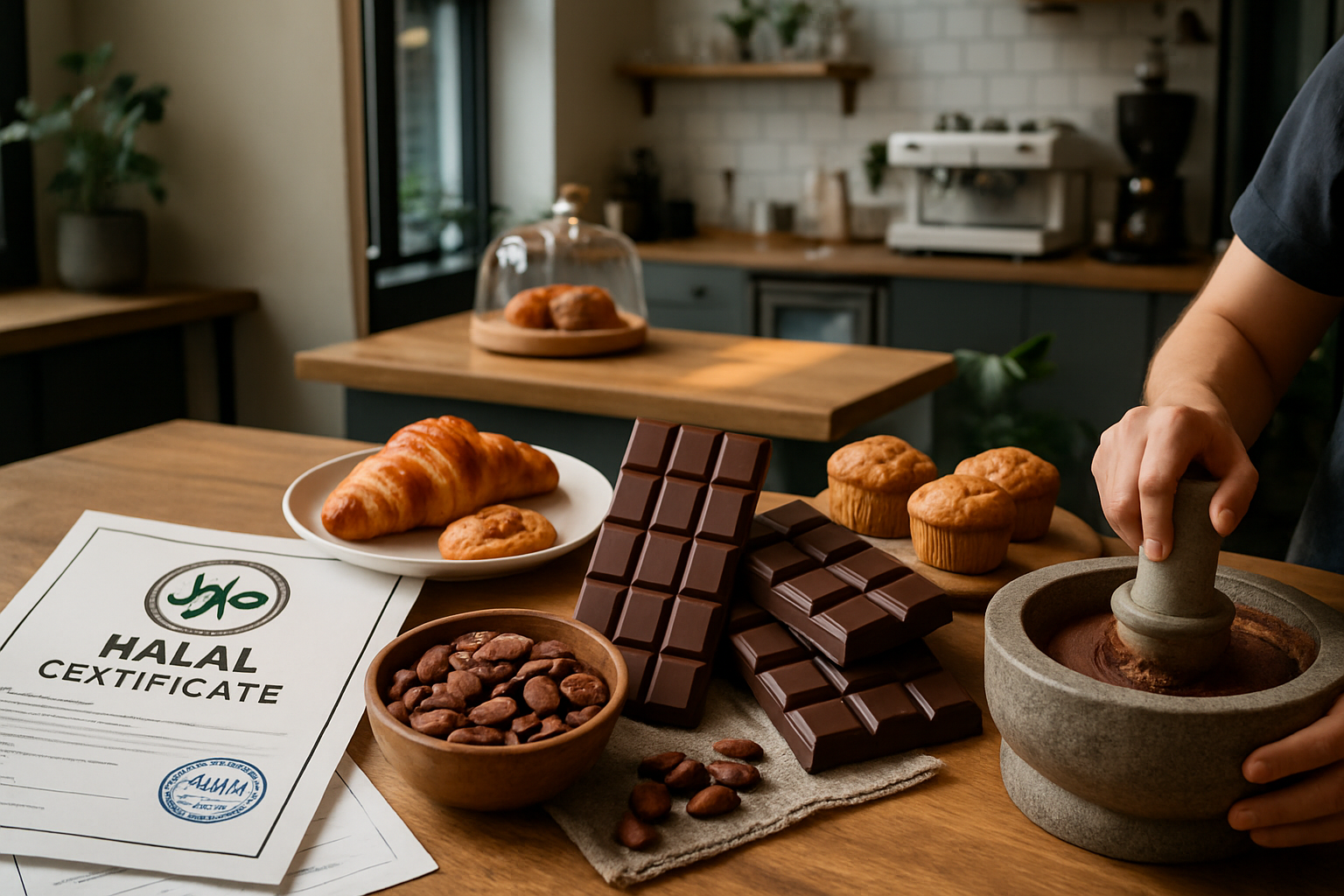
A comprehensive transformation is sweeping through the global food industry, marked by unprecedented expansion in halal certification programs and fundamental shifts in chocolate production that are reshaping how millions experience their daily meals and treats.
From Indonesia's bustling streets to Panama's cacao farms and Singapore's modern bakeries, February 2026 has witnessed remarkable developments that highlight the dynamic evolution of food systems worldwide. These changes reflect broader consumer demands for authenticity, quality, and cultural accommodation in an increasingly interconnected culinary landscape.
Indonesia Leads Halal Certification Revolution
The city of Medan, North Sumatra, has emerged as a focal point for Indonesia's ambitious halal certification initiative. Local authorities recently granted halal certification to 100 small and medium enterprises (SMEs), representing a significant milestone in the country's effort to boost consumer confidence and expand market reach for local food products.
This certification wave extends far beyond simple religious compliance. According to industry observers, the halal certification process has become a comprehensive quality assurance system that enhances food safety standards, improves supply chain transparency, and opens new international market opportunities for Indonesian producers.
The initiative in Medan reflects Indonesia's strategic position as the world's largest Muslim-majority nation, where halal certification has evolved into a crucial competitive advantage. Small businesses that previously operated in local markets are now positioned to access global halal food networks worth hundreds of billions of dollars annually.
"Halal certification is not just about religious compliance anymore – it's about quality, transparency, and market access," explained a food industry analyst familiar with Southeast Asian markets.
— Industry Expert on Indonesian Food Markets
Singapore's Bakery Chain Embraces Halal Standards
Simultaneously, Singapore witnessed a significant development as Paris Baguette, the South Korean bakery-cafe chain, announced that all its outlets in the city-state are now officially halal-certified. This move represents a strategic expansion of halal food options in Singapore's diverse culinary landscape.
The certification of Paris Baguette's Singapore operations demonstrates the growing commercial importance of halal certification in multicultural societies. Singapore's reputation as a food hub has been enhanced by its ability to accommodate diverse dietary requirements while maintaining high culinary standards.
This development also reflects broader trends in the Asian food service industry, where international chains are increasingly adapting their operations to meet local religious and cultural requirements. The success of such adaptations often determines the long-term viability of foreign food brands in Muslim-majority regions.
The Chocolate Conundrum: When Taste Memories Fade
While halal certification represents expansion and inclusion, the chocolate industry faces a more complex challenge rooted in changing production methods and evolving consumer expectations. Lyn Bishop, founder of Quetzal Cacao and a certified organic farmer in Panama, has witnessed firsthand how chocolate has transformed over the past two decades.
Bishop's observations, drawn from over a decade of cacao farming experience since 2011, reveal a fundamental shift in how chocolate is produced, processed, and ultimately experienced by consumers. Her insights provide a rare perspective from someone who has observed the industry transformation from farm to finished product.
"I've been a cacao farmer in Panama since 2011. Long before I was making chocolate, I was someone who loved it. I loved how a little went a long way, how a small piece was enough, and how it melted slowly and stayed with you after the last bite."
— Lyn Bishop, Founder, Quetzal Cacao
According to Bishop, many consumers now report that chocolate "doesn't taste the way it used to." This sentiment, particularly common among those who remember chocolate from before 2000, reflects significant changes in production methods, ingredient sourcing, and processing techniques that have occurred over the past quarter-century.
Industrial vs. Artisanal: The Great Chocolate Divide
Today's chocolate market presents a stark contrast between mass-produced products and artisanal offerings. Modern industrial chocolate is often described as smoother, sweeter, and more widely available than ever before. Walk through any supermarket chocolate aisle and the options seem endless, yet Bishop and others in the artisanal chocolate community argue that this abundance comes at the cost of complexity and authenticity.
The transformation of chocolate production has been driven by several factors: cost reduction pressures, supply chain standardization, and consumer preferences for consistency and sweetness. However, these changes have also led to what some describe as a homogenization of chocolate flavors and textures.
Industrial processing methods, while efficient and cost-effective, often involve higher temperatures, extended processing times, and the addition of various stabilizers and emulsifiers. These techniques can alter the fundamental character of cacao, reducing the subtle flavor notes that distinguish different growing regions and processing methods.
The Memory of Taste: Cultural and Sensory Loss
Bishop's observations tap into a broader phenomenon that food scientists and cultural historians have begun to document: the erosion of taste memory across generations. The chocolate that many adults remember from their childhood was often produced using different methods, with different ingredient ratios, and from cacao sourced through different supply chains.
This shift has implications beyond individual consumer satisfaction. Traditional chocolate-making knowledge, passed down through generations of producers, faces displacement by standardized industrial processes. The result is not just a change in flavor, but a potential loss of cultural heritage embedded in food production methods.
The phenomenon extends beyond chocolate to other traditional foods, where industrialization has prioritized efficiency and cost-effectiveness over the preservation of traditional flavors and production methods. This tension between tradition and modernity represents one of the defining challenges of contemporary food systems.
Convergence of Trends: Quality, Authenticity, and Access
The developments in halal certification and chocolate production, while seemingly unrelated, reflect broader themes shaping the global food industry in 2026. Both trends highlight consumer demands for authenticity, quality assurance, and cultural accommodation.
The expansion of halal certification programs demonstrates how religious and cultural requirements can drive improvements in food safety, supply chain transparency, and market access. Meanwhile, the chocolate industry's grappling with changing consumer perceptions reveals the challenges of maintaining traditional qualities while meeting contemporary production and distribution demands.
These parallel developments occur within the context of broader food system transformations documented throughout 2026. From climate adaptation challenges to supply chain vulnerabilities, the food industry faces unprecedented pressures to balance efficiency, sustainability, and cultural authenticity.
Economic Implications and Market Dynamics
The economic significance of these trends extends far beyond individual companies or regions. The global halal food market, valued at hundreds of billions of dollars, continues to expand as certification programs become more sophisticated and widespread. Indonesia's initiative to certify 100 SMEs in Medan alone represents millions of dollars in potential market access for these businesses.
Similarly, the chocolate industry's evolution reflects broader economic forces within agricultural commodities and food processing. Panama's cacao farmers, like Bishop, represent a growing artisanal sector that commands premium prices by emphasizing quality, origin, and traditional processing methods.
These developments also highlight the growing importance of food authenticity and traceability in consumer decision-making. Whether through halal certification or artisanal chocolate production, consumers increasingly seek products that align with their values and expectations for quality and authenticity.
Technology and Tradition: Finding Balance
Both halal certification expansion and chocolate production evolution demonstrate the complex relationship between technological advancement and traditional practices. Halal certification has benefited from modern supply chain management, digital tracking systems, and scientific testing methods that enhance compliance and consumer confidence.
Conversely, the chocolate industry's challenges illustrate how technological efficiency can sometimes compromise traditional qualities that consumers value. The key for many food producers lies in finding optimal balances between efficiency and authenticity, scalability and quality.
This balance becomes increasingly important as global food systems face mounting pressures from climate change, population growth, and evolving consumer preferences. Success often requires innovative approaches that leverage technology to enhance rather than replace traditional production methods.
Looking Forward: Sustainable Food Evolution
The trends observed across Indonesia, Singapore, and Panama reflect broader patterns likely to shape food systems throughout 2026 and beyond. The expansion of halal certification programs suggests growing consumer influence over food production standards, while the chocolate industry's evolution highlights the ongoing tension between industrial efficiency and artisanal quality.
These developments occur within the context of broader food system challenges, including climate adaptation requirements, supply chain resilience needs, and the imperative to feed growing global populations while maintaining cultural food traditions.
Success in this evolving landscape will likely require food producers, regulators, and consumers to work together in developing systems that can deliver quality, authenticity, and accessibility simultaneously. The experiences in Indonesia, Singapore, and Panama provide valuable insights into how different approaches to these challenges can succeed in diverse cultural and economic contexts.
As 2026 progresses, these food industry transformations will likely accelerate, driven by continued consumer demands for quality, authenticity, and cultural accommodation. The ability of food systems to adapt while preserving essential qualities will determine not just commercial success, but the preservation of cultural heritage embedded in global culinary traditions.