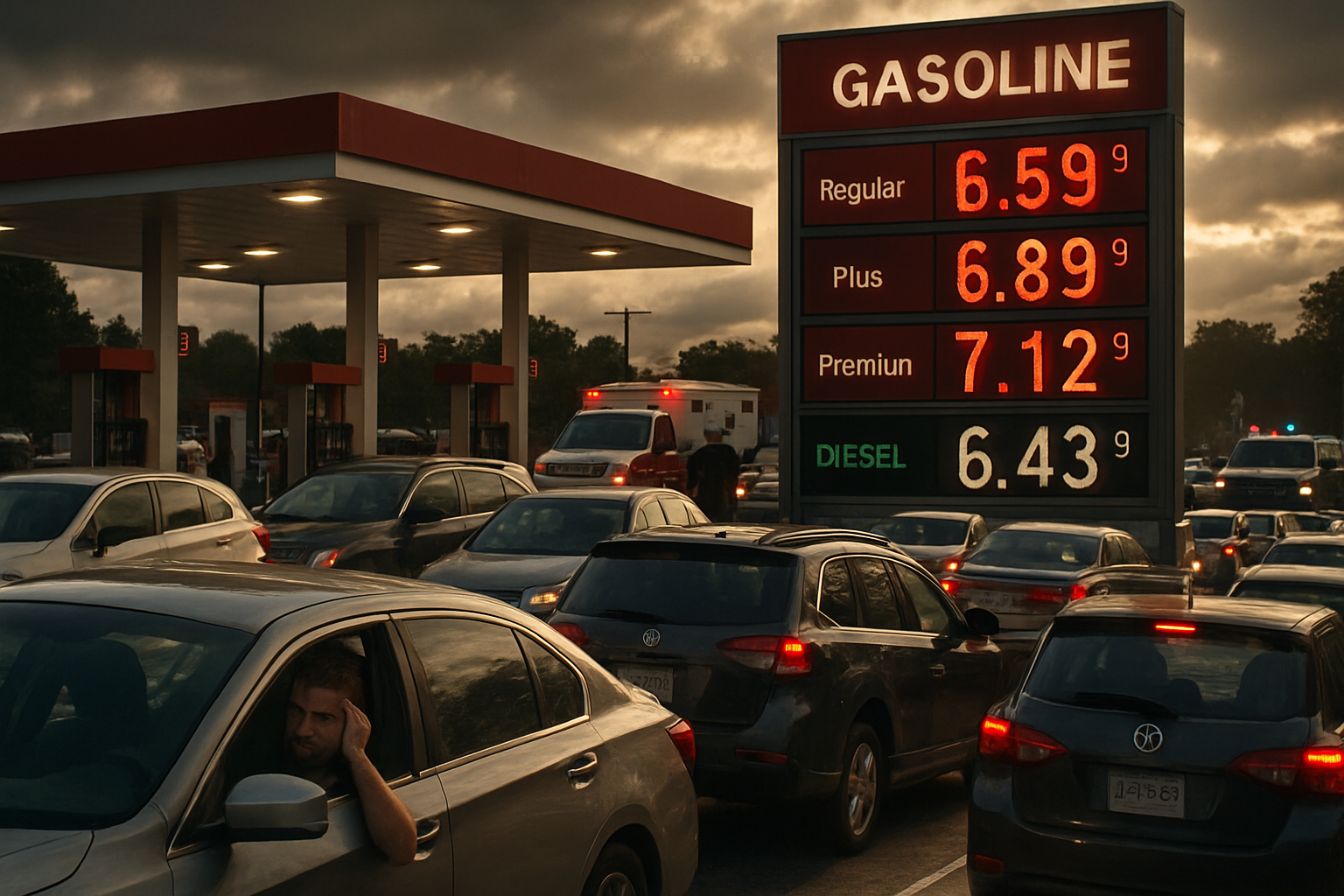
Countries across the globe are implementing emergency fuel price measures and releasing strategic petroleum reserves as the Middle East conflict drives oil prices above $100 per barrel for the first time since 2022, creating the most severe energy crisis in decades.
From Azerbaijan's crude oil hitting $132 per barrel to widespread fuel rationing in Bangladesh affecting 170 million people, the current crisis represents an unprecedented challenge to global energy security. The situation has triggered the largest strategic petroleum reserve release in history, with the International Energy Agency coordinating the deployment of 400 million barrels from 32 countries.
Emergency Government Interventions Worldwide
The scale of government responses has been extraordinary, with nations abandoning traditional free-market approaches to protect consumers from soaring fuel costs. In Bolivia, the Senate approved the elimination of the Financial Transaction Tax (ITF) and restored the full VAT tax credit for fuel purchases, representing a significant shift in fiscal policy to address energy affordability.
Italy announced plans for another fuel tax cut of 24.4 cents per liter, extending previous emergency measures through April 30. Meanwhile, Latvia has observed dramatic price fluctuations at fuel stations, with diesel prices varying by seven cents per liter between major suppliers despite temporary excise tax reductions taking effect.
Norway's implementation of fuel tax cuts has been met with mixed reactions from consumers, who report that prices remain "absurdly high" despite the government intervention. "Finally!" was the sentiment expressed by many Norwegian motorists, though concerns persist about the long-term effectiveness of the measures.
United States Faces Regional Fuel Shortages
In the United States, gasoline prices have surged above $4 per gallon in many regions, with tensions involving Iran pushing West Texas Intermediate crude over $100 per barrel. New York drivers report paying up to $80 to fill their tanks while bracing for further increases as the situation in the Middle East remains volatile.
"This is creating serious inflation concerns across the board. We're seeing the ripple effects throughout the entire economy."
— Energy Industry Analyst
The crisis has prompted the Biden administration to consider additional strategic petroleum reserve releases, while state governments monitor fuel distribution networks to prevent shortages and price gouging.
European Nations Coordinate Emergency Response
Greece has reinstated the Fuel Pass subsidy program, marking a return to direct government intervention in fuel markets as the global energy crisis intensifies. The European Union has issued urgent directives to all 27 member states to maximize natural gas storage levels and prepare emergency energy protocols.
Hungary has implemented immediate price caps on gasoline and diesel to counter what Prime Minister Viktor Orbán described as "war-driven price explosions." France deployed 500 fuel station inspectors to prevent price manipulation, while Romania developed five comprehensive scenarios to prevent diesel from exceeding 10 lei per liter.
Austria's Finance Minister Magnus Brunner announced a comprehensive fuel price brake system that redistributes excess fuel tax revenues back to consumers, representing one of Europe's most sophisticated crisis response mechanisms.
Asia-Pacific Region Grapples With Supply Disruption
Pakistan faces acute challenges with fuel prices reaching Rs321.17 per liter, the highest in South Asia. The government has announced that both petrol and diesel prices are set to increase further within days, with officials considering targeted subsidies for motorcyclists and farmers while passing international cost pressures to general consumers.
Romania has seen historic fuel price highs, with gasoline reaching 8.82 lei per liter and diesel at 9.39 lei per liter – the highest in the country's history. Government officials are working to prevent diesel from crossing the psychologically important 10 lei threshold through various emergency measures.
Strategic Reserve Deployment
The International Energy Agency's coordination of strategic petroleum reserve releases represents the largest such deployment in the organization's 50-year history. Japan is releasing 80 million barrels – the first such action since the 2011 Fukushima disaster – highlighting the severity of the current situation given the country's 95% dependence on Middle Eastern oil.

Root Causes and Market Dynamics
The current crisis stems from Iran's Revolutionary Guard declaration that the Strait of Hormuz is "unsafe for shipping," effectively blocking 40% of global seaborne oil transit through the critical 21-mile chokepoint. This action follows the complete collapse of US-Iran nuclear negotiations despite what had been described as the most promising diplomatic progress since 2018.
Major shipping companies including Maersk and MSC have suspended operations in the Persian Gulf, leaving more than 150 oil and LNG tankers stranded with billions of dollars worth of cargo. The aviation industry has been severely impacted, with over 18,000 flights cancelled worldwide – the most extensive disruption since the COVID-19 pandemic.
Consumer Impact and Economic Consequences
The human cost of the crisis is becoming increasingly apparent across all affected regions. In Bangladesh, fuel rationing affects 170 million people, while Bosnia-Herzegovina has been reduced to just two days of gas reserves. Sweden faces electricity price increases of 10-20 öre and gasoline increases of 1-2 kronor per liter, with the Malmö region particularly exposed due to continental integration.
Ireland has seen heating oil approach €2 per liter, prompting government officials to condemn what they term "brazen rip-offs" in the energy sector. The Philippines has declared a year-long "national energy emergency" as diesel approaches 100 pesos per liter, triggering nationwide transport strikes.
Financial Market Implications
Global financial markets have experienced severe volatility, with Pakistan's KSE-100 index recording its largest single-day decline in history at -8.97%. South Korea's KOSPI dropped 12%, triggering circuit breakers as the Korean won hit a 17-year low. Central banks including the European Central Bank and Bank of Japan are coordinating emergency liquidity measures to prevent broader financial contagion.
"This represents the most severe energy security crisis in decades, exposing dangerous over-dependence on strategic chokepoints."
— Samuel Ciszuk, Energy Security Analyst
Long-term Implications for Energy Security
The crisis has exposed fundamental vulnerabilities in global energy architecture, particularly the dangerous over-dependence on strategic chokepoints that can be weaponized in geopolitical conflicts. The 21-mile Strait of Hormuz represents a single point of failure for modern logistics systems, with no realistic alternatives capable of handling the diverted volume.
Qatar's Energy Minister Saad Al Kaabi has warned that Gulf states may declare force majeure "within weeks" if oil prices approach $150 per barrel, which could "bring down the economies of the world." This unprecedented warning underscores the severity of the current situation and the potential for economic catastrophe if the crisis continues.
Technology and Innovation Responses
The crisis is accelerating interest in alternative energy solutions, with Germany reporting a massive surge in electric vehicle searches as consumers seek to avoid volatile fuel costs. However, experts note that supply diversification and renewable energy transitions require years or decades to implement fully, leaving nations vulnerable during the critical interim period.
Estonia's energy independence model, featuring 88% renewable electricity generation and continental Europe's largest battery storage system serving 90,000 households, is increasingly viewed as a template for other nations seeking to reduce their dependence on volatile fossil fuel markets.
International Cooperation and Diplomacy
The crisis represents what UN Secretary-General António Guterres has called "the greatest test of multilateral cooperation and crisis management in the modern era." The coordinated response involving strategic reserve releases, diplomatic initiatives, and economic measures demonstrates both the potential for international cooperation and the limitations of current crisis management frameworks.
Recovery timelines remain uncertain, as the situation depends on military and diplomatic resolution rather than predictable economic factors. Unlike weather-related disruptions, the current crisis affects critical infrastructure and international relationships simultaneously, requiring fundamentally different response approaches.
Looking Forward
As the situation continues to evolve, governments worldwide are reassessing their energy security strategies and crisis response capabilities. The events of 2026 are likely to serve as a watershed moment, establishing new paradigms for energy security planning and requiring fundamental transformation to reduce dependence on strategic chokepoints.
The success or failure of current intervention measures will influence energy governance approaches for decades to come, with implications extending far beyond immediate fuel costs to encompass international stability mechanisms, supply chain resilience, and the balance between diplomatic and military solutions in 21st-century conflict resolution.
This energy crisis represents the most consequential test of global cooperation since the end of the Cold War, with outcomes that will shape international relations and energy policy for generations to come.