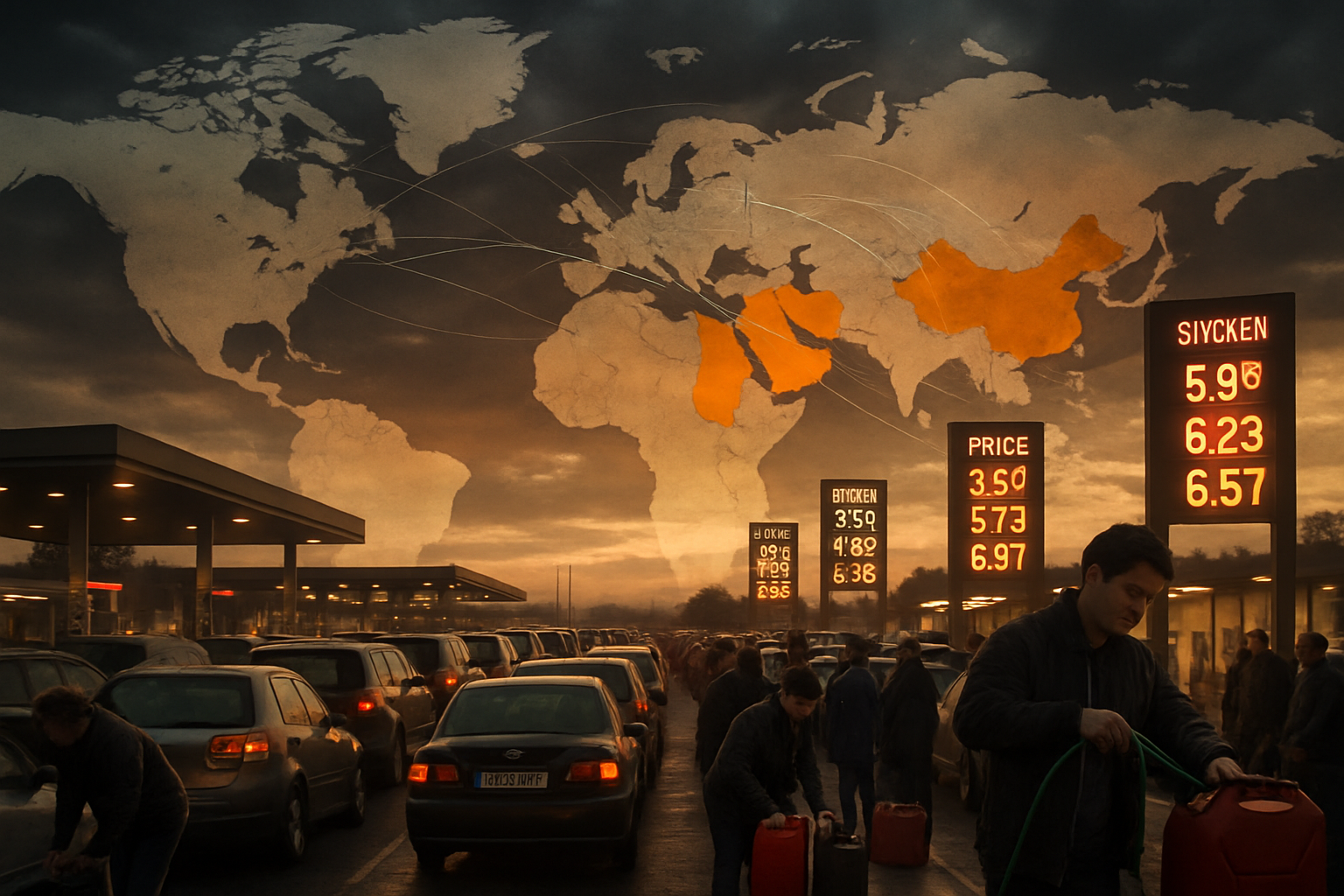
Governments across Europe, Asia, and the Americas are implementing emergency measures to control spiraling fuel costs as the Middle East conflict creates the most severe global energy security crisis in decades, with oil prices surging past $80 per barrel and gasoline shortages triggering panic buying from Montenegro to New Zealand.
The crisis began when Iran's Revolutionary Guard declared the Strait of Hormuz "unsafe" on March 8, effectively closing a chokepoint that handles 40% of global seaborne oil transit. This dramatic escalation of the ongoing Middle East conflict has sent shockwaves through energy markets worldwide, forcing governments to deploy emergency reserves and consider drastic tax cuts to prevent economic collapse.
European Governments Act Swiftly
In France, Prime Minister Sébastien Lecornu announced an exceptional enforcement plan with 500 inspections of fuel stations between Monday and Wednesday to prevent price manipulation. "The war in the Middle East cannot serve as a pretext for abusive price increases at the pump," Lecornu declared on social media platform X, signaling a zero-tolerance approach to profiteering.
French authorities are particularly concerned about retailers exploiting consumer fears to inflate prices beyond what global market conditions justify. The government has mobilized regulatory agencies to monitor pricing across the country's 11,000 fuel stations.
In Romania, Energy Minister Bogdan Ivan revealed the government has five scenarios on the table to prevent diesel prices from exceeding 10 lei per liter (approximately $2.20). These measures include temporary reductions in taxes and excises, which currently comprise nearly 70% of fuel's final price.
"We have mechanisms to intervene starting next week if necessary. The state will reduce taxes and excises for a limited period to protect consumers,"
— Bogdan Ivan, Romanian Energy Minister
Romania's approach reflects a broader European strategy of using fiscal policy as a buffer against energy price shocks, building on lessons learned from previous crises.
Panic Spreads Across the Balkans
Montenegro has emerged as a flashpoint for fuel-related panic, with enormous queues forming at gas stations following warnings from the Oil Companies Association about potential supply disruptions and price increases. The Association warned that current international procurement prices significantly exceed maximum retail prices set by existing regulations, forcing companies to operate at losses.
"There is a serious risk of fuel supply interruption and price increases," the Oil Companies Association of Montenegro stated, triggering immediate panic buying across the country.
Social media footage from Montenegro shows unprecedented scenes of motorists waiting hours to fill their tanks, while some stations have begun rationing fuel sales per customer.
Global Supply Chain Disruption
The crisis extends far beyond Europe. In New Zealand, Waitomo Group CEO Simon Parham reported that demand at the company's petrol stations surged 15-20% over the past week as drivers rushed to fill up before anticipated price increases.
"We're seeing panic buying behavior similar to what we experienced during the early stages of COVID-19," Parham told Morning Report, highlighting how geopolitical events thousands of miles away can instantly impact local markets in an interconnected global economy.
The surge in demand has strained New Zealand's fuel distribution networks, with some rural stations reporting temporary shortages as delivery schedules struggle to keep pace with hoarding behavior.
Industry Warns of Structural Vulnerabilities
In Ireland, the haulage industry is sounding alarm bells about the broader economic implications. The Irish Hauliers Association warned of potential protests over rising fuel prices, citing escalating costs on top of increased tolls, new charges at Dublin port, and a host of other government-imposed taxes and charges.
Industry representatives argue their sector faces collapse due to compounding cost pressures, with fuel representing the largest single expense for transportation companies. The warning comes as Ireland's economy remains heavily dependent on efficient logistics networks for trade with continental Europe.
Strategic Response Measures
Governments are deploying multiple strategies to address the crisis:
- Emergency Reserves: Countries are considering tapping strategic petroleum reserves, with Japan contemplating its first deployment since the 2011 Fukushima disaster
- Tax Relief: Multiple nations are exploring temporary reductions in fuel taxes and excises
- Price Controls: Some governments are implementing or considering retail price caps
- Supply Diversification: Accelerated efforts to secure alternative supply routes and suppliers
- Market Monitoring: Enhanced surveillance to prevent price manipulation and profiteering
Historical Context and Precedents
The current crisis evokes memories of the 1970s oil shocks, but with crucial differences. Today's global economy is more interconnected, with just-in-time supply chains that offer little buffer against disruptions. Additionally, the concentration of oil transit through strategic chokepoints like the Strait of Hormuz creates single points of failure that can instantly affect global markets.
Energy analysts warn that the 21-mile-wide Strait of Hormuz represents a geographic vulnerability that has no realistic alternative. While other routes through the Arabian Peninsula exist, they lack the capacity and infrastructure to handle the diverted volume, creating inevitable bottlenecks and cost increases.
Long-term Implications
Beyond immediate price concerns, the crisis is accelerating discussions about fundamental energy security architecture. The over-dependence on strategic chokepoints in volatile regions has exposed critical vulnerabilities in the global energy system.
European Union officials are rapidly developing emergency options including state aid for energy-intensive industries and accelerated green transition elements. However, renewable infrastructure requires years to replace fossil fuel dependence, leaving economies vulnerable during the transition period.
"This crisis demonstrates that we need fundamental restructuring of our energy architecture to reduce dependence on volatile geopolitical regions,"
— Samuel Ciszuk, Energy Security Analyst
Economic Ripple Effects
The fuel crisis is creating cascading effects throughout the global economy. Financial markets have reacted severely, with Pakistan's KSE-100 index suffering its largest single-day decline in history, falling 8.97%. European markets have also experienced significant volatility as energy-intensive industries face mounting pressure.
Supply chains dependent on Gulf shipping networks are experiencing severe disruptions affecting automotive, electronics, and textile manufacturing globally. The Persian Gulf's role as a critical trade hub extends far beyond energy, encompassing consumer goods and industrial materials essential to modern manufacturing.
Government Coordination Challenges
While individual nations are responding rapidly, the crisis has highlighted limitations in international coordination mechanisms. Unlike weather-related disruptions that follow predictable patterns, geopolitical energy crises depend on military and diplomatic resolutions, making recovery timelines uncertain.
The International Energy Agency and other multilateral institutions are coordinating strategic petroleum reserve releases, but their effectiveness is limited when fundamental shipping routes remain blocked. Traditional monetary policy tools also prove insufficient for addressing structural geopolitical disruptions.
Looking Ahead
The resolution of this crisis will likely reshape international approaches to energy security for decades to come. Success in containing the immediate price impacts while maintaining supply stability could provide a template for managing similar future crises. However, failure to prevent economic disruption may accelerate the shift toward energy independence and supply chain resilience, even at higher costs.
As governments continue implementing emergency measures, the coming weeks will prove decisive in determining whether coordinated international action can contain what analysts are calling the most dangerous energy crisis since the Cold War ended.
The stakes extend beyond immediate fuel prices to encompass regional war prevention, global energy security, nuclear governance credibility, and international law enforcement mechanisms that have underpinned the post-WWII international order.