A devastating global fuel crisis has reached critical levels across multiple continents, with governments from Australia to Latvia implementing emergency measures as Middle East conflicts drive energy prices to historic highs and threaten worldwide economic stability.
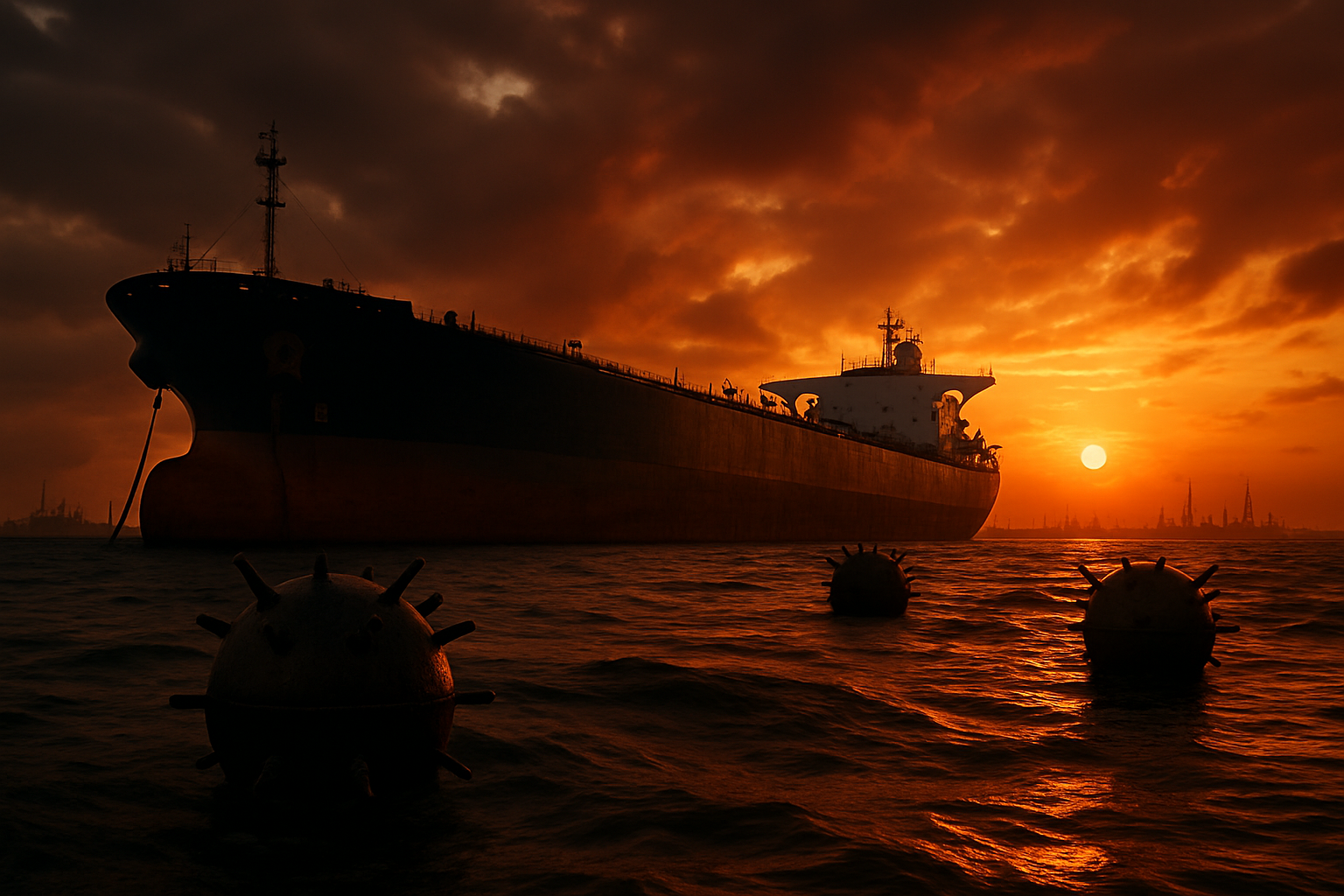
The crisis stems from Iran's Revolutionary Guard declaring the Strait of Hormuz "unsafe for shipping," effectively blockading the critical 21-mile waterway that handles 40% of global seaborne oil transit. This strategic chokepoint closure, combined with ongoing military operations in the region, has created the most severe energy crisis since the 1970s oil shocks.
Unprecedented Price Surge Hits Global Markets
Oil prices have shattered the $100 per barrel threshold for the first time since 2022, with Brent crude peaking at $119.50 and West Texas Intermediate recording an 18.98% single-day jump to $108.15 - the largest increase on record. Natural gas prices have exploded by 24% in Europe and 78% in the United States, reaching €47.32/MWh, the highest level since February 2025.
The International Energy Agency (IEA) has responded with the largest strategic petroleum reserve release in its 50-year history, deploying 400 million barrels from 32 member countries - double the amount released during the 2022 Ukraine crisis. Japan is contributing 80 million barrels, marking its first reserve deployment since the 2011 Fukushima disaster, reflecting the nation's extreme vulnerability with 95% Middle East oil dependence.
Regional Fuel Shortages Spread Worldwide
The crisis has manifested in acute fuel shortages across multiple regions. In Australia, Queensland stations have completely run dry, with towns like Texas and Robinvale depleted of fuel supplies. NSW Energy Minister Penny Sharpe has held crisis meetings as fuel prices surpass $2.50 per liter, approaching the $3 threshold in some areas.
European nations face equally severe challenges. In Bosnia and Herzegovina, fuel reserves have dropped to just two days' worth. Estonia's Alexela Group warns of prices rising above €2 per liter, while Ireland reports "brazen rip-offs" with heating oil approaching the same threshold. France has deployed 500 fuel inspectors to prevent price manipulation.
"West Australians are feeling more pressure from the higher petrol prices than interest rates. One-third of holidaymakers cancelled or postponed their Easter plans due to economic uncertainty."
— Australian Consumer Survey Report
Government Emergency Interventions Intensify
Governments worldwide have implemented unprecedented emergency measures to manage the crisis. Hungary has imposed immediate price caps on gasoline and diesel, describing them as responses to "war-driven price explosions." Romania has outlined five scenarios to prevent diesel from exceeding 10 lei per liter, while Slovakia has activated strategic petroleum reserves for the first time under current protocols.
In Pakistan, the government has implemented wartime austerity measures, including four-day work weeks for government offices, as fuel prices reach Rs321.17 per liter - the highest in South Asia. Bangladesh has instituted fuel rationing for 170 million people, representing one of the largest rationing programs globally.
Canada's Conservative Party has called for dropping taxes on gas and diesel fuel for the remainder of the year, with party leaders claiming this could save approximately 25 cents per liter. The party notes that Canadians are currently paying 20% more than Americans for gas.
Transportation Networks Face Collapse
The aviation industry confronts its worst crisis since COVID-19, with over 18,000 flights cancelled worldwide. Eight Middle Eastern countries have simultaneously closed their airspace, while Dubai International Airport - the world's busiest with 86 million passengers annually - remains shut due to missile damage.
Shipping giants Maersk and MSC have suspended all Persian Gulf operations, leaving more than 150 oil and LNG tankers stranded with billions of dollars worth of cargo. Qatar has halted LNG production at its Ras Laffan and Mesaid facilities, which represent approximately 20% of global exports.
In New Zealand, where the Cook Islands rely heavily on diesel for power and transport, authorities are exploring price controls as they have maintained fuel prices despite global market volatility. Prime Minister Christopher Luxon has warned citizens to prepare for a "prolonged Iran conflict" and its economic implications.
Financial Markets in Turmoil
Global financial markets have experienced severe crashes, with Pakistan's KSE-100 recording its largest single-day decline in history at -8.97%. South Korea's KOSPI fell 12%, triggering circuit breakers as the Korean won hit a 17-year low. The volatility has led to the postponement of PayPal's $1.1 billion IPO indefinitely.
Central banks, including the European Central Bank and Bank of Japan, are coordinating emergency liquidity measures to prevent financial contagion, though traditional monetary policy tools have limited effectiveness against structural geopolitical disruptions.
Nuclear Diplomacy Breakdown Fuels Crisis
The current crisis emerged from the complete collapse of US-Iran nuclear talks, despite achieving what was described as "broad agreement on guiding principles" - the most diplomatic progress since the 2018 JCPOA breakdown. The failure to reach a comprehensive agreement led to Operation Epic Fury, the largest US-Israeli military operation since 2003, prompting Iran's massive retaliation.
The broader nuclear governance crisis is compounded by the February expiration of the New START treaty - the first time in over 50 years without US-Russia nuclear constraints. Iran continues 60% uranium enrichment with over 400kg of weapons-grade material, while UN Secretary-General António Guterres warns that nuclear risks are at their "highest in decades."
Expert Warnings of Economic Collapse
Energy security experts warn of catastrophic global implications. Samuel Ciszuk describes this as "the most severe energy security crisis in decades, with single-chokepoint vulnerabilities completely exposed." Qatar's Energy Minister Saad Al Kaabi has warned that Gulf states may be forced to declare force majeure "within weeks," with oil potentially reaching $150 per barrel threatening to "bring down the economies of the world."
The 21-mile Strait of Hormuz represents a dangerous single-point failure in modern global logistics, with no realistic alternative routes possessing adequate capacity. Alternative Arabian Peninsula routes face significant time and cost penalties that would fundamentally restructure global trade patterns.
Long-term Energy Architecture at Stake
This crisis exposes the dangerous over-dependence on strategic chokepoints and volatile geopolitical regions for global energy security. Strategic petroleum reserves provide only temporary buffers against sustained disruptions, highlighting the urgent need for supply diversification and renewable transitions.
The template-setting nature of this crisis will determine whether future international disputes are resolved through diplomatic frameworks or military confrontation. Success in containing the escalation could provide a nuclear crisis resolution model, while failure risks accelerating military solutions and encouraging nuclear proliferation globally.
"This represents the greatest test of multilateral cooperation in crisis management in the modern era. The stakes include regional war prevention, global energy security, nuclear governance credibility, and international law enforcement."
— UN Secretary-General António Guterres
As governments worldwide grapple with emergency measures and consumers face unprecedented fuel costs, the global energy crisis of April 2026 stands as a watershed moment that will reshape international energy security planning for decades. The urgent need for fundamental transformation to reduce dependence on strategic chokepoints has never been more apparent, as the world confronts the fragility of interconnected energy systems in an increasingly volatile geopolitical landscape.