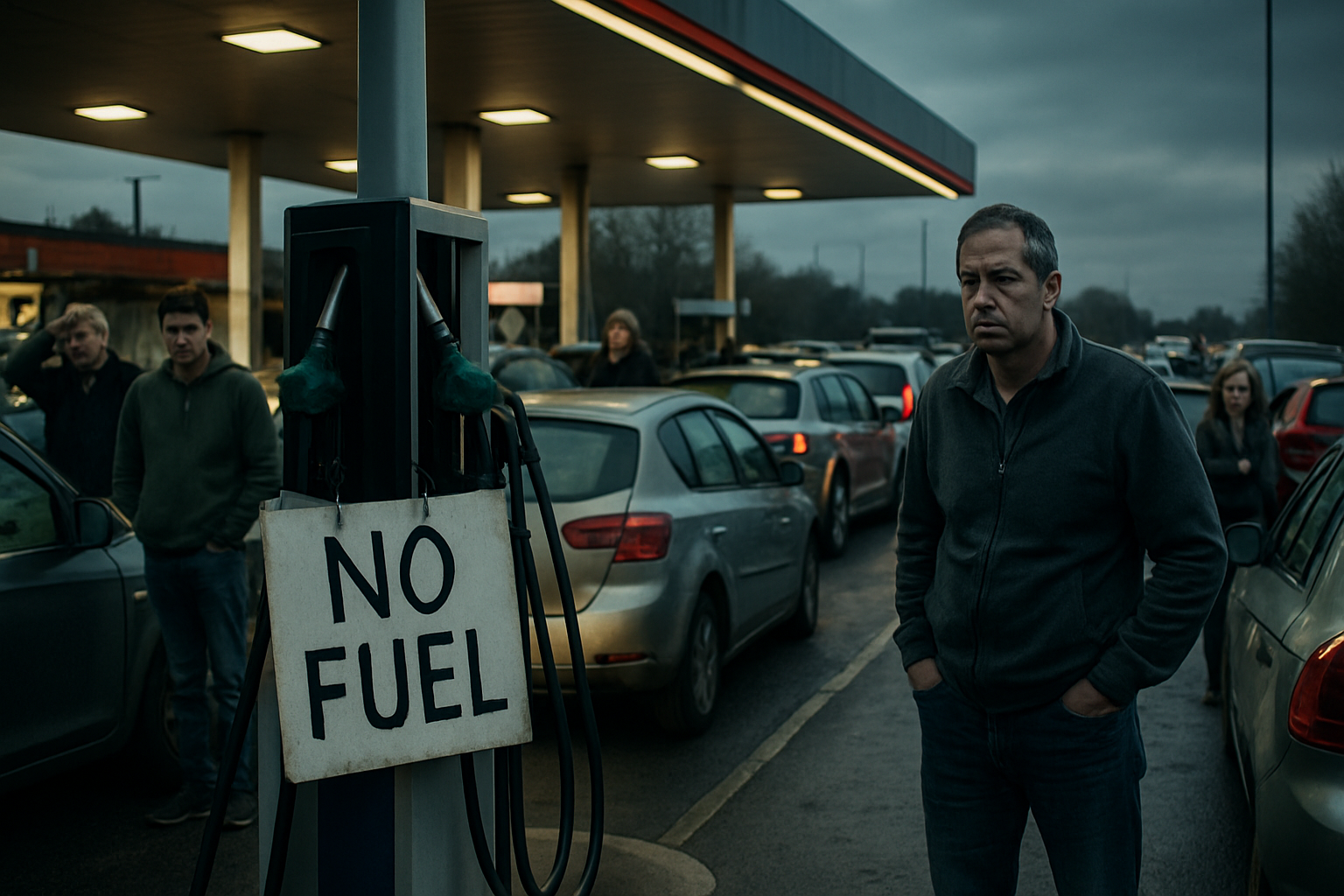
Countries across the globe are implementing emergency measures to address the most severe fuel crisis since the 1970s oil shocks, as prices surge past critical thresholds and supply chains face unprecedented disruption from the ongoing Middle East conflict.
The crisis has reached a tipping point as governments from Ireland to the Philippines announce comprehensive intervention packages, while essential workers bear the brunt of fuel costs that have more than doubled in some regions. Oil prices breached $100 per barrel for the first time since 2022, with Brent crude peaking at $119.50 and WTI jumping a record 18.98% to $108.15.
European Nations Deploy Emergency Tax Relief
The European Union faces its most severe energy crisis in decades, with member states rolling out unprecedented fiscal measures. Ireland announced immediate excise duty cuts of 20 cents per liter on diesel and 15 cents on petrol, effective from midnight, in a package costing €235 million.
"The situation is critical for energy supply allies worldwide,"
— Ursula von der Leyen, European Commission President
Latvia's government approved "fiscally neutral" legislation reducing diesel excise taxes to mitigate the rapid price increases caused by the Middle East war. Slovenia experienced substantial fuel price increases despite government intervention, with regular petrol rising 11.5 cents to €1.581 per liter and diesel jumping 16.8 cents to €1.696 per liter.
Estonia's energy sector faces particular pressure, with fuel prices threatening to breach €2 per liter if the conflict continues. The Estonian Stockpiling Agency has joined international efforts by releasing strategic fuel reserves, marking a significant escalation in Europe's crisis response.
Asia-Pacific Emergency Response
The fuel crisis has devastated transportation industries across Asia-Pacific, with the Philippines experiencing nationwide jeepney driver strikes demanding fare increases from P13 to P18 as diesel approaches P100 per liter.
"We are losing our income. What we earn just goes to paying for diesel,"
— Toni Prado, Philippine Transport Union Leader
New Zealand faces an existential energy challenge with petrol breaching NZ$3.32 per liter and economists forecasting NZ$4 per liter. Prime Minister Christopher Luxon warned the nation is preparing for a "prolonged Iran conflict," with the government considering "Muldoon-era" emergency measures including car-free days and petrol sale limits not implemented since the 1970s oil crisis.
In Australia, regional Queensland petrol stations have run completely dry, with towns like Robinvale and Texas depleted of supplies. NSW Energy Minister Penny Sharpe is chairing crisis talks in Sydney as the Australian Competition and Consumer Commission monitors fuel companies for price gouging, with petrol surging past $2.50 per liter and approaching the $3 threshold in some regions.
Root Cause: Strait of Hormuz Crisis
The global energy emergency stems from Iran's Revolutionary Guard declaration that the Strait of Hormuz is "unsafe for shipping," effectively blocking 40% of global seaborne oil transit through the critical 21-mile chokepoint. This single-point failure has created cascading disruptions across global energy markets.
The crisis deepened with Qatar's halt of LNG production at Ras Laffan and Mesaid facilities, representing approximately 20% of global LNG exports. Major shipping companies Maersk and MSC have suspended all Persian Gulf operations, leaving over 150 oil and LNG tankers stranded with billions of dollars worth of cargo.
Historic Strategic Reserves Deployment
The International Energy Agency announced the largest strategic petroleum reserve release in its 50-year history, deploying 400 million barrels from 32 countries – more than double the 182.7 million barrels released during the 2022 Ukraine crisis.

Japan is releasing 80 million barrels starting March 16 – the first deployment since the 2011 Fukushima disaster. This is particularly significant given Japan's 95% dependence on Middle Eastern oil, with 70% transiting through the now-blocked Strait of Hormuz. Germany has confirmed participation, with the United States expected to be the largest contributor.
Transportation Industry Under Siege
The aviation industry faces its worst crisis since COVID-19, with over 18,000 flights cancelled worldwide. Eight countries have simultaneously closed their airspace, while Dubai International Airport – the world's busiest with 86 million passengers annually – remains shut due to missile damage.
Jet fuel costs have soared 122% from $85-90 per barrel to $150-200, forcing airlines including Air New Zealand, SAS, and Qantas to implement emergency fare increases. Air New Zealand has cut over 1,000 flights affecting 44,000 passengers and suspended its 2026 financial outlook.
Ground transportation faces equal challenges. Australia's trucking industry received new Fair Work Act amendments allowing emergency contract chain orders for drivers struggling with fuel price spikes. Essential workers who cannot work from home are bearing the greatest burden of the crisis.
"I literally have no choice. I have to drive to work every day,"
— Australian Essential Worker
Pacific Island Nations Seek Security Assurances
Pacific island nations, heavily dependent on fuel imports, are coordinating regional responses. Tonga's Prime Minister Lord Fakafanua received assurances from Fiji that Tonga's fuel supply remains secure, with shipments traveling from Singapore through Fiji. The discussion focused on regional coordination to maintain supply stability as fuel prices surge across the Pacific.
Financial Market Contagion
The fuel crisis has triggered severe financial market disruption globally. Pakistan's KSE-100 suffered its largest single-day decline in history, falling 8.97%, while South Korea's KOSPI dropped 12%, triggering circuit breakers as the Korean won hit a 17-year low.
Central banks including the European Central Bank and Bank of Japan are coordinating emergency liquidity measures to prevent financial contagion, though traditional monetary policy tools have limited effectiveness against structural geopolitical disruptions.
Consumer Impact and Social Consequences
The crisis extends far beyond transportation, affecting basic household needs. In Australia, women unable to afford sanitary items are resorting to using bread instead of pads as the cost-of-living crisis deepens alongside fuel price surges.
Bangladesh has implemented fuel rationing for 170 million people, while Pakistan reached Rs321.17 per liter – the highest in South Asia – prompting wartime austerity measures including four-day government work weeks. Bosnia-Herzegovina is down to just two days of gas reserves.
Sweden faces electricity increases of 10-20 öre and gasoline increases of 1-2 kronor, with Malmö being the most exposed due to continental integration. Ireland's heating oil prices approach €2 per liter, prompting accusations of "brazen rip-offs" from consumer advocates.
Government Intervention Measures
Nations worldwide are implementing unprecedented intervention measures:
- Hungary: Immediate price caps on gasoline and diesel to counter "war-driven price explosions"
- France: Deployed 500 fuel station inspectors to prevent price manipulation
- Romania: Five scenarios to prevent diesel from exceeding 10 lei per liter
- Slovakia: First-time activation of strategic petroleum reserves
- Philippines: Nationwide fuel subsidy rollout for transport workers
Long-Term Energy Security Implications
The crisis exposes fundamental vulnerabilities in global energy architecture. The 21-mile Strait of Hormuz represents a single-point failure for modern logistics, with no realistic alternative routes possessing adequate capacity.
"This is the most severe energy security crisis in decades, exposing single-chokepoint vulnerabilities,"
— Samuel Ciszuk, Energy Security Analyst
Experts warn that strategic petroleum reserves provide only temporary relief for sustained disruptions. Qatar's Energy Minister Saad Al Kaabi has warned that Gulf states may declare force majeure "within weeks," with oil potentially approaching $150 per barrel, threatening to "bring down economies of the world."
Nuclear Diplomacy Context
The energy crisis stems from the complete collapse of US-Iran nuclear talks despite a Geneva breakthrough representing the most progress since 2018. The diplomatic breakdown led to Operation Epic Fury – the largest coordinated military operation since 2003 – followed by Iranian retaliation designated "Operation True Promise 4."
The crisis occurs amid the expiration of the New START treaty on February 5, marking the first time in over 50 years without US-Russia nuclear constraints. UN Secretary-General António Guterres has called nuclear risks the "highest in decades," describing this as the "greatest test of multilateral cooperation in the modern era."
Path Forward
Recovery timelines remain uncertain, dependent on military and diplomatic resolution rather than predictable economic factors. Unlike weather-related disruptions, the current crisis stems from geopolitical conflicts that could persist indefinitely.
The situation represents a template-setting moment for 21st-century crisis management, determining whether diplomatic solutions can prevail over military escalation. Success could provide a framework for future nuclear crisis resolution, while failure may accelerate military solutions with decades-long implications for global geopolitics.
Energy experts emphasize the urgent need for fundamental restructuring of global energy architecture to reduce dependence on strategic chokepoints in volatile regions. While supply diversification and renewable transitions require years or decades to implement, the current crisis has dramatically accelerated the urgency for such transformation.
"This watershed moment establishes new paradigms for energy security planning that will affect international stability mechanisms for decades beyond the current events,"
— International Energy Analyst
As governments worldwide deploy emergency measures and strategic reserves, the coming weeks will prove decisive in determining whether coordinated international action can contain what has become the most dangerous energy crisis since the Cold War ended, with implications extending far beyond fuel prices to the foundations of global economic and security architecture.