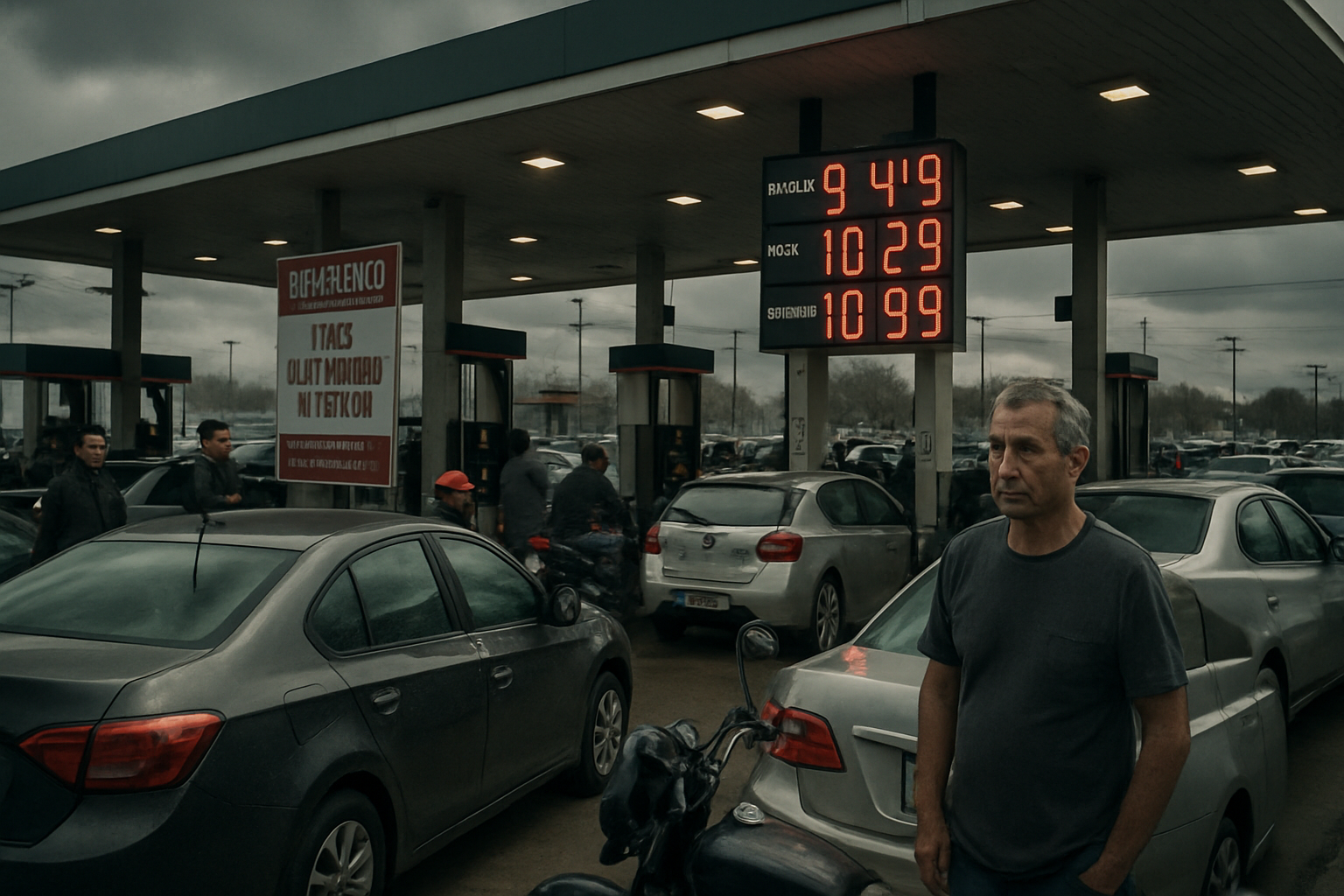
Governments around the world are implementing extraordinary emergency measures as a global fuel crisis reaches critical levels, with diesel prices surging by nearly P19 per liter in some countries and nations tapping strategic oil reserves for the first time in decades.
The crisis, triggered by ongoing Middle East conflicts that have disrupted major oil shipping routes, has forced countries to abandon free-market principles in favor of direct government intervention to protect consumers from spiraling energy costs.
Philippines Declares National Emergency
The Philippines stands at the center of the crisis, with oil companies announcing massive price hikes effective Tuesday, April 7. Diesel prices are set to jump by as much as P18.80 per liter, representing the 15th consecutive week of increases.
"Consumers will be hit by even higher fuel prices as oil companies announced another round of major pump price hikes amid the continuing conflict in the Middle East."
— Rappler Business Analysis
Major oil companies including Petron and Shell have released advisories detailing the steep increases. Petron will raise diesel by P18.80 per liter, gasoline by P4.90 per liter, and kerosene by P8.10 per liter starting 6 AM Tuesday. Shell announced similar increases, with diesel rising P19.80 per liter and gasoline by P5.90 per liter.
European Nations Deploy Price Controls
European countries are implementing some of the most aggressive market interventions seen since the 1970s oil crisis. Croatia has extended fuel price caps until April 20, while Estonia faces record-high diesel prices reaching €2.299 per liter.
France has rolled out emergency "flash fuel loans" to help small businesses cope with the crisis, as the economic fallout from Middle East conflicts continues to impact key economic sectors. The French government is providing rapid financial assistance to companies struggling with soaring energy costs.
Ireland Prepares for Major Protests
Irish authorities are warning motorists of potential disruptions as fuel price protests are planned across Dublin's main commuting routes. Organizers demand the government reduce excise duty on fuel and remove carbon taxes as prices spiral out of control.
The protests come as heating oil approaches €2 per liter, with critics describing the increases as "brazen rip-offs" that disproportionately impact vulnerable households.
Africa Faces Severe Shortages
Several African nations are experiencing acute supply disruptions. Liberia has announced new price ceilings for petroleum products, with the adjustment taking effect April 4, 2026, as authorities respond to global market fluctuations.
In Mauritania, retailers have announced a complete suspension of domestic gas sales effective Monday, citing dramatic price increases and vanishing profit margins for traders. The Mauritania Retailers Union called for all shops to comply with the boycott in response to what they described as "unfavorable pricing conditions."
Pakistan Implements Wartime Measures
Pakistan's government faces mounting criticism over its response to the fuel crisis. The Oil and Gas Regulatory Authority (Ogra) and Pakistan State Oil (PSO) have come under fire for inadequate monitoring of fuel stocks and supply positions.
The government has activated law enforcement agencies to improve monitoring of retail petroleum outlets and prevent hoarding. Meanwhile, Pakistan International Airlines has been forced to end passenger discounts and reduce flight operations due to soaring jet fuel costs, with rates jumping from $85-90 to $150-200 per barrel.
Singapore Reports Regional Impact
Singapore, a major regional energy hub, reports that Southeast Asian countries are scrambling to manage the energy crisis through various measures including work-from-home policies, fuel price caps, and emergency subsidies.
As the Iran conflict enters its sixth week, regional governments are implementing diverse strategies to cope with skyrocketing energy costs, from fuel rationing to enhanced public transportation subsidies.
Historic Strategic Reserve Releases
The International Energy Agency (IEA) has coordinated the largest strategic petroleum reserve release in its 50-year history, with 32 countries contributing 400 million barrels – more than double the 182.7 million barrels released during the 2022 Ukraine crisis.
Japan is releasing 80 million barrels starting March 16, marking the first deployment since the 2011 Fukushima disaster. This is particularly significant given Japan's 95% dependence on Middle East oil, with 70% transiting through the now-disrupted Strait of Hormuz.
Root Cause: Middle East Supply Disruption
The current crisis stems from Iran's Revolutionary Guard declaring the Strait of Hormuz "unsafe for shipping," effectively blocking 40% of global seaborne oil transit through the critical 21-mile waterway. This single chokepoint closure has created the most severe energy supply disruption since the 1970s oil shocks.
Over 150 oil and LNG tankers remain stranded in the Persian Gulf, representing billions of dollars in cargo value. Major shipping companies Maersk and MSC have suspended operations, while Qatar has halted LNG production at facilities representing approximately 20% of global exports.
Consumer Impact Reaches Crisis Levels
The crisis is having severe impacts on ordinary consumers worldwide. In Bangladesh, authorities have implemented fuel rationing for 170 million people, while Bosnia-Herzegovina reportedly has only a two-day supply of gas reserves remaining.
Sweden is experiencing electricity price increases of 10-20 öre and gasoline increases of 1-2 kronor, with Malmö being the most exposed due to continental energy integration. Pakistan has implemented wartime austerity measures, including four-day government work weeks.
Aviation Industry in Turmoil
The aviation sector faces particular challenges, with over 18,000 flights cancelled worldwide – the most extensive disruptions since COVID-19. Dubai International Airport, the world's busiest with 86 million passengers annually, remains shut due to missile damage.
Jet fuel costs have surged 122%, forcing airlines to implement emergency fare increases and reduce operations. Pakistan International Airlines has suspended flights to several destinations including Beijing and Kuala Lumpur.
Financial Markets React
Global financial markets have responded with panic, experiencing some of the worst crashes in recent history. Pakistan's KSE-100 index suffered its largest single-day decline at -8.97%, while South Korea's KOSPI fell 12%, triggering circuit breakers as the Korean won hit a 17-year low.
Central banks including the European Central Bank and Bank of Japan are coordinating emergency liquidity measures to prevent financial contagion, though traditional monetary policy tools are proving limited against structural geopolitical disruptions.
Long-term Energy Security Implications
Energy experts warn that the current crisis exposes dangerous over-dependence on strategic chokepoints in volatile geopolitical regions. The 21-mile Strait of Hormuz represents a single point of failure for modern global logistics, with no realistic alternatives for the massive volumes of energy it typically handles.
"This is the most severe energy security crisis in decades, exposing single-chokepoint vulnerabilities that require fundamental restructuring of global energy architecture."
— Samuel Ciszuk, Energy Security Analyst
Qatar's Energy Minister Saad Al Kaabi has warned that Gulf states may declare force majeure "within weeks" if oil approaches $150 per barrel, which he says could "bring down the economies of the world."
Government Response Strategies
Countries are deploying various emergency response strategies:
- Price Controls: Hungary, France, and Romania have implemented immediate fuel price caps and market intervention measures
- Strategic Reserves: Coordinated release of 400 million barrels through IEA member countries
- Fuel Rationing: Bangladesh and several other nations have implemented consumption limits
- Financial Support: France's "flash fuel loans" and various subsidy programs for affected businesses
- Regulatory Measures: Enhanced monitoring of fuel companies and prevention of price manipulation
Recovery Timeline Uncertain
Unlike weather-related disruptions, recovery from the current crisis depends entirely on military and diplomatic resolution in the Middle East. Traditional supply diversification and renewable energy transitions require years or decades to implement, though the current crisis has dramatically accelerated the urgency for fundamental energy architecture transformation.
The situation represents what UN Secretary-General António Guterres has called "the greatest test of multilateral cooperation in the modern era," with implications extending far beyond immediate energy needs to affect international crisis management frameworks for decades to come.
As governments worldwide grapple with this unprecedented challenge, the crisis is fundamentally reshaping approaches to energy security, supply chain resilience, and emergency response coordination in an increasingly interconnected but volatile global system.