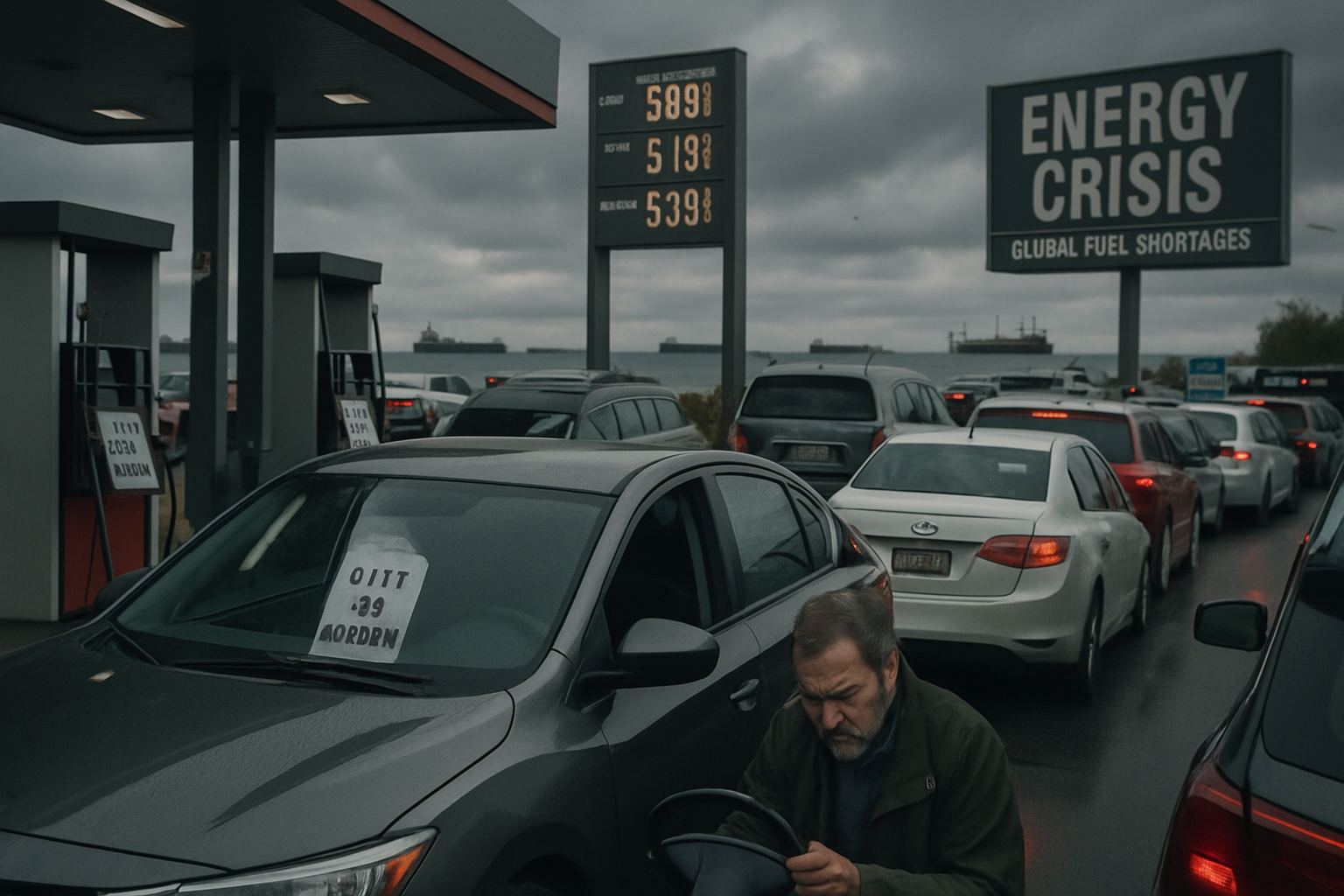
A severe global fuel price crisis continues to grip nations worldwide, with petrol stations running dry, airlines cutting routes, and governments implementing emergency measures as energy costs surge to historic levels across multiple continents.
The crisis has manifested differently across regions, from Australia's rural petrol station closures to the Philippines' nationwide jeepney strikes, revealing vulnerabilities in global energy supply chains and highlighting the interconnected nature of modern fuel markets.
Australia Faces Rural Fuel Shortages
In Australia, the energy crisis has hit rural communities particularly hard. More than 100 petrol stations across Victoria have run out of fuel, according to the state's energy minister, with both metropolitan and regional areas experiencing supply shortages triggered by a rush of panic buying.
The situation has become critical in regional Queensland, where small towns like Texas have completely run out of fuel over recent weekends. Goondiwindi Mayor Lawrence Springborg reports that major suppliers are favoring their own bulk distributors, leaving independent rural stations without adequate supply.
"This is what happens at the bowser when fuel prices skyrocket," noted Samantha Selinger-Morris, host of The Morning Edition podcast, who stepped out in Sydney to understand the impact of rising fuel costs on consumers. Prices have surged past $2.50 per liter nationwide, with some regions approaching the critical $3 threshold.
Philippines Transport Sector in Crisis
The Philippines has experienced some of the most dramatic impacts, with fuel prices soaring past P100 per liter following double-digit price increases. The crisis has prompted thousands of jeepney drivers to stage nationwide strikes, demanding fare increases and the scrapping of fuel taxes.
"We are losing our income. What we earn just goes to paying for diesel," explained Toni Prado, a representative of the drivers' movement. The transport disruption has forced President Marcos Jr. to suspend scheduled fare increases, citing Middle East conflicts and cost-of-living pressures.
Meanwhile, major airline Cebu Pacific has been forced to trim routes and reduce flights as aviation fuel costs have surged dramatically, with passengers reporting widespread disruptions to travel plans.
European Energy Security Concerns
Ireland's government is preparing to cut excise duty on petrol and diesel amid what officials describe as "high energy prices." A diesel rebate scheme for hauliers and bus operators is also expected, which will be backdated to provide relief for commercial transport operators.
The Irish measures come as European nations grapple with energy security concerns stemming from ongoing geopolitical tensions. The crisis has exposed the vulnerability of fuel supply chains that depend heavily on imports and are susceptible to global disruption.
Global Supply Chain Disruption
Energy industry experts point to the closure of the Strait of Hormuz as a critical factor in the global crisis. The strategic waterway, which handles 40% of the world's seaborne oil transit, has been declared "unsafe for shipping" by Iran's Revolutionary Guard, creating unprecedented supply chain disruptions.
"If the Strait of Hormuz is not open again, I can predict a very high price for LNG by summer and September, when we are refilling the gas storage in Europe. The consequence is not only high energy prices, it would damage also other economies, for example, supply chain."
— Patrick Pouyanne, TotalEnergies CEO
Major shipping companies including Maersk and MSC have suspended operations, with over 150 oil and LNG tankers stranded in the Persian Gulf representing billions in cargo value. This has created a bottleneck effect that reverberates through global energy markets.
Aviation Industry Under Pressure
The aviation sector has been particularly hard hit, with jet fuel costs surging from $85-90 to $150-200 per barrel – a staggering 122% increase. This has forced airlines worldwide to implement emergency fare increases and cancel thousands of flights.
Over 18,000 flights have been cancelled globally, marking the most extensive aviation disruption since the COVID-19 pandemic. Eight countries have simultaneously closed their airspace, while Dubai International Airport – the world's busiest with 86 million passengers annually – remains shut due to missile damage.
Government Emergency Responses
Governments worldwide have implemented unprecedented emergency measures to address the crisis. Hungary has imposed immediate price caps on gasoline and diesel to counter what officials describe as "war-driven price explosions." France has deployed 500 fuel station inspectors to prevent price manipulation.
The International Energy Agency (IEA) has announced the largest strategic petroleum reserve release in its 50-year history – 400 million barrels from 32 countries, more than double the 2022 Ukraine crisis response. Japan is releasing 80 million barrels starting March 16, the first deployment since the 2011 Fukushima disaster.
In Pakistan, the government has implemented wartime austerity measures including four-day work weeks for government offices, while Bangladesh has introduced fuel rationing affecting 170 million people. Bosnia-Herzegovina is reportedly down to just two days of gas reserves.
Financial Market Impact
Financial markets have crashed globally, with Pakistan's KSE-100 suffering its largest single-day decline in history at -8.97%. South Korea's KOSPI fell 12%, triggering circuit breakers as the Korean won hit a 17-year low. Major IPOs, including PayPal's $1.1 billion offering, have been postponed indefinitely.
Central banks including the European Central Bank and Bank of Japan are coordinating emergency liquidity measures, though traditional monetary policy has limited effectiveness against structural geopolitical disruptions.
Long-term Energy Security Concerns
Energy security experts warn that the crisis exposes dangerous over-dependence on strategic chokepoints with limited alternatives. The 21-mile Strait of Hormuz represents a single-point failure in modern logistics, with no realistic alternatives to handle diverted volume.
Samuel Ciszuk, an energy analyst, describes this as "the most severe energy security crisis in decades, exposing single-chokepoint vulnerabilities." Qatar's Energy Minister Saad Al Kaabi has warned that Gulf states may declare force majeure "within weeks" if oil approaches $150 per barrel, threatening to "bring down economies of the world."
Consumer Impact and Adaptation
Consumers worldwide are adapting to the new reality of higher energy costs. In Sweden, electricity prices are expected to increase 10-20 öre with gasoline rising 1-2 kronor per liter, with the southern Malmö region most exposed due to continental European market integration.
Malta faces prices 45% higher without government subsidies, while Austria has seen fuel costs increase 20%. The crisis has prompted discussions about fundamental energy architecture transformation to reduce dependence on volatile geopolitical regions.
Looking Ahead
Recovery timelines remain uncertain as they depend on military and diplomatic resolutions rather than predictable economic factors. Unlike weather-related disruptions, geopolitical crises have unpredictable duration, making it impossible for industries like aviation to implement long-term scheduling.
The crisis represents what experts describe as a "template-setting moment" for 21st-century energy security, requiring fundamental transformation to reduce dependence on strategic chokepoints. Success in containing the crisis could provide a framework for future nuclear crisis resolution, while failure may accelerate military solutions and reshape geopolitics for decades.
As governments worldwide implement emergency measures and release strategic reserves, the coming weeks will be critical in determining whether coordinated international action can stabilize global energy markets or if the world faces a prolonged period of energy insecurity that could reshape international relations for years to come.