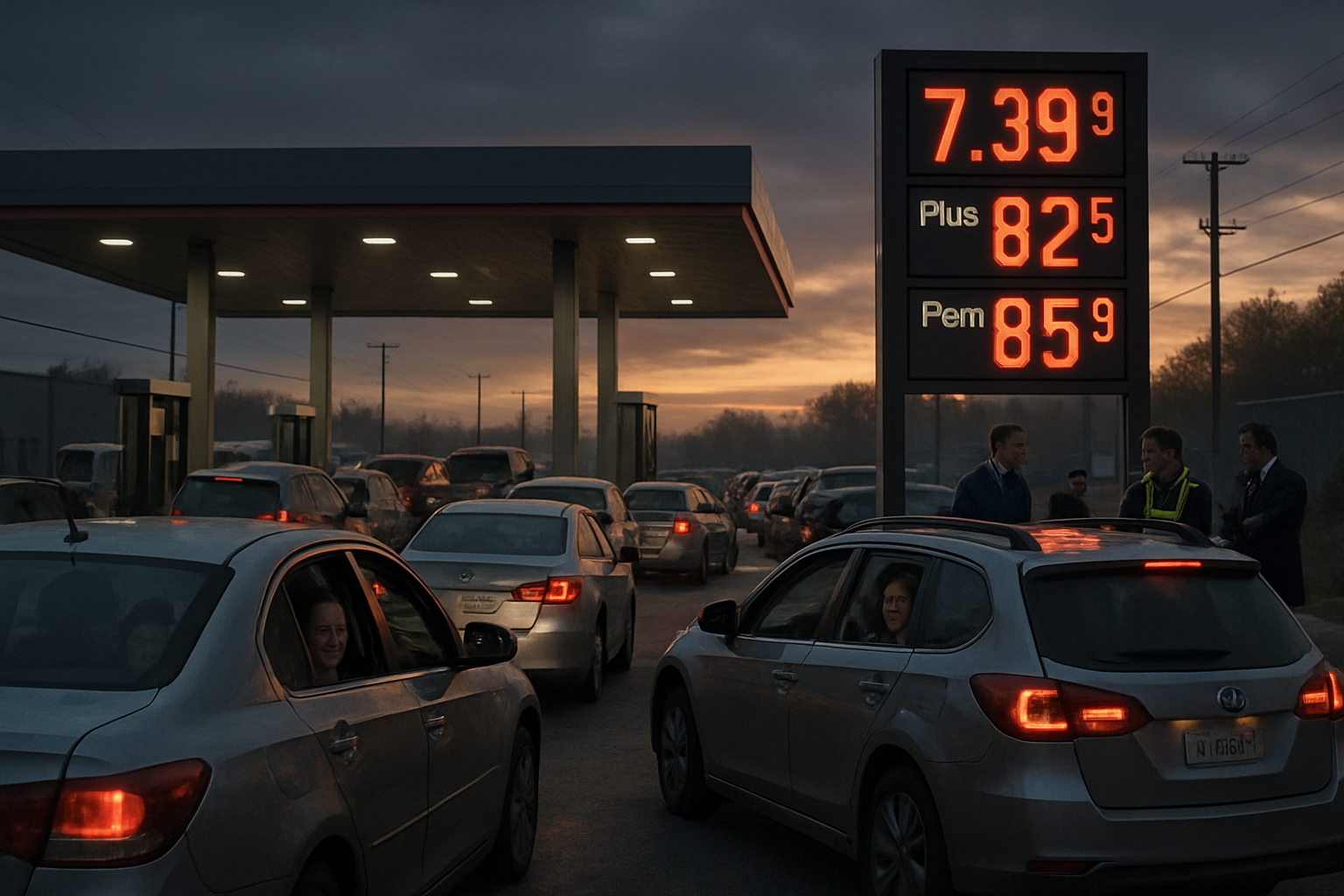
The global energy crisis continues to intensify as fuel prices reach historic levels worldwide, forcing governments across multiple continents to implement unprecedented emergency measures while Middle East tensions show no signs of abating.
From Pakistan's implementation of 8pm store closures to conserve energy, to Bosnia and Herzegovina's fuel stations already hitting record prices, the ripple effects of Iran's Revolutionary Guard closure of the Strait of Hormuz continue to devastate global energy markets five weeks into the crisis.
Crisis Escalates Across Multiple Nations
In Pakistan, Prime Minister Shehbaz Sharif announced that markets and shopping malls across most of the country will now close by 8pm as part of comprehensive energy conservation measures. The decision follows mounting pressure from rising fuel prices and supply disruptions linked to the ongoing conflict in the Middle East.
"As global tensions ripple through energy markets, Pakistan has taken stern measures to conserve fuel," officials stated, noting that the move is part of a broader push to curb energy consumption after rising fuel prices and supply disruptions.
The Philippines faces similar challenges, with oil companies set to implement another round of devastating fuel price increases, pushing diesel costs above P100 per liter. Since the Middle East war erupted in late February, total increases for diesel have surpassed P170 per liter - a staggering 122% increase that has crippled transportation and daily commerce.
Aviation Industry in Crisis Mode
Aviation fuel shortages have reached critical levels, with multiple Italian airports now facing severe limitations. Brindisi airport remains without aviation fuel until at least noon tomorrow, joining Bologna, Milan Linate, Treviso, Venice, Reggio Calabria, and Pescara in experiencing supply disruptions.
The crisis stems from the continued closure of the Strait of Hormuz, which handles 40% of global seaborne oil transit. Iran's Revolutionary Guard has maintained the waterway as "unsafe for shipping" for over a month, creating the most severe energy disruption since the 1970s oil shocks.
Government Emergency Responses Intensify
Pakistan's government has also activated law enforcement and investigation agencies to monitor retail petroleum outlets and prevent hoarding, following criticism of the Oil and Gas Regulatory Authority (Ogra) and Pakistan State Oil (PSO) for insufficient monitoring of stock and supply positions.
In Ireland, organizations are offering emergency energy efficiency advice as fuel costs continue to rise. Spraoi agus Spórt is hosting free Home Energy Upgrade Events to help households learn about cutting energy bills, representing a grassroots response to the crisis.
"A home energy upgrade means making simple improvements so your home stays warmer, uses less energy, and costs less to run," explains Helen Nolan, chief executive of Spraoi agus Spórt. "It's about keeping heat in, using less energy, and lowering your bills."
— Helen Nolan, Spraoi agus Spórt CEO
In Ireland, unions are seeking government support for workers facing the impact of increased fuel and food prices, with the Irish Congress of Trade Unions president noting that "fuel is a particular issue" requiring immediate attention.
Transportation Revolution Underway
The crisis has accelerated Pakistan's adoption of electric vehicles as a cost-saving measure. Islamabad Traffic Police has acquired a fleet of electric vehicles capable of covering up to 400km on a single charge, part of Prime Minister Sharif's vision to modernize transportation amid the fuel crisis.
Consumers are also adapting their vehicle choices, with fuel-efficient cars gaining popularity. The Daihatsu Mira, achieving 25-30 km per liter with "e:S" technology, has become a sought-after option for Pakistani drivers facing sky-high fuel prices.
Ferry Services Feel the Pinch
The crisis extends to maritime transport, with ferry operators in the Caribbean raising ticket prices. H.H.V. Whitchurch & Co. Ltd, local agent for FRS Express des Îles, announced fare adjustments effective March 31, 2026, citing the surge in fuel costs as the primary driver.
International Energy Response
The International Energy Agency (IEA) has deployed the largest strategic petroleum reserve release in its 50-year history - 400 million barrels from 32 countries, more than double the response to the 2022 Ukraine crisis. Japan led with 80 million barrels, marking its first such deployment since the 2011 Fukushima disaster.
However, experts warn that strategic reserves only provide temporary relief. Qatar's Energy Minister Saad Al Kaabi has cautioned that Gulf states may be forced to declare force majeure "within weeks" if the situation continues, with oil potentially reaching $150 per barrel and threatening to "bring down the economies of the world."
Root Causes and Global Impact
The current crisis originated from the complete breakdown of US-Iran nuclear negotiations, despite initial progress in Geneva talks. The subsequent Operation Epic Fury - the largest US-Israeli coordinated operation since 2003 - triggered Iran's massive retaliation, including the closure of the Strait of Hormuz and attacks on regional energy infrastructure.
Oil prices have reached levels not seen since the early stages of the Ukraine conflict, with Brent crude peaking at $119.50 and WTI recording an 18.98% single-day jump to $108.15. Natural gas prices have exploded by 24% in Europe and 78% in the United States.
The 21-mile Strait of Hormuz represents a critical single-point failure in global logistics, with no realistic alternatives for the massive volume of oil and gas that typically transits the waterway. Major shipping companies Maersk and MSC have suspended operations, leaving over 150 oil and LNG tankers stranded in the Persian Gulf.
Long-term Implications
Energy security experts warn that this crisis exposes fundamental vulnerabilities in the global energy architecture. Samuel Ciszuk describes it as "the most severe energy security crisis in decades, with single-chokepoint vulnerabilities exposed."
The crisis has also triggered the most extensive flight cancellations since COVID-19, with over 18,000 flights cancelled as eight Middle Eastern countries closed their airspace simultaneously. Dubai International Airport, the world's busiest with 86 million passengers annually, remains shut due to missile damage.
Financial markets have crashed globally, with Pakistan's KSE-100 experiencing its largest single-day decline in history (-8.97%) and South Korea's KOSPI falling 12% to trigger circuit breakers. Central banks are coordinating emergency liquidity measures, though traditional monetary policy has limited effectiveness against such structural geopolitical disruptions.
Looking Ahead
As the crisis enters its sixth week, recovery timelines remain uncertain and dependent on military and diplomatic developments rather than market fundamentals. The situation represents what UN Secretary-General António Guterres has called "the greatest test of multilateral cooperation in the modern era."
With no immediate resolution in sight to the Middle East conflict, governments worldwide continue to implement unprecedented emergency measures to protect their populations from the economic fallout of what has become the most severe global energy crisis since the 1970s oil shocks.
The template-setting implications of this crisis will likely influence international energy security planning for decades to come, highlighting the urgent need for fundamental transformation to reduce dependence on strategic chokepoints and volatile geopolitical regions.