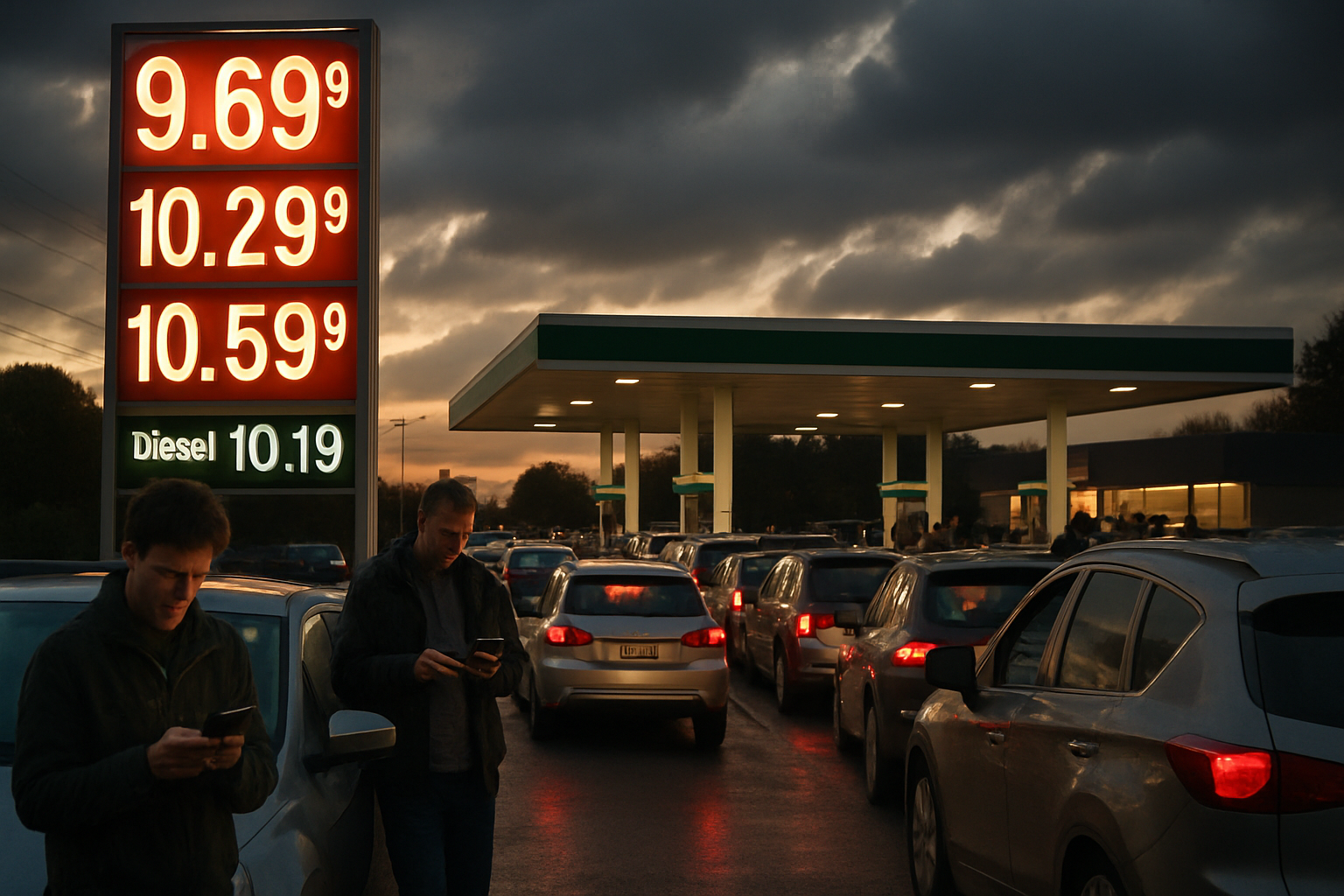
A devastating fuel price crisis is gripping the world as the ongoing Middle East conflict has triggered the most severe energy emergency since the 1970s oil shocks, forcing governments from Australia to Luxembourg to implement emergency measures while millions of drivers face record-high prices at the pump.
The crisis stems from Iran's Revolutionary Guard declaring the Strait of Hormuz "unsafe for shipping," effectively blocking 40% of global seaborne oil transit through the strategic 21-mile waterway. Oil prices have breached $100 per barrel for the first time since 2022, with Brent crude peaking at $119.50 and West Texas Intermediate hitting a record single-day jump of 18.98% to $108.15.
Global Government Emergency Response
In response to what energy analysts are calling the most severe crisis in decades, governments worldwide are rushing to implement unprecedented emergency measures. Australian Prime Minister Anthony Albanese announced a new fuel supply taskforce to investigate price-gouging as petrol prices surge past $2.50 per liter nationally, with some regions approaching the historic $3 threshold.
"Australia's fuel supply is currently secure, but we want the country to be over-prepared," Albanese stated, echoing growing concerns about supply chain vulnerabilities exposed by the crisis.
"This is the most severe energy security crisis in decades, with single-chokepoint vulnerabilities completely exposed."
— Samuel Ciszuk, Energy Security Analyst
In Luxembourg, diesel prices have surged by 15 centimes while unleaded gasoline increased by 2.5 centimes, with the government warning that consequences of the Middle East war continue to impact fuel stations across the country. The price of diesel is now expected to exceed two euros per liter by Friday.
New Zealand is experiencing similar pressures, with petrol stations across the country seeing a surge of drivers filling up as fuel prices rise toward unprecedented levels. Despite some stations running dry, Foodstuff's petrol stations continue offering discounts even as supply shortages intensify.
Rideshare Industry Under Pressure
The fuel price explosion has created a crisis within the gig economy, with rideshare and delivery platforms facing mounting pressure to increase driver rates. Australian rideshare and delivery drivers report feeling "depressed and angry" as skyrocketing fuel costs eat into their earnings.
The situation has become so dire that some platforms are considering emergency fuel surcharges, while drivers are reducing their working hours or leaving the industry altogether. Food delivery services are particularly hard-hit, with drivers struggling to maintain profitability as petrol costs consume an ever-larger portion of their income.
International Energy Architecture in Crisis
The crisis has exposed dangerous vulnerabilities in global energy infrastructure. The International Energy Agency (IEA) has announced its largest strategic petroleum reserve release in 50-year history—400 million barrels from 32 countries, more than double the 2022 Ukraine crisis response.
Japan is releasing 80 million barrels starting March 16, marking the first such deployment since the 2011 Fukushima disaster. This is particularly significant given Japan's 95% dependence on Middle Eastern oil, with 70% transiting through the now-closed Strait of Hormuz.
The shipping industry has effectively collapsed in the Persian Gulf, with major carriers Maersk and MSC suspending operations entirely. Over 150 oil and LNG tankers are stranded, representing billions in cargo value. Qatar has halted LNG production at its Ras Laffan and Mesaid facilities, which account for approximately 20% of global LNG exports.
Economic Ripple Effects
The energy crisis has triggered widespread financial market volatility. Pakistan's KSE-100 index suffered its largest single-day decline in history, dropping 8.97%. South Korea's KOSPI fell 12%, triggering circuit breakers as the Korean won hit a 17-year low. Central banks from the European Central Bank to the Bank of Japan are coordinating emergency liquidity measures to prevent broader financial contagion.
Natural gas prices have exploded, rising 24% in Europe and 78% in the United States, reaching €47.32 per MWh—the highest levels since February 2025. This has created severe shortages across Europe, with Bosnia-Herzegovina reporting only a two-day gas reserve and Malta facing 45% higher prices without government subsidies.
Consumer Impact Worldwide
The crisis is hitting consumers with unprecedented force across the globe. In Sweden, electricity prices are expected to increase by 10-20 öre, with gasoline rising by 1-2 kronor per liter. The Malmö region is most exposed due to continental European market integration.
Ireland is experiencing what officials call "brazen rip-offs," with heating oil approaching €2 per liter. In Bangladesh, fuel rationing has been implemented for 170 million people, while Pakistan has introduced wartime austerity measures including four-day government work weeks.
The aviation industry is facing parallel disruption, with over 18,000 flights cancelled worldwide—the most extensive since COVID-19. Dubai International Airport, the world's busiest with 86 million passengers annually, remains shut due to missile damage. Jet fuel costs have soared from $85-90 per barrel to $150-200, representing increases of up to 122%.
Supply Chain Collapse
The Persian Gulf serves as a critical trade hub beyond energy, affecting consumer goods and industrial materials worldwide. The 21-mile Strait of Hormuz represents a single-point failure for modern logistics, with no realistic alternatives for the massive volume of trade that normally transits the waterway.
Manufacturing industries dependent on Gulf supply networks are experiencing severe disruptions. China has suspended refined fuel export contracts, cancelling committed shipments. Singapore retailers are warning of 30% increases in logistics costs, while automotive, electronics, and textile industries face production challenges.
"Gulf states may be forced to declare force majeure within weeks if the situation continues, with oil approaching $150 per barrel threatening to bring down economies of the world."
— Saad Al Kaabi, Qatar Energy Minister
Geopolitical Breakdown
The crisis stems from the complete collapse of US-Iran nuclear negotiations, despite what had been described as a "broad agreement on guiding principles"—the most progress since the JCPOA collapsed in 2018. However, fundamental disagreements remained over scope, with Iran excluding ballistic missiles and proxy groups as "red lines" while the US demanded comprehensive coverage including missiles, armed groups, and human rights.
This diplomatic breakdown led to Operation Epic Fury, the largest US-Israeli coordinated operation since 2003, which prompted Iran's massive retaliation known as Operation True Promise 4. The regional coalition of Saudi Arabia, UAE, Qatar, and Egypt—previously unified in supporting diplomatic solutions—has been severely strained as Iranian attacks targeted member territories.
Nuclear Governance Crisis
The energy crisis is unfolding against a backdrop of broader nuclear governance challenges. The New START treaty expired on February 5, marking the first time in over 50 years without US-Russia nuclear constraints. Iran continues uranium enrichment at 60% purity with over 400kg of weapons-grade material—sufficient for multiple nuclear weapons.
UN Secretary-General António Guterres has described nuclear risks as being at their "highest in decades," calling the situation "the greatest test of multilateral cooperation and crisis management in the modern era."
Long-term Energy Transformation
The crisis has exposed the dangerous over-dependence on strategic chokepoints and volatile geopolitical regions. Energy security experts are calling for fundamental restructuring of global energy architecture, though such transformations would require years or decades to implement.
Strategic petroleum reserves, while providing temporary buffering, are insufficient for sustained disruptions. The urgency for supply diversification and renewable energy transitions has been dramatically accelerated, but the current crisis highlights the vulnerability during the transition period.
Recovery Uncertain
Unlike weather-related disruptions, recovery from this crisis depends entirely on military operations resolution and diplomatic normalization. Aviation industries cannot implement long-term scheduling with closed airspace, while energy markets remain volatile with critical transit routes blocked.
Traditional monetary policy tools are proving limited in effectiveness against these structural geopolitical disruptions, requiring coordinated international responses to address root causes rather than symptoms.
As the crisis enters its third week, the template-setting implications for 21st-century energy security and international relations are becoming clear. Success in containing the situation could provide a framework for future nuclear crisis resolution, while failure may accelerate military solutions, reshape Middle Eastern geopolitics for decades, and encourage nuclear proliferation globally while undermining diplomatic credibility worldwide.
The global fuel price crisis of March 2026 represents a watershed moment, establishing new paradigms for energy security planning that will require fundamental transformation to reduce dependence on strategic chokepoints—with implications extending decades beyond the current events.