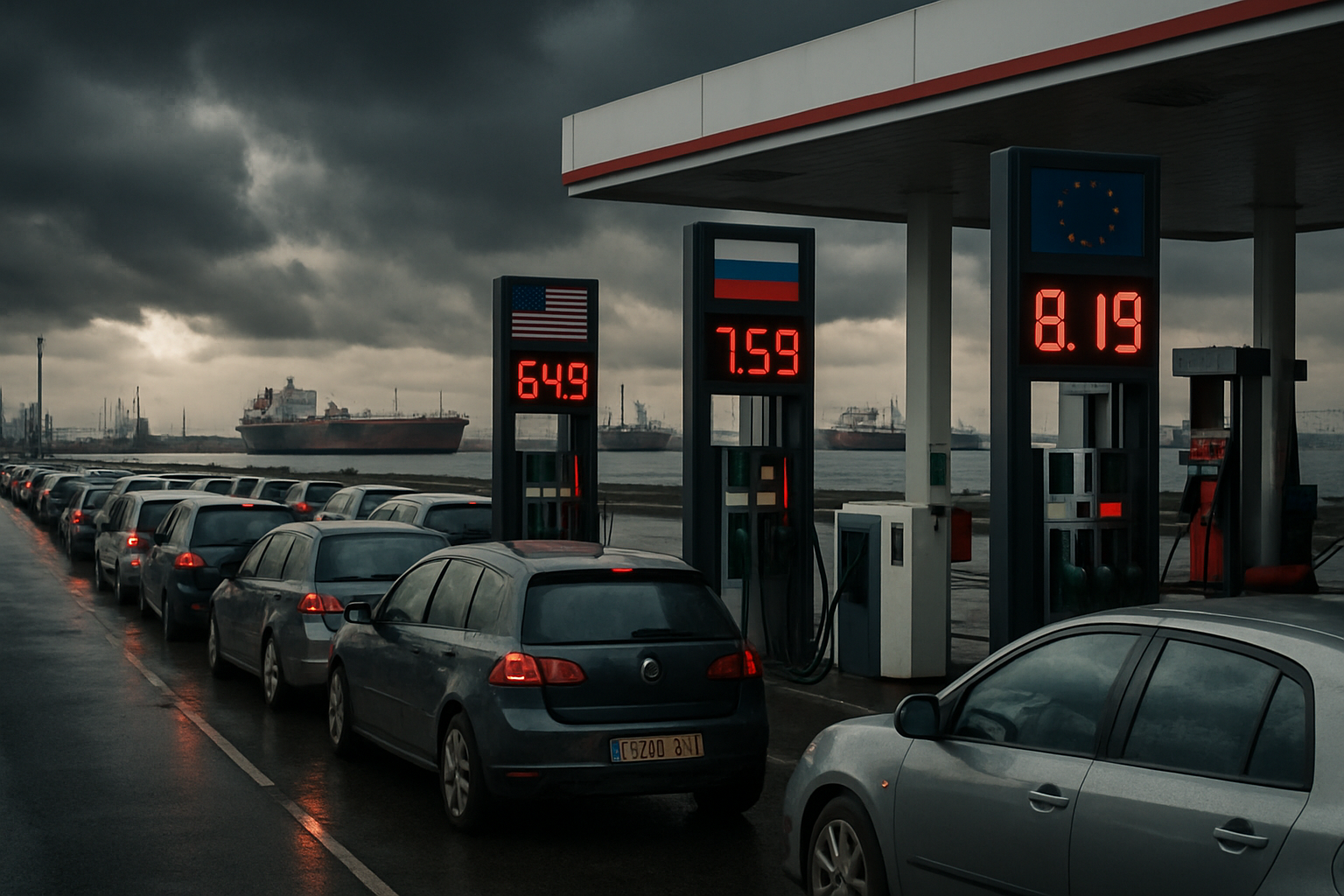
Fuel prices across multiple continents continue experiencing significant volatility as Middle East tensions maintain pressure on global energy markets, forcing governments worldwide to implement unprecedented emergency measures while consumers face mounting economic pressures.
The ongoing fuel crisis, which began with Iran's Revolutionary Guard declaring the Strait of Hormuz "unsafe for shipping" in February 2026, continues to reverberate through global markets. While some regions report price stabilization or modest declines, the broader picture reveals a world still grappling with the aftermath of what experts call the most severe energy crisis since the 1970s oil shocks.
Regional Price Developments Show Mixed Patterns
In Bolivia, agricultural sector leaders are expressing alarm over diesel shortages threatening crucial farming operations. Anapo's manager Jaime Hernández warned that the agricultural sector requires at least 90 million liters of diesel between April and June to complete the summer harvest of soybeans, corn, and sorghum across 1.5 million hectares.
"We have made 60% progress on the harvest, but the lack of fuel threatens to halt operations," Hernández stated, highlighting how global supply disruptions are directly impacting food production chains.
Meanwhile, in the United States, low-cost airline executives are meeting with Transportation Secretary Sean Duffy to urge Congress for temporary tax relief to offset soaring jet fuel costs sparked by the ongoing conflict. The meeting includes representatives from Spirit Airlines, Frontier Airlines, Allegiant Air, Sun Country, and Avelo, demonstrating the aviation industry's continued struggles with fuel cost pressures.
African carriers are also feeling the strain, with LAM Mozambique Airlines signaling potential fare increases if fuel costs continue rising. The airline assured passengers of sufficient fuel availability for the next 30 days but warned that price increases may be necessary if current market conditions persist.
European Markets See Gradual Price Relief
European consumers are beginning to see some relief as fuel prices show signs of stabilization following the implementation of various government intervention measures. In Slovenia, regulated fuel prices have dropped for the second consecutive week, though they remain well above pre-crisis levels.
The new diesel price in Slovenia was set at €1.736 per liter, down 8.6 cents from the previous week, but still significantly higher than the €1.465 mark that was in force before the Iran crisis began. Regular petrol now costs €1.605 per liter, representing a modest 1.5-cent decrease.
Norway presents an interesting case study in commodity price dynamics beyond energy. The country is experiencing coffee price reductions due to record harvest expectations in Brazil, with Coop Sverige predicting kilogram prices will fall by 8-10 percent. However, Norwegian consumers may not see these benefits until autumn due to existing inventory purchased at higher prices.
Asia-Pacific Region Continues Struggles
The Philippines continues to experience significant pressure, with fuel prices dropping for a second consecutive week but diesel still decreasing by at least P24.94 per liter, indicating the substantial price increases that preceded these modest rollbacks. The continued high prices are maintaining pressure on the country's crucial jeepney transportation system and broader economy.
In the United Kingdom, petrol retailers are reporting alarming increases in fuel theft, with some stations experiencing about five drive-offs per week. This surge in theft directly correlates with the sustained high fuel prices resulting from the Middle East crisis, illustrating how energy costs are creating secondary security and social challenges.
Historical Context of the Crisis
The current situation stems from the most severe energy disruption in modern history, which began when Iran's Revolutionary Guard effectively closed the Strait of Hormuz, a critical chokepoint handling 40% of global seaborne oil transit. Oil prices surged past $100 per barrel for the first time since 2022, with Brent crude peaking at $119.50 and WTI reaching a record single-day jump of 18.98% to $108.15.
The crisis prompted the largest strategic petroleum reserve release in the International Energy Agency's 50-year history, with 400 million barrels deployed from 32 countries—double the amount released during the 2022 Ukraine crisis. Japan alone released 80 million barrels, marking its first such deployment since the 2011 Fukushima disaster.
"We are witnessing the most severe energy security crisis in decades, with single-chokepoint vulnerabilities completely exposed,"
— Samuel Ciszuk, Energy Analyst
Government Emergency Responses Worldwide
Governments across the globe have implemented unprecedented emergency measures to protect consumers from fuel price volatility. Hungary imposed immediate price caps on gasoline and diesel to prevent what officials termed "war-driven price explosions." France deployed 500 fuel station inspectors to prevent price manipulation, while Romania developed five emergency scenarios to prevent diesel from exceeding 10 lei per liter.
In Germany, authorities strengthened antitrust laws targeting gas station price manipulation—representing one of the most significant market interventions in modern German energy policy. These coordinated responses demonstrate how the crisis has forced traditionally market-oriented economies to abandon free-market principles in favor of consumer protection.
Australia implemented emergency fuel import guarantees and halved excise taxes for three months, costing A$2.55 billion but reducing consumer costs by 26.3 Australian cents per liter. New Zealand considered implementing "Muldoon-era" emergency measures, including car-free days and petrol purchase limits not seen since the 1970s oil crisis.
Aviation Industry Faces Ongoing Challenges
The aviation sector continues experiencing unprecedented disruption, with over 18,000 flights cancelled worldwide—the most extensive disruption since COVID-19. Jet fuel costs surged 122% from $85-90 to $150-200 per barrel, forcing airlines globally to implement emergency surcharges and route cancellations.
Eight Middle Eastern countries simultaneously closed their airspace, creating what industry experts describe as an "aviation black hole" for Europe-Asia corridors. Dubai International Airport, the world's busiest with 86 million passengers annually, remains closed due to missile damage, while major carriers including Emirates, Air France-KLM, and Wizz Air have suspended operations indefinitely.
Long-term Implications and Energy Security
The crisis has exposed critical vulnerabilities in global energy architecture, particularly the dangerous over-dependence on strategic chokepoints like the 21-mile Strait of Hormuz. The waterway represents a single-point failure in modern logistics with no realistic alternatives for handling massive oil and LNG volumes.
Qatar's Energy Minister Saad Al Kaabi warned that Gulf states might be forced to declare force majeure "within weeks" if oil approaches $150 per barrel, which could "bring down the economies of the world." This warning underscores the severity of the situation and the interconnected nature of global energy markets.
Energy experts emphasize that strategic petroleum reserves serve only as temporary buffers against sustained disruptions. The crisis has accelerated discussions about supply diversification and renewable energy transitions, though such transformations require years or decades to implement fully.
Nuclear Diplomacy and Geopolitical Context
The energy crisis originated from the complete breakdown of US-Iran nuclear negotiations, despite earlier achieving what diplomats described as "broad agreement on guiding principles"—the most significant progress since the 2018 JCPOA collapse. The diplomatic failure led to Operation Epic Fury, the largest coordinated US-Israeli operation since 2003, which triggered Iranian retaliation through Operation True Promise 4.
Adding to global security concerns, the New START treaty between the US and Russia expired in February 2026, marking the first time in over 50 years without nuclear constraints between the superpowers. Iran continues uranium enrichment at 60% levels with over 400 kilograms of weapons-grade material, sufficient for multiple nuclear weapons.
UN Secretary-General António Guterres described the situation as representing "the greatest test of multilateral cooperation in crisis management in the modern era," with nuclear risks at their "highest level in decades."
Economic and Financial Market Impact
Financial markets worldwide experienced historic crashes during the crisis peak. Pakistan's KSE-100 recorded its largest single-day decline in history at -8.97%, while South Korea's KOSPI fell 12% requiring circuit breakers, with the Korean won hitting 17-year lows. The European Central Bank and Bank of Japan coordinated emergency liquidity measures, though traditional monetary policy showed limited effectiveness against structural geopolitical disruptions.
Consumer impacts varied globally but remained severe across all affected regions. Bangladesh implemented fuel rationing for 170 million people, while Pakistan instituted wartime austerity measures including four-day government work weeks. Sweden experienced electricity increases of 10-20 öre and gasoline price rises of 1-2 kronor, with Malmö particularly exposed due to continental integration.
Template-Setting Crisis for 21st Century
Experts widely regard the 2026 energy crisis as a template-setting moment for 21st-century international relations. The rapid transition from diplomatic frameworks to military confrontation demonstrates the fragility of modern crisis management mechanisms in an increasingly multipolar world.
The crisis affects not only regional war prevention and global energy security but also nuclear governance credibility and international law enforcement of post-World War II order principles simultaneously. Recovery timelines remain uncertain, depending entirely on military operations resolution and diplomatic normalization rather than predictable economic factors.
"This situation is going on longer than initially thought, with financial markets representing the ultimate constraint on prolonged conflict,"
— Damien Boey, Financial Analyst
Path Forward: Energy Architecture Transformation
The crisis has made clear that fundamental transformation of global energy architecture is imperative. The dangerous over-dependence on strategic chokepoints requires comprehensive restructuring to reduce geopolitical volatility. Alternative transportation routes around the Arabian Peninsula lack adequate capacity and involve significant time and cost penalties.
Supply diversification and renewable energy transitions have gained unprecedented urgency, though implementation will require years or decades. The crisis has demonstrated that modern economic resilience depends on diversified supply chains, reduced dependence on volatile regions, and enhanced international cooperation mechanisms.
Success in containing the current escalation could provide a framework for nuclear crisis resolution, strengthening diplomatic precedents for 21st-century conflict management. Failure, however, could accelerate military solutions, reshaping Middle Eastern geopolitics for decades while encouraging nuclear proliferation globally and undermining diplomatic credibility worldwide.
The April 2026 fuel price situation represents a watershed moment in global energy security, requiring immediate crisis management while building the foundation for resilient energy systems capable of withstanding geopolitical shocks. The lessons learned from this crisis will likely determine the framework for diplomatic versus military solutions in future international disputes, affecting international stability mechanisms globally for decades beyond current events.