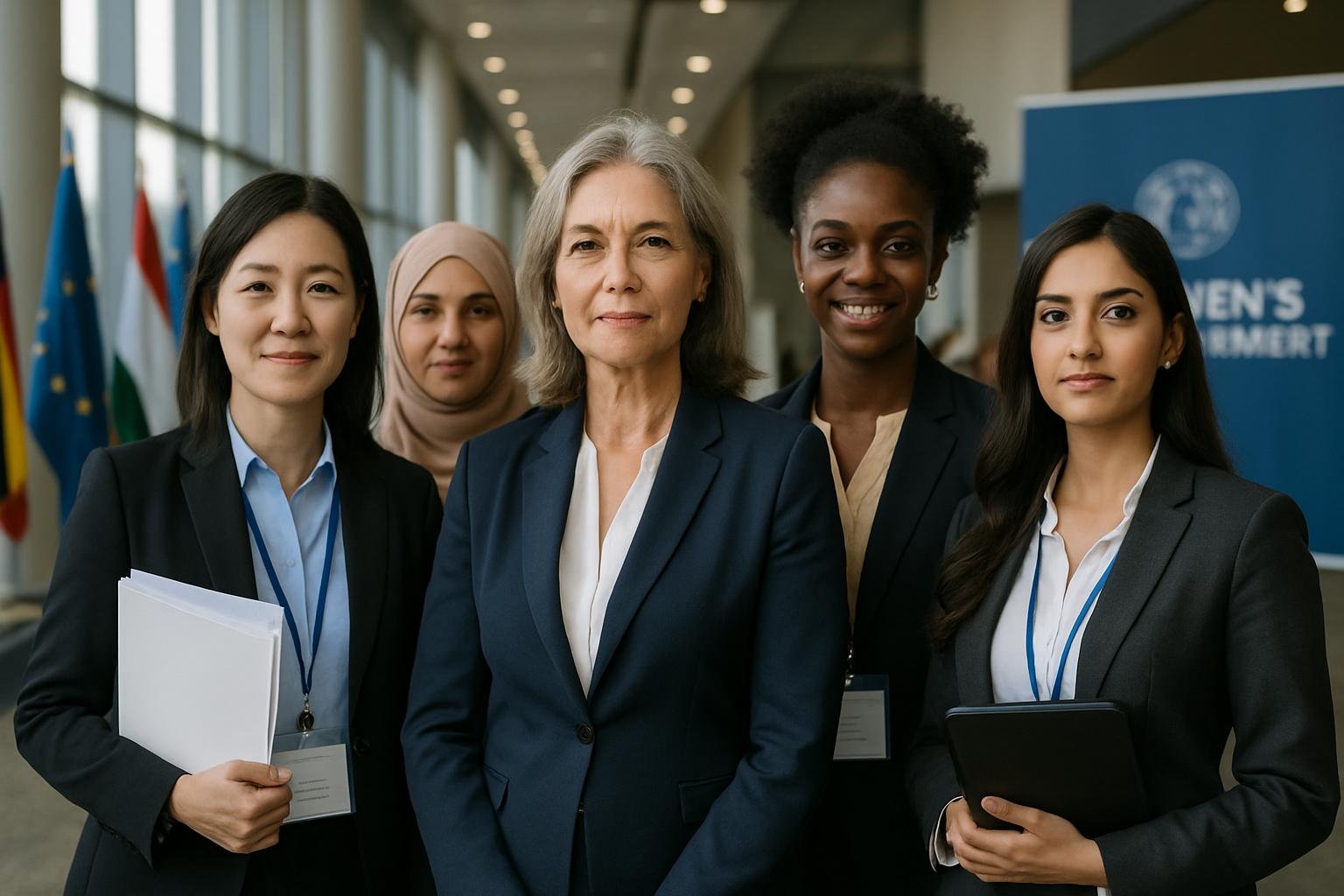
International Women's Day 2026 brings a complex global picture of women's rights progress, with significant advances in economic empowerment and pay equity in some regions contrasting sharply with continued systematic persecution in others, as new initiatives emerge to bridge the gender gap in entrepreneurship and workplace equality.
Major developments across four countries demonstrate both the promise and challenges facing the global women's rights movement, from groundbreaking pay transparency legislation in Austria to innovative women's entrepreneurship programs in Liberia, while Afghanistan's gender apartheid system continues to serve as a stark reminder of how quickly progress can be reversed.
Austria Leads European Pay Transparency Revolution
Austria has emerged as a leader in addressing gender wage discrimination, with the Austrian Trade Union Federation (ÖGB) calling for the timely implementation of the EU Pay Transparency Directive on International Women's Day. The initiative comes amid revelations that Austrian women lose over €10,000 annually due to unequal pay practices.
However, new research from Allianz provides encouraging evidence of progress. The company's latest study reveals that Austria's lifelong gender income gap has dramatically narrowed from 31.4% for those born in 1975 to just 19.4% for the 2025 birth cohort—a reduction of nearly 12 percentage points over five decades.
"This represents the most significant narrowing of the gender pay gap in Austrian history," according to the Allianz research, which tracked income disparities across generations. The study suggests that systematic policy interventions, including enhanced parental leave policies, childcare support, and workplace flexibility measures, have contributed to this historic improvement.
The Austrian government's commitment to implementing EU-wide pay transparency requirements reflects broader European efforts to create standardized approaches to gender equality in the workplace. Under the new directive, companies will be required to disclose salary ranges in job postings and provide employees with information about pay levels for comparable positions.
African Women's Entrepreneurship Gains Momentum
In West Africa, innovative partnerships are creating new pathways for women's economic empowerment. The Jewel Starfish Foundation, SATEC Liberia, and the Center for Public-Private Development, collaborating with the Tony Elumelu Foundation, hosted a comprehensive Entrepreneurial Readiness and Grant Access Support Initiative in Monrovia's Congo Town on March 5.
The four-hour intensive program brought together 30 female-led businesses from across Monrovia, focusing on strengthening women's economic independence and expanding access to continental funding opportunities. This initiative represents a growing trend across Africa, where women's entrepreneurship is increasingly recognized as crucial for economic development and poverty reduction.
"We are creating sustainable pathways for women to access not just local opportunities, but continental networks that can transform their businesses and communities."
— Program Organizer, Jewel Starfish Foundation
The collaboration with the Tony Elumelu Foundation is particularly significant, as it connects Liberian women entrepreneurs with one of Africa's most successful business development networks. The foundation has supported over 20,000 entrepreneurs across Africa since its inception, with women representing a growing percentage of beneficiaries.
Similar initiatives are emerging across the continent, reflecting a broader recognition that women's economic empowerment is essential for achieving sustainable development goals and reducing inequality.
Pacific Recognition of Women's Excellence
In Papua New Guinea, Westpac Bank unveiled its 2026 Outstanding Women Awards judging panel, highlighting the bank's commitment to recognizing and celebrating women's achievements across various sectors. This annual program has become a cornerstone of women's recognition in the Pacific region, providing platforms for female leaders to share their experiences and inspire the next generation.
The awards program addresses a critical need for visibility and recognition of women's contributions in traditionally male-dominated industries, particularly in the Pacific region where cultural barriers and limited opportunities have historically constrained women's professional advancement.
Global Context: Progress Amid Crisis
These positive developments occur against a backdrop of concerning global trends. Recent memory research reveals that Afghanistan has become the world's worst example of systematic rollback of women's rights, with the Taliban's restrictions since August 2021 creating what international observers describe as "gender apartheid."
The Georgetown Institute for Women, Peace and Security ranked Afghanistan dead last—181st out of 181 countries—in its Women, Peace and Security Index, with 88% of female-headed households unable to meet minimum living requirements. This represents not just a national tragedy but a global challenge to fundamental principles of human dignity and equality.
European Union Advances Reproductive Rights
Meanwhile, European policy developments demonstrate another dimension of women's rights progress. The European Commission recently clarified that EU member states can use existing European Social Fund resources to support citizens seeking safe abortion services abroad, particularly those traveling from restrictive to liberal abortion law countries.
This breakthrough policy, responding to the "My Voice, My Choice" women's rights campaign, addresses disparities across 27 member states where countries like Poland and Malta maintain restrictive laws while Netherlands, France, and Germany provide broad access. Over 5,000 Polish women annually seek abortion care abroad, facing significant financial and logistical barriers.
Technology and Innovation in Gender Equality
Emerging technologies are increasingly being leveraged to advance gender equality goals. Digital platforms are enabling women entrepreneurs to access global markets, while data analytics are helping organizations identify and address pay gaps more effectively.
However, experts warn that technology can also exacerbate inequalities if not implemented thoughtfully. Ensuring that women have equal access to digital literacy training, technology jobs, and decision-making roles in tech companies remains a critical challenge.
Challenges and Opportunities Ahead
Despite notable progress in many regions, significant challenges remain. The International Labour Organization reports that women's labor force participation has stagnated globally, and the COVID-19 pandemic disproportionately affected women's employment and economic security.
Climate change also poses particular risks to women, especially in developing countries where they often bear primary responsibility for water collection, food production, and family care. Addressing these interconnected challenges requires integrated approaches that recognize the links between gender equality, economic development, and environmental sustainability.
Looking Forward: International Cooperation Essential
The examples from Austria, Liberia, and Papua New Guinea demonstrate that progress is possible when governments, civil society organizations, and private sector partners work together with sustained commitment to gender equality principles.
As the international community observes International Women's Day 2026, the path forward requires continued vigilance against backsliding, innovative solutions to persistent challenges, and recognition that women's rights are not just women's issues—they are fundamental to building just, prosperous, and sustainable societies for all.
The stark contrast between Austria's pay gap progress and Afghanistan's systematic oppression reminds us that equality is not inevitable—it requires active protection, continuous effort, and international solidarity to ensure that the principles of human dignity and equal opportunity remain universal values rather than regional privileges.