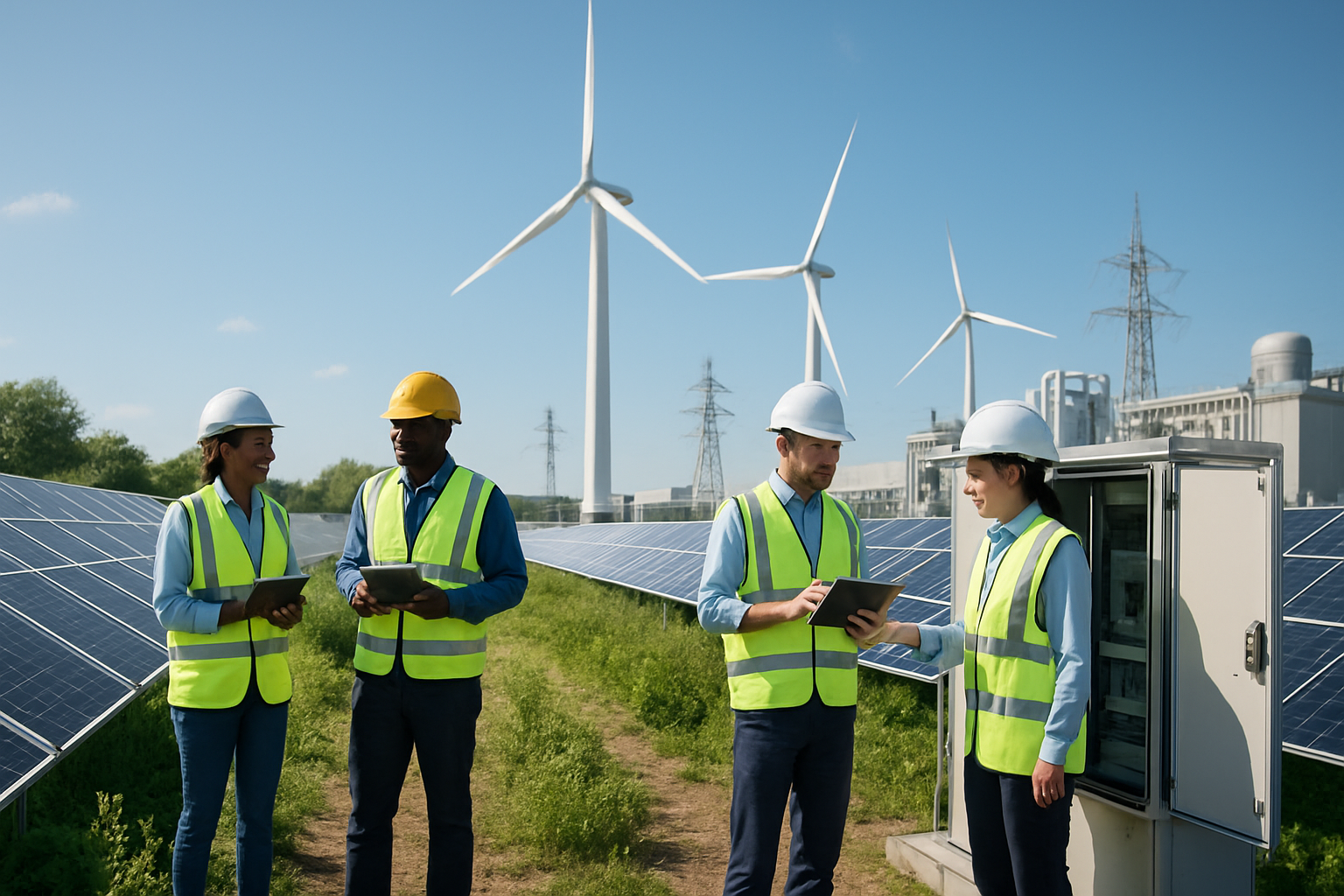
A new wave of environmental initiatives is transforming the global energy landscape, as countries from the Baltic to Southeast Asia accelerate renewable energy projects and sustainable technology adoption, even as industry leaders grapple with significant cost barriers and supply chain vulnerabilities.
The most significant development comes from Turkey and Saudi Arabia, which signed a historic $2 billion renewable energy agreement during President Recep Tayyip Erdoğan's diplomatic tour to Riyadh. Energy Minister Alparslan Bayraktar confirmed the deal will establish large-scale solar power plants across central Turkey, ultimately covering around 5,000 megawatts of renewable capacity.
"The project will ultimately cover around 5,000 megawatts of renewable capacity, with the first phase consisting of 2,000 megawatts of solar power," Bayraktar announced after signing the intergovernmental agreement with Saudi Energy Minister Prince Abdulaziz bin Salman.
Strategic Energy Partnerships
The Turkey-Saudi agreement represents part of a broader effort by both nations to expand trade and investment ties, building on the vision set out by Erdoğan and Saudi Crown Prince Mohammed bin Salman. This development follows previous major Gulf energy sector breakthroughs, including the unprecedented $5+ billion in energy deals witnessed at Kuwait's KOGS 2026 show earlier this month.
The timing is particularly significant as it occurs during a period of heightened global energy volatility. Natural gas prices have surged 24% in Europe and 78% in the United States over the past month, while oil markets have reacted to Middle East tensions with Brent crude rising to $67.89 per barrel.
Aviation Industry's Green Transition Challenges
Meanwhile, in Singapore, aviation industry leaders are confronting the harsh economic realities of sustainable fuel adoption. Green jet fuel currently costs two to four times more than fossil fuels, creating a substantial barrier to widespread implementation despite growing environmental pressures.
Industry experts emphasize that securing demand commitments is crucial for broader adoption of sustainable aviation fuels. The cost differential highlights one of the key challenges facing the transportation sector's decarbonization efforts, even as environmental regulations and corporate commitments drive demand for cleaner alternatives.
This challenge reflects broader issues in the green technology sector, where initial costs remain prohibitively high despite long-term economic and environmental benefits. The aviation industry's struggle mirrors similar cost barriers faced in electric vehicle adoption, renewable energy storage, and industrial decarbonization.
European Leadership in Sustainability
The Baltic region continues to demonstrate environmental leadership through practical initiatives. A major energy conference in Riga brought together leaders from Europe and the United States to address regional energy security, while Latvia has intensified focus on waste management and resource sustainability.
Waste sorting initiatives in Latvia have gained particular importance as the country recognizes the direct impact of proper resource management on long-term sustainability goals. The Baltic Times reports that improved sorting practices at the household level contribute significantly to broader environmental objectives.
These regional efforts build on Europe's recent achievements in renewable energy adoption. Austria achieved an exceptional 88% renewable electricity production in 2024, while Estonia opened the continent's largest battery storage facility at Kiisa, capable of serving 90,000 households.
"Waste sorting in Latvia is becoming increasingly important, as it has a direct impact on resource sustainability."
— Baltic Environmental Initiative
Critical Materials Challenge
However, ambitious green technology goals face a fundamental constraint: critical materials shortages. European Union auditors have warned that climate objectives are seriously threatened by dangerous dependence on China, which controls 60% of global production and 90% of refining capacity for essential materials including lithium, cobalt, and rare earth elements.
This dependency creates vulnerabilities for renewable energy infrastructure, electric vehicles, and clean energy technologies. The warning highlights the intersection of climate policy with geopolitical security and strategic autonomy concerns, as nations seek to balance environmental goals with supply chain resilience.
The materials challenge is particularly acute given the massive scaling required to meet 2030 and 2050 climate neutrality targets. EU auditors recommend immediate action including strategic stockpiling, alternative supplier agreements, domestic production acceleration, and enhanced recycling investments.
Innovation Despite Constraints
Despite these challenges, technological innovation continues across multiple sectors. The convergence of renewable energy development with digital technologies offers new possibilities for efficiency and grid management. Smart home solutions, energy storage systems, and AI-enabled optimization are becoming integral components of the green technology ecosystem.
The global transition toward sustainable energy reflects both urgent climate necessities and long-term economic opportunities. Countries investing in renewable infrastructure today are positioning themselves as future energy exporters, while those lagging risk becoming dependent on others' green technology capabilities.
Looking Forward
As the world moves through 2026, the pace of green technology adoption appears to be accelerating despite cost and supply chain challenges. The combination of policy support, corporate commitment, and public awareness is creating momentum for environmental initiatives across both developed and developing nations.
The success of projects like Turkey's massive solar installation and the Baltic region's comprehensive sustainability programs will likely influence global approaches to renewable energy development. However, the industry must simultaneously address cost barriers and supply chain vulnerabilities to achieve the scale of transformation required for meaningful climate impact.
The next phase of the global green revolution will likely depend on international cooperation to secure critical materials, continued technological innovation to reduce costs, and sustained political commitment to long-term environmental objectives despite short-term economic pressures.