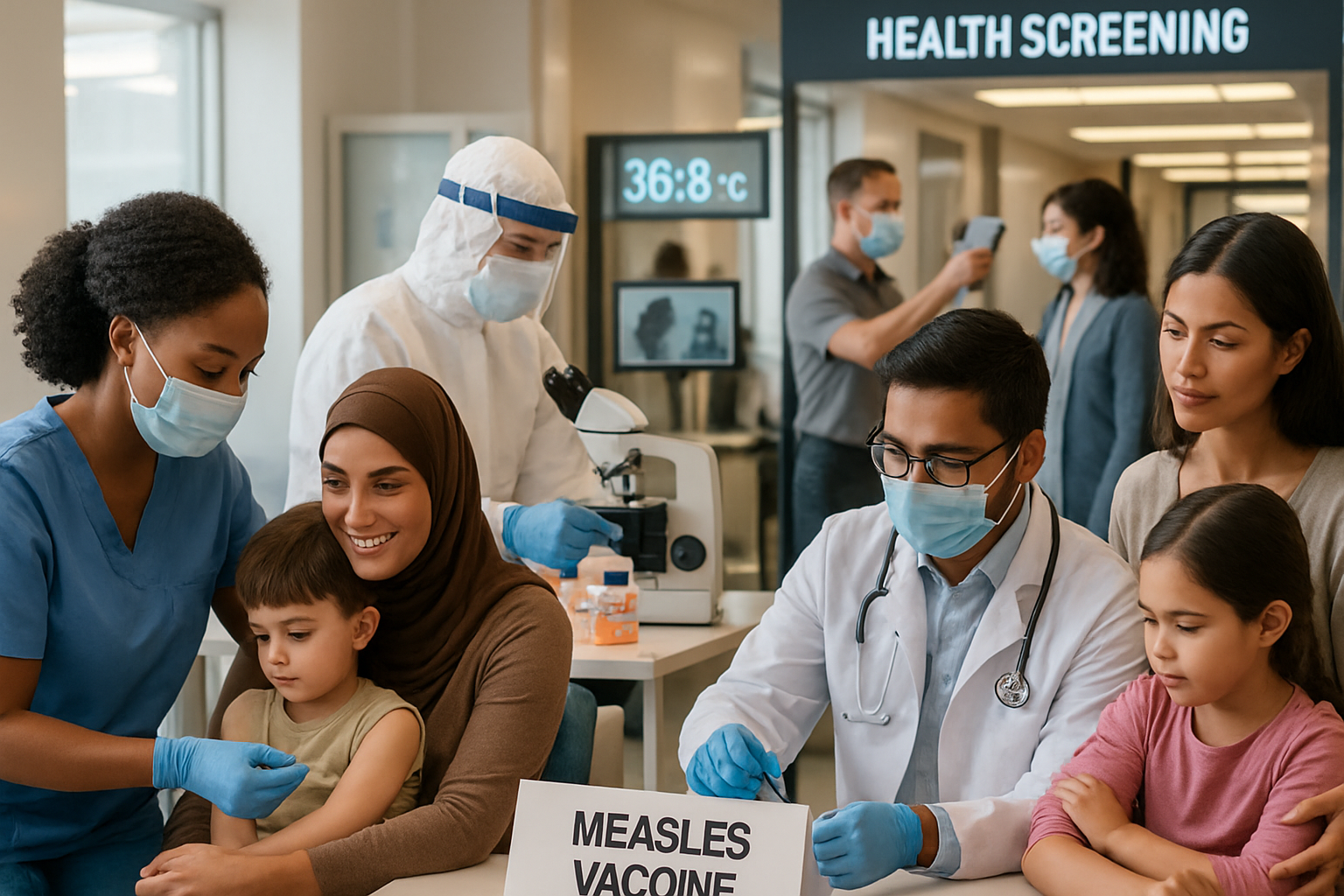
Global health authorities are confronting a convergence of infectious disease outbreaks, surveillance challenges, and rising non-communicable diseases that threaten to overwhelm healthcare systems across multiple continents, with Mexico's measles crisis reaching alarming proportions and international surveillance networks mobilizing against emerging viral threats.
Recent developments across six countries reveal the fragility of global health security as traditional infectious diseases resurge while modern lifestyle-related illnesses claim younger victims, creating a dual burden that challenges both prevention and treatment strategies.
Mexico's Measles Crisis Reaches Critical Point
Mexico continues to grapple with an escalating measles outbreak that has claimed the life of an 8-year-old boy in Durango, bringing the country's death toll to 29 fatalities amid 2,642 confirmed infections—a staggering 17-fold increase from just one month prior.
The child, son of agricultural workers who contracted the disease in Sinaloa state, died on February 10 in a Durango hospital, according to state Health Secretary Moisés Nájera. His death underscores the outbreak's reach across rural communities where vaccination coverage remains insufficient.
"This represents a marcado incremento in cases that has obligated authorities to intensify sanitary controls and vaccination campaigns to contain the contagions."
— Health authorities, El Financiero
Mexico City authorities have confirmed their first death from the outbreak—a 14-month-old infant who died in December 2025, highlighting how the crisis predates current surveillance efforts. The capital has launched comprehensive vaccination campaigns with multiple strategic modules citywide, calling urgently for population vaccination to prevent further outbreaks and protect collective health.
The outbreak's timing, occurring just months before the FIFA World Cup 2026, has raised particular concerns for international visitors and teams, with Guadalajara—a key host city—significantly affected by the surge.
International Nipah Virus Surveillance Intensifies
Parallel to the measles crisis, international health networks are strengthening surveillance protocols against the Nipah virus, a zoonotic pathogen with mortality rates reaching 40-75% and no available vaccine or specific treatment.
Vietnam's Ho Chi Minh City has implemented mandatory remote temperature checks for all passengers arriving at border gates, specifically targeting Nipah virus prevention during the 2026 Lunar New Year period. The Ho Chi Minh City People's Committee has emphasized the critical importance of early detection given the virus's severe health implications.
Mauritius health authorities have issued comprehensive educational materials about the virus, noting its natural presence in fruit bats and transmission through direct contact with infected animals, consumption of contaminated foods like raw date palm sap, or close contact with infected persons.
The Nipah virus (NiV) represents a serious zoonotic disease that can transmit from animals to humans and, in certain cases, from person to person. Symptoms typically appear between 4-14 days after exposure and can range from asymptomatic infection to acute respiratory illness and fatal encephalitis.
Malaysia's Persistent Tuberculosis Challenge
Malaysia faces ongoing challenges with tuberculosis clusters, with health authorities detecting 10 new clusters across the country. Johor state has recorded the highest number of cases, according to Health Minister Dzulkefly Ahmad, while new tuberculosis cases have also been identified in six additional states.
This development builds on Malaysia's struggle with 35 active tuberculosis clusters remaining from 88 clusters (254 cases) reported in 2025, demonstrating the persistent nature of TB transmission in community settings. The geographic distribution shows Selangor with the highest concentration, followed by Kelantan, Kedah, and Sarawak.
Health experts warn that latent tuberculosis cases create ongoing transmission risks requiring sustained monitoring and comprehensive contact tracing to prevent further community spread.
Singapore's Proactive Health Screening
Singapore continues to maintain robust health surveillance systems, with recent reports indicating comprehensive screening protocols for various health threats. The city-state's proactive approach includes temperature monitoring and health questionnaires for populations at risk of exposure to emerging diseases.
These measures reflect Singapore's broader strategy of maintaining strict public health vigilance while serving as a regional hub for international travel and commerce, requiring constant adaptation to emerging global health threats.
Fiji's Alarming NCD Statistics
Perhaps most concerning for long-term global health trends, Fiji's 2025 STEPS Survey reveals that nearly two out of every three families are affected by non-communicable diseases (NCDs), with cardiac events and diabetes-related complications increasingly claiming lives of people aged 35 and below.
Health Minister Dr. Atonio Lalabalavu warns that inactivity, smoking, unhealthy diets, and sugary drinks continue to fuel the crisis, stressing that tackling NCDs requires comprehensive lifestyle interventions and systemic healthcare reforms.
"Young lives are being lost to NCDs at an unprecedented rate, requiring urgent action to address the root causes of this preventable tragedy."
— Dr. Atonio Lalabalavu, Fiji Health Minister
The survey, conducted among 18-69 year-olds from May 2024 to June 2025, reveals troubling statistics about tobacco use: 36.3% of adults use tobacco, with 80.6% being daily smokers who predominantly choose manufactured cigarettes. Women show higher daily smoking rates (87.7%) compared to men (78.6%).
Systemic Healthcare Vulnerabilities Exposed
These concurrent health challenges expose fundamental vulnerabilities in global health systems that have emerged despite decades of international cooperation and investment. The measles outbreak in Mexico demonstrates how quickly vaccine-preventable diseases can resurge when coverage drops, while the NCD crisis in Fiji shows how lifestyle changes are outpacing healthcare system adaptation.
The Nipah virus surveillance efforts reveal both the strengths and limitations of international health security networks. While rapid information sharing and coordinated screening protocols demonstrate improved pandemic preparedness since COVID-19, the lack of vaccines or treatments for emerging pathogens highlights ongoing research and development gaps.
Malaysia's persistent tuberculosis clusters underscore how social and economic factors continue to drive infectious disease transmission even in middle-income countries with established healthcare systems.
International Response and Coordination
The World Health Organization continues to coordinate international responses despite facing funding challenges from major contributor withdrawals. Regional health networks have stepped up to fill gaps, with Asian countries particularly active in sharing surveillance data and coordinating response protocols.
Mexico's vaccination campaigns are receiving technical support from the Pan American Health Organization (PAHO), which has confirmed that Mexico leads the Americas with the highest measles case numbers plus over 5,200 suspected cases under investigation.
The economic implications of these health challenges are substantial. Prevention-focused approaches offer potential cost-effective interventions reducing long-term healthcare expenditures, while outbreak responses require immediate resource mobilization that strains already stretched health budgets.
Looking Forward: Lessons and Adaptations
These developments collectively represent a critical test of global health resilience in an era of climate change, increased mobility, and evolving disease patterns. Success in addressing these challenges depends on sustained political commitment, adequate resource allocation, international cooperation, and comprehensive training programs.
The convergence of infectious disease outbreaks with rising NCDs requires healthcare systems to simultaneously strengthen emergency response capabilities while building robust prevention and chronic disease management programs. This dual approach demands significant investment in both human resources and technology infrastructure.
Community engagement has emerged as a critical factor, with successful interventions requiring authentic connections and cultural sensitivity rather than top-down approaches. The integration of traditional knowledge with modern medical insights shows promise for sustainable health improvements.
As global health challenges continue to evolve, the experiences from Mexico's measles outbreak, international Nipah virus surveillance, Malaysia's TB clusters, Singapore's screening protocols, and Fiji's NCD crisis provide valuable lessons for building more resilient health systems capable of addressing both acute emergencies and chronic health challenges simultaneously.