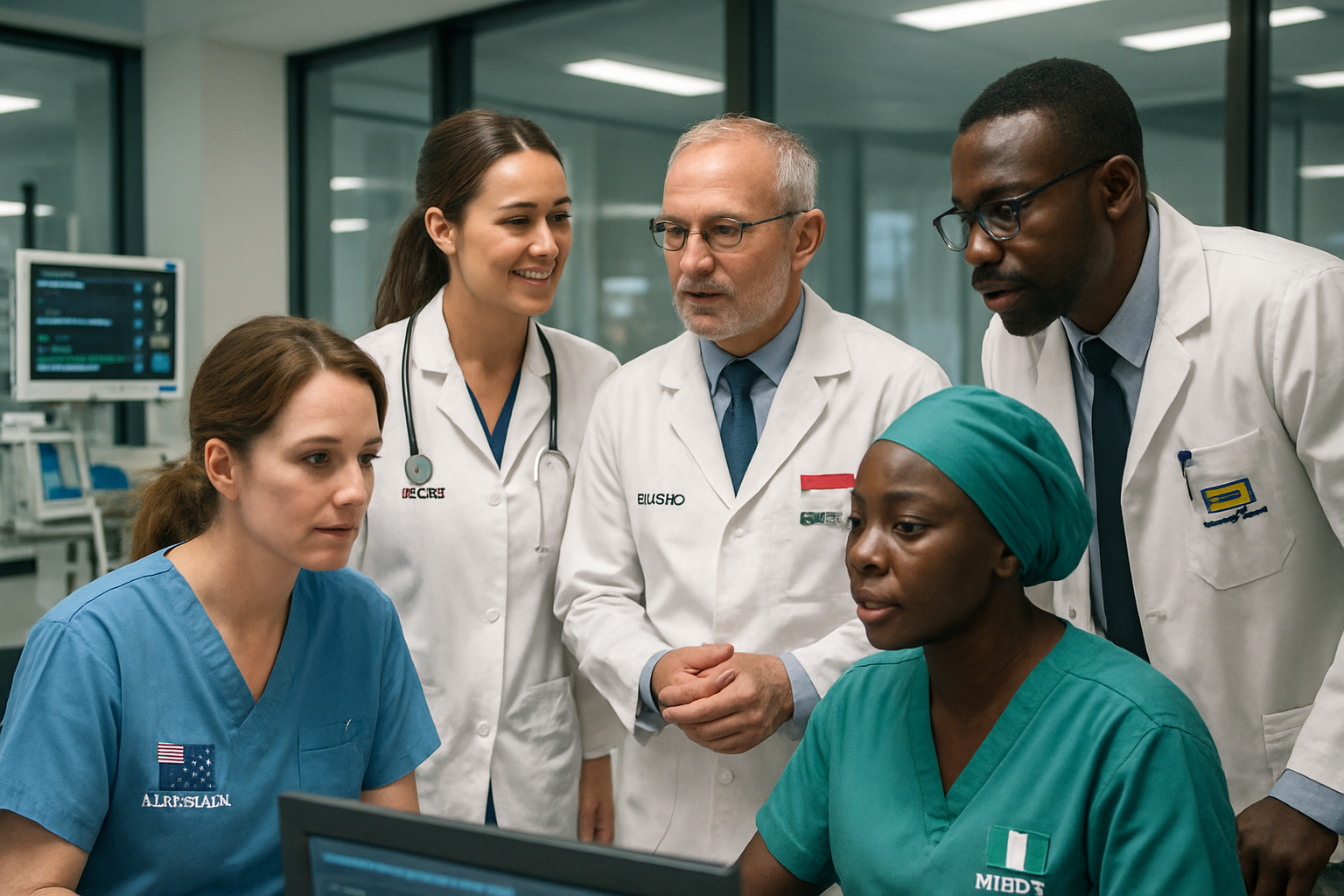
Countries across continents are implementing groundbreaking healthcare initiatives that range from life-saving HIV prevention injections to innovative antimicrobial resistance research, demonstrating unprecedented international cooperation in addressing global health challenges during what experts are calling the "therapeutic revolution of 2026."
Nigeria's HIV Prevention Breakthrough
Nigeria is set to become one of the first African nations to introduce twice-yearly HIV prevention injections in March 2026, marking a transformative milestone in the continent's HIV prevention response. The National Agency for the Control of AIDS (NACA) has completed landscape and readiness assessments in 10 states including Akwa Ibom, Anambra, Benue, Cross River, Ebonyi, FCT, Gombe, Kano, Kwara, and Lagos to evaluate service delivery capacity and identify implementation needs.
This long-acting injectable treatment offers significant advantages over daily oral medications through convenient dosing schedules while maintaining superior protection against HIV transmission. The initiative positions Nigeria as a regional pioneer in advanced HIV prevention technology, potentially serving as a model for other African nations implementing comprehensive prevention strategies.
Monaco's Cancer Screening Excellence
Monaco is marking two decades of organized cancer screening success with its comprehensive colorectal cancer detection program launched in 2006. The Principality's initiative targets insured residents aged between 50 and 80, who are invited every two years to complete free, home-based tests designed to detect traces of blood in stools before symptoms appear.
Health officials emphasize that early detection remains the most effective defense against the disease, with survival rates reaching nearly nine out of 10 cases when cancer is identified at an early stage. The program's March awareness campaign takes on added significance as it demonstrates how sustained political commitment to prevention-first healthcare strategies can achieve measurable improvements in population health outcomes.
Australia's Antimicrobial Resistance Research
Australian researchers have drawn a direct link between the biodiversity of the Australian bush, drug resistance, and common food products, highlighting the critical challenge of antimicrobial resistance that kills 100 Australians weekly. This crisis, affecting healthcare systems globally, represents one of the most pressing health security challenges of our time.
The research underscores the complex interconnections between environmental health, food systems, and medical treatment effectiveness. As antimicrobial resistance continues to spread globally, Australia's approach to understanding these relationships through environmental research offers potential insights for developing new treatment strategies and prevention protocols.
Canada's Surgical Innovation
In Canada, medical advances are addressing complex surgical challenges that have left patients on waiting lists for years. Daniel McClelland, a Winnipegger who spent years on a waitlist for highly specialized jaw surgery not performed in Manitoba, successfully received treatment in Saskatchewan. McClelland, who holds a 3D print of his skull, says he's now able to eat solid food again after getting the specialized procedure.
This case highlights both the challenges of healthcare delivery across provincial boundaries and the innovative solutions being developed to ensure patients receive necessary specialized care. The use of 3D printing technology for surgical planning represents the sophisticated integration of technology with human-centered care that characterizes the current healthcare transformation.
Uganda's Childhood Cancer Crisis
Uganda is confronting a troubling reality in childhood cancer care, with experts raising alarm over high numbers of children who die unnecessarily from curable childhood cancers. Dr. Banabus Atwiine, a pediatric oncologist at Mbarara Regional Referral Hospital, revealed that significant gaps in care and cases where families abandon treatment contribute to preventable deaths.
Speaking during February Childhood Cancer Awareness Month, Dr. Atwiine noted that while there is currently no nationwide registry for childhood cancer cases, the pattern of treatment abandonment represents a critical challenge that requires comprehensive community support systems and cultural sensitivity in healthcare delivery.
The Prevention-First Revolution
These developments occur within what healthcare experts are calling the "prevention-first healthcare revolution of 2026," characterized by a fundamental shift from reactive treatment models to proactive prevention strategies. Countries implementing comprehensive prevention programs are reporting superior cost-effectiveness compared to traditional treatment-focused approaches.
Economic analyses demonstrate that prevention-focused strategies offer substantial long-term cost reductions through decreased crisis interventions while achieving superior population health outcomes. The benefits extend beyond immediate healthcare savings, including improved community resilience, reduced social service demands, and enhanced international competitiveness.
"The convergence of evidence-based innovations, international cooperation models, and prevention-focused strategies provides a foundation for addressing 21st-century health challenges through coordinated action."
— Global Health Policy Analysis, 2026
International Cooperation Evolution
Despite funding challenges facing traditional multilateral health organizations, innovative cooperation models are emerging through bilateral partnerships and regional collaboration networks. Countries are developing peer-to-peer knowledge sharing systems where smaller nations provide research methodologies while larger countries offer technological innovations and implementation resources.
This distributed cooperation model represents a potentially transformative approach to international health coordination, allowing for flexible, culturally responsive approaches while maintaining evidence-based medical standards. The success of initiatives across Nigeria, Monaco, Australia, Canada, and Uganda demonstrates that effective healthcare transformation can occur through sustained commitment to scientific excellence balanced with human-centered delivery.
Technology and Human-Centered Care
The successful healthcare innovations of 2026 demonstrate a sophisticated understanding that technology should enhance rather than replace clinical judgment and personal medical relationships. From 3D surgical planning in Canada to home-based cancer screening in Monaco, the most effective advances integrate cutting-edge science with authentic human connections.
This balanced approach avoids what experts term the "wellness paradox," where technological solutions create healthcare inequality rather than improving access and outcomes for diverse populations. The goal is technology that increases accessibility while maintaining fundamental human elements of healthcare delivery.
Looking Forward
The healthcare initiatives documented across these five nations represent critical components of a global healthcare evolution that has the potential to establish new frameworks for addressing shared health challenges. Success in scaling these innovations globally will depend on sustained political commitment, adequate resource allocation, comprehensive professional training, and continued international cooperation.
As these programs continue to develop and demonstrate results, they provide templates for comprehensive transformation that addresses multiple healthcare challenges simultaneously through cultural adaptation, economic sustainability, and evidence-based medicine. The diversity of approaches—from high-tech antimicrobial research to community-based cancer screening—offers complementary models that strengthen the global healthcare ecosystem through shared learning and adaptation.
March 2026 represents a critical juncture in global healthcare evolution, with evidence-based innovations successfully translating into accessible, effective treatments that benefit communities regardless of geographic or economic constraints. The therapeutic revolution continues to demonstrate that coordinated international action can achieve transformative improvements in human health under even the most challenging circumstances.