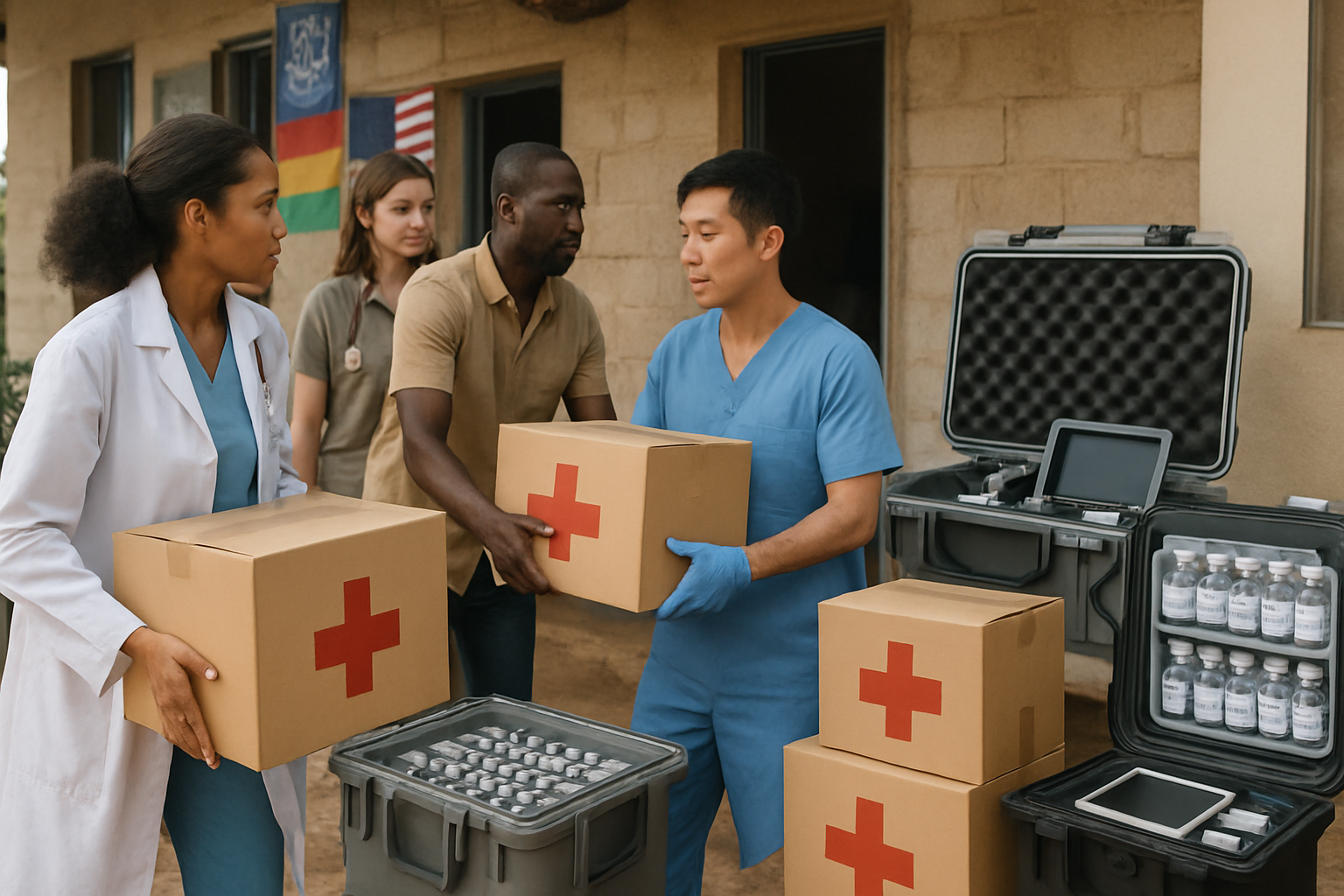
International health cooperation reached new heights this week as India delivered critical vaccine supplies to Afghanistan while Caribbean clinics received essential medical equipment donations, marking the latest phase in 2026's unprecedented global healthcare strengthening initiative.
Two significant health aid deployments underscore the expanding international commitment to healthcare infrastructure development across vulnerable regions. India's donation of 131 cartons of Td vaccines to Afghanistan addresses critical immunization gaps, while the Mustique Charitable Foundation's medical equipment delivery to Union Island and Mayreau demonstrates sustained Caribbean healthcare recovery efforts following Hurricane Beryl's devastating impact in 2024.
Afghanistan Receives Critical Vaccine Support
India's substantial vaccine donation represents a strategic humanitarian intervention in Afghanistan's struggling healthcare system. The 131 cartons of Tetanus-diphtheria (Td) vaccines contain a total of 100,608 doses, with each carton holding 768 doses distributed across multiple vials containing ten doses each. Taliban public health authorities confirmed receipt of the donation, emphasizing its crucial role in supporting national immunization programs amid the country's worst humanitarian crisis in 25 years.
The timing of India's donation aligns with Afghanistan's desperate healthcare needs, where international aid cuts have forced hundreds of health center closures, creating severe healthcare vacuums particularly affecting women and children. The World Health Organization recently delivered medical oxygen supplies to 23 hospitals across Afghanistan, highlighting the international community's continued engagement despite complex political circumstances.
Afghanistan's healthcare crisis extends far beyond vaccine shortages. The UN Development Programme recently revealed that 88% of female-headed households cannot meet minimum living requirements, compared to 75% of the general population struggling with daily needs. Taliban employment restrictions on women since August 2021 have effectively removed half the workforce from Afghanistan's economy, creating cascading effects throughout the healthcare system where women historically played crucial roles.
Caribbean Medical Equipment Initiative
In the Caribbean, the Mustique Charitable Foundation (MCF) and the UK Friends of the Mustique Charitable Trust (UKFMCT) delivered essential medical equipment to Union Island and Mayreau clinics as part of ongoing Hurricane Beryl recovery efforts. The donations address critical gaps in basic healthcare infrastructure that emerged following the storm's extensive damage to regional medical facilities.
The Caribbean initiative represents a model of sustained international commitment extending far beyond immediate disaster response. Rather than temporary relief, these medical equipment donations establish long-term healthcare capacity in communities that previously faced significant barriers to accessing basic medical services. The targeted approach addresses specific regional needs while building resilience against future climate-related disruptions.
This Caribbean medical equipment delivery builds on broader regional healthcare strengthening trends documented throughout 2026. Saint Vincent and the Grenadines recently announced a $23 million Overland Water Supply System for climate-vulnerable northeast communities, demonstrating how small island developing states are mobilizing resources for adaptive healthcare infrastructure.
Global Healthcare Infrastructure Renaissance
These recent donations occur within the context of what experts are calling a "global healthcare infrastructure renaissance" throughout 2026. Multiple developing regions have simultaneously launched unprecedented healthcare system strengthening initiatives, suggesting coordinated international recognition of healthcare sovereignty as essential for sustainable development.
Kenya's government medical equipment program successfully deployed mammography machines to 84 public hospitals for breast cancer screening, addressing significant diagnostic gaps in sub-Saharan Africa where late-stage cancer diagnosis remains a primary factor in poor survival rates. Similarly, Ghana's nationwide Free Primary Healthcare Programme launches in April 2026, engaging multiple stakeholders including the Ghana Medical Association, Pharmaceutical Society, private sector, and donor partners for sustainable implementation.
Tanzania has emerged as a regional cancer treatment hub with International Atomic Energy Agency recognition, while Benjamin Mkapa Hospital in Dodoma is positioned to serve Eastern Africa. Burkina Faso achieved successful kidney transplants at CHU de Tengandogo, establishing West African medical hubs during Captain Ibrahim Traoré's healthcare expansion funded by record gold production revenues.
Technology Integration and Innovation
The 2026 healthcare strengthening wave emphasizes technology integration alongside traditional infrastructure development. Fiji commissioned a $200,000 digital radiology machine at Nausori Health Centre, replacing 1997 analog equipment and serving multiple population centers. The Maldives inaugurated government-run optical shops and cardiac catheterization laboratories, with health officials pledging "transformational overhaul" of regional healthcare systems.
Malaysia's Health Ministry placed special emphasis on precision medicine and international cooperation, with eight specialists from China's Guangdong Provincial Health Commission arriving for medical assistance missions. These exchanges demonstrate how bilateral healthcare partnerships supplement traditional multilateral frameworks, creating resilient cooperation models that continue functioning despite institutional constraints.
Digital health initiatives complement physical infrastructure investments. The Caribbean's Caridoctor platform launch helps residents locate medical services and providers, addressing regional healthcare accessibility challenges through technology. Kuwait's implementation of Hugo robotic surgical systems represents cutting-edge surgical precision technology for specialized medical procedures.
Economic and Strategic Implications
Healthcare infrastructure investments demonstrate substantial economic implications extending far beyond immediate medical benefits. Prevention-focused approaches offer long-term cost reductions through decreased crisis intervention needs, reduced emergency care demands, and enhanced human capital development. Countries investing in comprehensive healthcare systems report improved community resilience, reduced social service demands, and better public health outcomes that justify initial infrastructure investments.
Medical tourism potential represents another significant economic factor. South Korea announced massive medical education expansion with 668 additional medical school places annually through 2031, positioning the country as a regional medical destination while addressing domestic healthcare workforce shortages. This strategic approach demonstrates how healthcare infrastructure investment can simultaneously serve domestic needs and international competitiveness.
The success of these healthcare initiatives depends on sustained political commitment, adequate resource allocation, comprehensive training programs, and maintenance protocols. International cooperation remains essential, with successful models emphasizing authentic community connections, cultural adaptation, and sustainable wellness approaches that allow space for local adaptation rather than standardized implementation.
Challenges and Future Prospects
Despite unprecedented progress in global healthcare strengthening, significant challenges persist. The WHO funding crisis resulting from major contributor withdrawals limits international coordination capacity during critical healthcare development periods. Regional disparities create implementation gaps, while the "wellness paradox" - where constant self-improvement pursuit creates psychological exhaustion - requires careful navigation in healthcare policy development.
Climate change impacts present additional complications for healthcare infrastructure development. January 2026 was recorded as the hottest month in history, with 18 out of 19 months exceeding 1.5°C above pre-industrial levels. Healthcare systems must simultaneously address immediate health needs while building resilience against increasingly severe environmental challenges.
Success factors identified across multiple healthcare strengthening initiatives include prevention emphasis over crisis response, authentic community connections versus performance-based metrics, cultural wisdom integration with modern medical insights, and holistic care approaches acknowledging social, cultural, and environmental factors affecting patient well-being.
International Cooperation Evolution
The February 2026 health initiatives demonstrate international cooperation evolution toward more flexible, culturally responsive, and sustainable models. Countries are developing peer-to-peer knowledge sharing networks where smaller nations provide research methodologies while larger countries offer technological innovations and implementation resources.
This distributed cooperation model potentially represents the future of international health coordination amid shifting geopolitical relationships. Rather than dependence on traditional multilateral frameworks, bilateral partnerships and regional cooperation continue driving progress through direct collaboration between healthcare systems facing similar challenges.
The Afghanistan vaccine donation and Caribbean medical equipment delivery exemplify this evolution. Both initiatives demonstrate sustained humanitarian engagement through organizations capable of navigating political sensitivities while addressing immediate civilian needs and long-term healthcare system strengthening.
As these healthcare initiatives continue developing throughout 2026, their success will be measured not only by immediate health outcomes but also by their contribution to sustainable healthcare sovereignty, international cooperation resilience, and community-centered wellness approaches that prioritize human dignity alongside medical effectiveness.