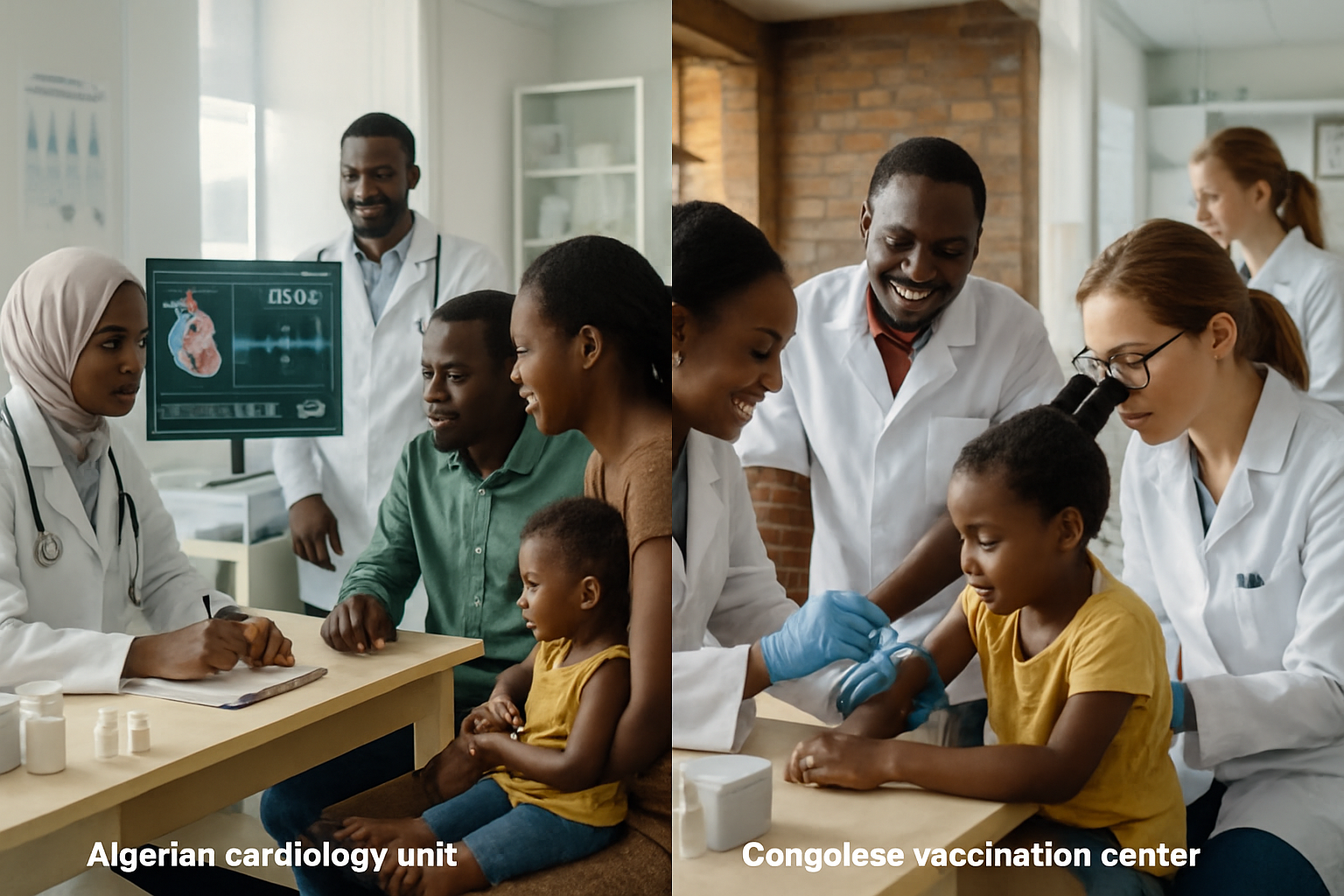
The global healthcare landscape is experiencing unprecedented transformation as the "Therapeutic Revolution of 2026" accelerates across three continents, with Algeria confronting a massive cardiovascular crisis affecting one million citizens, the Democratic Republic of Congo launching one of the world's largest childhood vaccination campaigns, and Sweden pioneering genetic solutions to organ shortages.
These developments represent a fundamental shift from reactive medical treatment to proactive, prevention-focused healthcare strategies that are reshaping how nations approach public health challenges. The convergence of innovative medical technologies with community-centered approaches is delivering measurable results while addressing some of humanity's most persistent health challenges.
Algeria's Heart Health Emergency: One Million Citizens at Risk
Professor Mohamed Shtibi, head of the cardiology department at Beni Messous University Hospital, revealed alarming statistics during a recent study day organized by NHS Mediacom. According to data from North African countries and statistical analyses, Algeria faces a cardiovascular crisis of unprecedented scale, with approximately one million Algerians suffering from heart failure or heart muscle failure.
The announcement came during a comprehensive study day titled "Heart Protection... Delayed Kidney Dialysis... Treatments That Make a Difference," organized in partnership with the Association of Medical Analysis Laboratories, the Algerian Association of Cardiology, and the Algerian Association of General Medicine. These figures position Algeria among the countries facing the most significant cardiovascular disease burdens in the Mediterranean region.
"This represents one of the most significant public health challenges facing our nation. The scale of heart failure cases requires immediate, coordinated intervention strategies that go beyond traditional treatment approaches."
— Professor Mohamed Shtibi, Cardiology Department Head
The crisis reflects broader patterns observed globally, where cardiovascular disease remains the leading cause of death despite significant advances in treatment technologies. Algeria's healthcare authorities are now implementing comprehensive prevention-first strategies, aligning with the global therapeutic revolution's emphasis on early intervention over reactive treatment.
Congo's Historic Vaccination Campaign: Protecting 23 Million Children
The Democratic Republic of Congo has launched one of the most ambitious vaccination campaigns in recent African history, targeting at least 23 million children aged 6 months to 14 years across all 515 health zones of the country. The campaign, scheduled from April 22-26, forms part of the 16th edition of African Vaccination Week and targets measles, rubella, and poliomyelitis.
Dr. Augustin Milabio, Deputy Director of the Expanded Programme on Immunization (EPI), announced the massive undertaking during a press briefing in Kinshasa. The campaign represents a coordinated effort to strengthen immunization coverage across one of Africa's largest and most geographically diverse nations.
This initiative aligns with the broader African healthcare renaissance, where developing nations are transitioning from healthcare recipients to regional medical innovators. The scale and coordination required for this vaccination campaign demonstrates the continent's growing capacity for large-scale public health interventions.

The campaign's timing coincides with increased global attention to vaccine-preventable diseases. Recent outbreaks of measles in various regions have highlighted the critical importance of maintaining high vaccination coverage rates, particularly in countries with large pediatric populations and geographical challenges.
Sweden's Genetic Engineering Breakthrough: Solving the Organ Crisis
Swedish researchers are pioneering revolutionary approaches to address the global organ shortage through genetically modified animals. According to reports from DN.se - Dagens Nyheter, scientists hope that genetically modified pigs will solve the critical shortage of organs for donations, with the additional benefit that people with meat allergies may be able to eat pork again.
This xenotransplantation research represents a paradigm shift in organ transplant medicine. The genetic modifications being developed aim to make animal organs compatible with human immune systems, potentially eliminating the dangerous rejection responses that have historically made cross-species transplantation impossible.
The research builds on recent advances in genetic engineering technologies, particularly CRISPR gene editing, which allows for precise modifications to animal DNA. These modifications target specific proteins and immune system markers that trigger rejection responses in human recipients.
"The potential impact of successful xenotransplantation cannot be overstated. We're looking at the possibility of ending organ waiting lists entirely while providing new therapeutic options for patients with various genetic conditions."
— Swedish Xenotransplantation Research Team
The Therapeutic Revolution of 2026: Prevention-First Healthcare
These developments occur within the broader context of what healthcare experts are calling the "Therapeutic Revolution of 2026"—a global paradigm shift from reactive treatment to prevention-focused healthcare strategies. Countries implementing comprehensive prevention programs are reporting superior cost-effectiveness through decreased crisis interventions while achieving better population health outcomes.
Economic analyses consistently show that prevention-focused strategies offer substantial cost reductions—some countries report up to 40% healthcare cost savings—through decreased emergency interventions while improving community resilience, reduced emergency care demands, and enhanced workforce productivity.
International Cooperation Despite Challenges
Despite funding challenges facing traditional multilateral health organizations, international cooperation continues to drive medical innovation through bilateral partnerships and regional collaboration networks. This distributed cooperation model allows for flexible, culturally responsive approaches while maintaining evidence-based medical standards.
The diversity of approaches—from Algeria's cardiovascular crisis management to Congo's massive vaccination campaigns and Sweden's genetic research—provides complementary models that strengthen the global healthcare ecosystem through shared learning and adaptation.
Technology Integration and Human-Centered Care
Successful healthcare innovations in 2026 demonstrate sophisticated integration of advanced technology with human-centered care approaches. The goal is for technology to enhance rather than replace clinical judgment and personal medical relationships, avoiding what experts term the "wellness paradox"—where technological solutions create healthcare inequality rather than improving access and outcomes for diverse populations.
This balance is evident in Congo's vaccination campaign, which combines advanced vaccine technologies with community-centered delivery approaches, ensuring cultural appropriateness and broad accessibility. Similarly, Sweden's genetic research maintains focus on patient outcomes and ethical considerations while pushing the boundaries of medical science.
Climate Health Intersection
These healthcare transformations occur during unprecedented environmental challenges, with global temperatures exceeding critical thresholds for consecutive months. Climate change is fundamentally altering traditional disease patterns, creating new health challenges that require healthcare systems to address immediate medical needs while building long-term environmental resilience.
Prevention-first approaches are particularly valuable for managing climate-related health challenges through proactive intervention rather than reactive crisis management. Vector-borne diseases, temperature-sensitive conditions, and food security issues require anticipatory healthcare strategies that align with the broader therapeutic revolution.
Economic and Social Implications
The economic implications of these healthcare advances extend far beyond immediate medical costs. Prevention-focused strategies demonstrate measurable benefits through enhanced community resilience, reduced social service demands, improved workforce productivity, and enhanced quality of life—creating positive economic multiplier effects that strengthen entire societies.
Countries developing breakthrough technologies position themselves as high-value market leaders while contributing to global knowledge bases. Medical tourism potential, reduced international medical referrals, and enhanced healthcare reputations create substantial economic opportunities for nations investing in comprehensive healthcare approaches.
Implementation Success Factors
The success of these diverse healthcare initiatives depends on several critical factors identified across the global therapeutic revolution:
- Sustained political commitment to healthcare investment beyond electoral cycles
- Comprehensive professional training programs for new technologies and approaches
- Authentic community engagement strategies that build trust and cultural appropriateness
- Continued international cooperation through knowledge sharing and resource optimization
- Regulatory frameworks that balance innovation with patient safety
Future Trajectory and Global Significance
April 2026 represents a critical juncture in global healthcare evolution, with evidence-based innovations successfully translating into accessible, effective treatments. The convergence of precision medicine advances, international cooperation models, and prevention-focused strategies provides a foundation for resilient healthcare systems addressing 21st-century challenges.
Algeria's cardiovascular crisis response, Congo's vaccination campaign, and Sweden's genetic research collectively demonstrate humanity's capacity for coordinated action achieving transformative health improvements under resource constraints. These initiatives integrate technological innovation with enduring healthcare principles: compassionate care, community engagement, and recognition of health as a universal human right.

The therapeutic revolution continues to demonstrate that coordinated international action can achieve transformative health improvements even under significant resource constraints. By balancing scientific excellence with human-centered care delivery, these initiatives ensure that medical advances benefit all populations regardless of geographic or economic constraints.
As these developments unfold, they offer hope for a future where healthcare systems can effectively address immediate health needs while building resilience for evolving challenges including climate change impacts, aging populations, and emerging health threats through sustained cooperation and innovation.