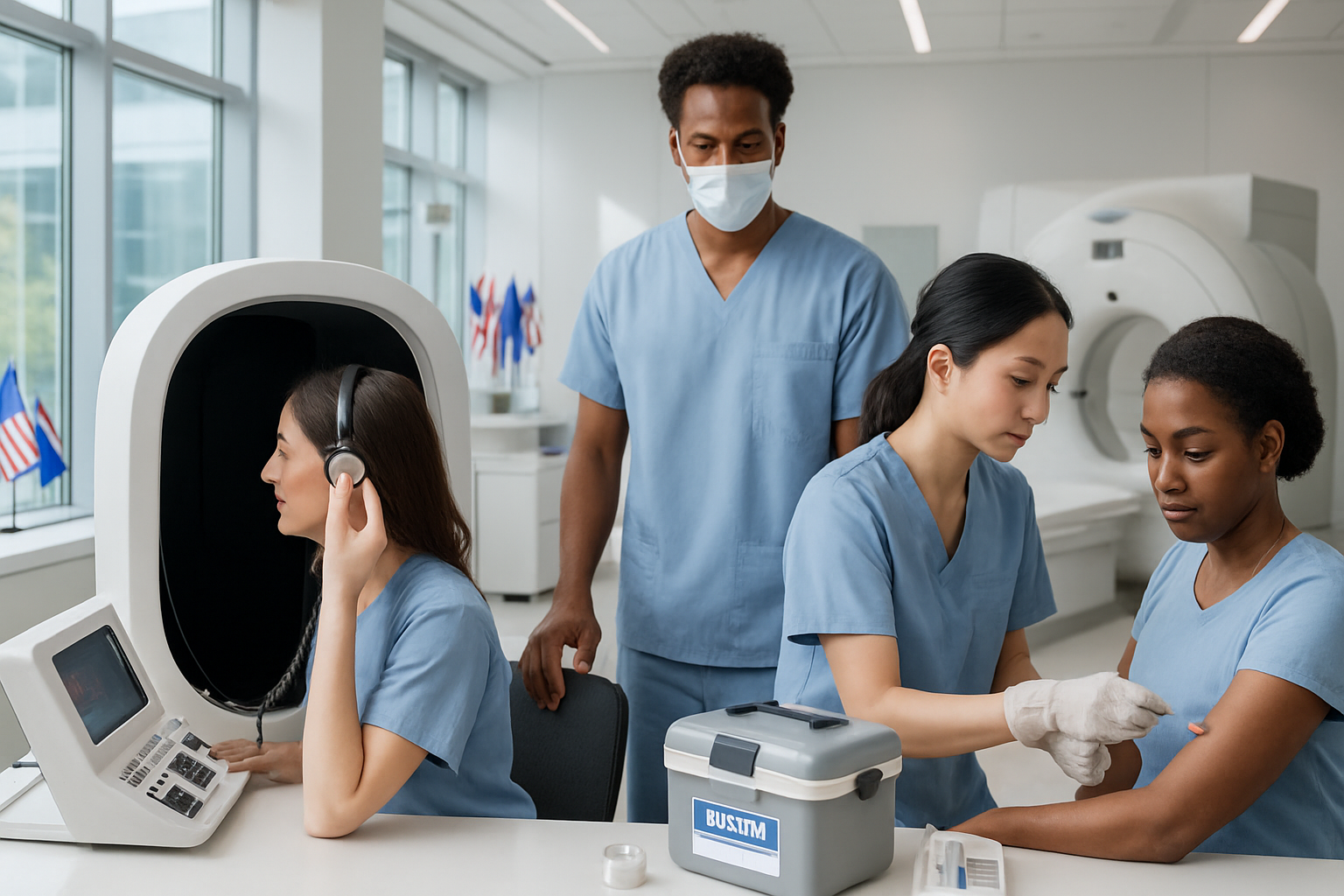
Medical advances spanning innovative hearing aid solutions, extensive vaccination campaigns, and revolutionary healthcare delivery models across Canada, Burkina Faso, Finland, Sweden, and Saint Lucia demonstrate the continuing momentum of the "Therapeutic Revolution of 2026," offering new hope for patients worldwide while addressing critical healthcare accessibility challenges.
The convergence of technological innovation with community-centered healthcare approaches marks a pivotal moment in global medical advancement, as nations increasingly adopt prevention-first strategies that prioritize early intervention over reactive treatment models.
Revolutionary Hearing Technology Transforms Childhood Care
Canadian researchers are pioneering breakthrough solutions for children with disabling hearing loss, addressing long-standing frustrations in pediatric audiology. The innovative technology targets a critical problem that has plagued healthcare providers for decades: earmolds that require constant replacement as children grow, creating significant barriers to consistent hearing aid effectiveness.
Nine-year-old Charlotte Gould's experience at the HA Leeper Speech and Hearing Clinic at Western University in London, Ontario, exemplifies the transformative potential of these advances. Under her mother Jennifer Gould's watchful guidance, Charlotte represents thousands of children who stand to benefit from game-changing hearing technology that could revolutionize pediatric audiological care.
"The constant need for earmold replacements creates unnecessary disruption in children's hearing aid functionality, affecting their development and quality of life."
— Pediatric Audiologist, Western University
This innovation aligns with broader international efforts to address sensory health challenges. Historical context reveals that Iceland has been calling for renewed primary school hearing screening programs, while researchers emphasize that early intervention in hearing loss could significantly reduce pressure on other healthcare waiting lists.
Massive Vaccination Campaign Reaches 23,000 in West Africa
Burkina Faso's Secretariat of NGOs (SPONG) achieved remarkable success through its Gavi-supported technical assistance project, demonstrating the power of community-centered healthcare delivery. The initiative, spanning ten health districts during the 2024-2025 period, mobilized 300 community resource persons—30 per district—to strengthen population awareness about vaccination importance.
The campaign successfully vaccinated over 23,000 additional people, representing a significant milestone in West African public health. Community resource persons were tasked with comprehensive communication strategies to enhance public understanding of vaccination benefits, addressing vaccine hesitancy through culturally appropriate education and engagement.
This success builds upon broader African healthcare transformation initiatives, including the Democratic Republic of Congo's historic introduction of antimalarial vaccines and Sierra Leone's ambitious "300 Days of Activism" targeting zero preventable maternal and child deaths. The coordinated approach reflects the continent's transition from healthcare recipient to regional medical innovator.
Community-Centered Approach Proves Effective
The SPONG project exemplifies successful implementation of prevention-first healthcare strategies. By deploying trained community advocates rather than relying solely on centralized medical facilities, the initiative overcame traditional barriers of geographic accessibility and cultural acceptance that have historically limited vaccination coverage in rural West African communities.
Nordic Nations Lead Environmental Health Innovation
Finland is pioneering research into how forest-derived materials in home environments can positively impact urban microbiomes, potentially reducing asthma and allergy risks. The groundbreaking study examines how forest soil brought into entrance mats creates more balanced microbial environments in urban homes, representing an innovative intersection of environmental science and preventive medicine.
Meanwhile, Sweden faces challenges with shingles vaccine shortages that have persisted for months. However, health authorities report that "fairly large volumes" of the vaccine are expected soon, with studies indicating the treatment may offer protection against dementia in addition to its primary function. The Swedish Medical Products Agency has received signals about incoming substantial vaccine supplies to address the shortage.
"Forest-derived materials in home settings demonstrate measurable improvements in urban microbial diversity, potentially offering new pathways for allergy and asthma prevention."
— Finnish Environmental Health Researcher
Climate and Health Intersection
These Nordic innovations occur within the broader context of climate health challenges, with healthcare systems adapting to the 18th consecutive month of global temperatures exceeding 1.5°C above pre-industrial levels. The Finnish research particularly highlights how environmental interventions can support human health during periods of unprecedented climate stress.
Caribbean Healthcare Infrastructure Expansion
Saint Lucia's investment in healthcare professional development demonstrates the global reach of the Therapeutic Revolution of 2026. Over thirty healthcare professionals participated in a comprehensive two-day workshop focused on non-communicable diseases (NCDs), strengthening their capacity to deliver quality care in addressing chronic conditions that represent leading health threats across the Caribbean region.
The initiative reflects broader Caribbean health priorities, including Trinidad and Tobago's expansion of the ILERA EKO equity fund and Jamaica's focus on preventive care strategies. These developments position Caribbean nations as active participants in global healthcare transformation rather than passive recipients of international health assistance.
Prevention-First Economics Demonstrate Superior Outcomes
Economic analyses across multiple countries implementing comprehensive prevention programs consistently demonstrate superior cost-effectiveness compared to reactive treatment models. Countries report substantial benefits including:
- Decreased crisis intervention costs through early identification and treatment
- Improved community resilience and reduced social service demands
- Enhanced workforce productivity through better population health outcomes
- Reduced emergency care demands and hospital utilization rates
- Enhanced international competitiveness through healthier populations
The Finnish forest microbiome research exemplifies this approach by addressing environmental factors that contribute to chronic respiratory conditions before symptoms develop. Similarly, the Burkina Faso vaccination campaign prevents disease outbreaks that would require expensive emergency interventions.
International Cooperation Drives Innovation
Despite funding challenges facing traditional multilateral health organizations, bilateral partnerships and regional cooperation networks continue driving medical innovation through peer-to-peer knowledge sharing. The diversity of approaches—from Canadian hearing technology to West African vaccination strategies to Nordic environmental health research—provides complementary models that strengthen the global healthcare ecosystem.
Success factors consistently identified across these initiatives include sustained political commitment to healthcare investment, comprehensive professional training programs, authentic community engagement strategies, and continued international cooperation for knowledge sharing and resource optimization.
Technology Integration with Human-Centered Care
The 2026 healthcare advances demonstrate sophisticated integration of advanced technology with human-centered care approaches, avoiding the "wellness paradox" where technological solutions create healthcare inequality. Each initiative emphasizes technology that enhances rather than replaces clinical judgment and personal medical relationships.
Canadian hearing technology development includes comprehensive patient support systems, while the Burkina Faso vaccination campaign combines digital tracking with community-based relationship building. This balance ensures that medical advances benefit diverse populations regardless of geographic or economic constraints.
Climate Resilience and Health System Adaptation
Healthcare transformations during unprecedented environmental challenges require systems that address immediate medical needs while building long-term climate resilience. The Finnish environmental health research directly addresses how urban populations can adapt to changing environmental conditions through practical interventions.
Prevention-first approaches prove particularly valuable for managing climate-related health challenges through proactive intervention rather than reactive crisis management. As temperature records continue falling and disease transmission patterns shift, healthcare systems implementing comprehensive prevention strategies demonstrate superior adaptability.
Future Implications and Global Scaling
April 2026 represents a critical healthcare evolution juncture with evidence-based innovations successfully translating into accessible, effective treatments. The convergence of precision medicine advances, international cooperation models, and prevention-focused strategies provides a foundation for resilient healthcare systems addressing 21st-century challenges.
Success in scaling these innovations globally depends on sustained political commitment, adequate resource allocation, comprehensive professional training, and continued international cooperation. The integration of technological innovation with enduring healthcare principles—compassionate care, community engagement, and health as a universal human right—offers hope for transformative improvements serving all populations.
"The Therapeutic Revolution of 2026 represents more than technological advancement; it embodies a fundamental shift toward healthcare systems organized around human flourishing rather than merely treating illness."
— Global Health Policy Analyst
The coordinated action demonstrated across Canada, Burkina Faso, Finland, Sweden, and Saint Lucia illustrates how diverse healthcare challenges can be addressed through innovative approaches that balance scientific excellence with equitable access. These developments provide a roadmap for sustainable healthcare transformation that serves communities worldwide while addressing the complex health landscape of the coming decades.