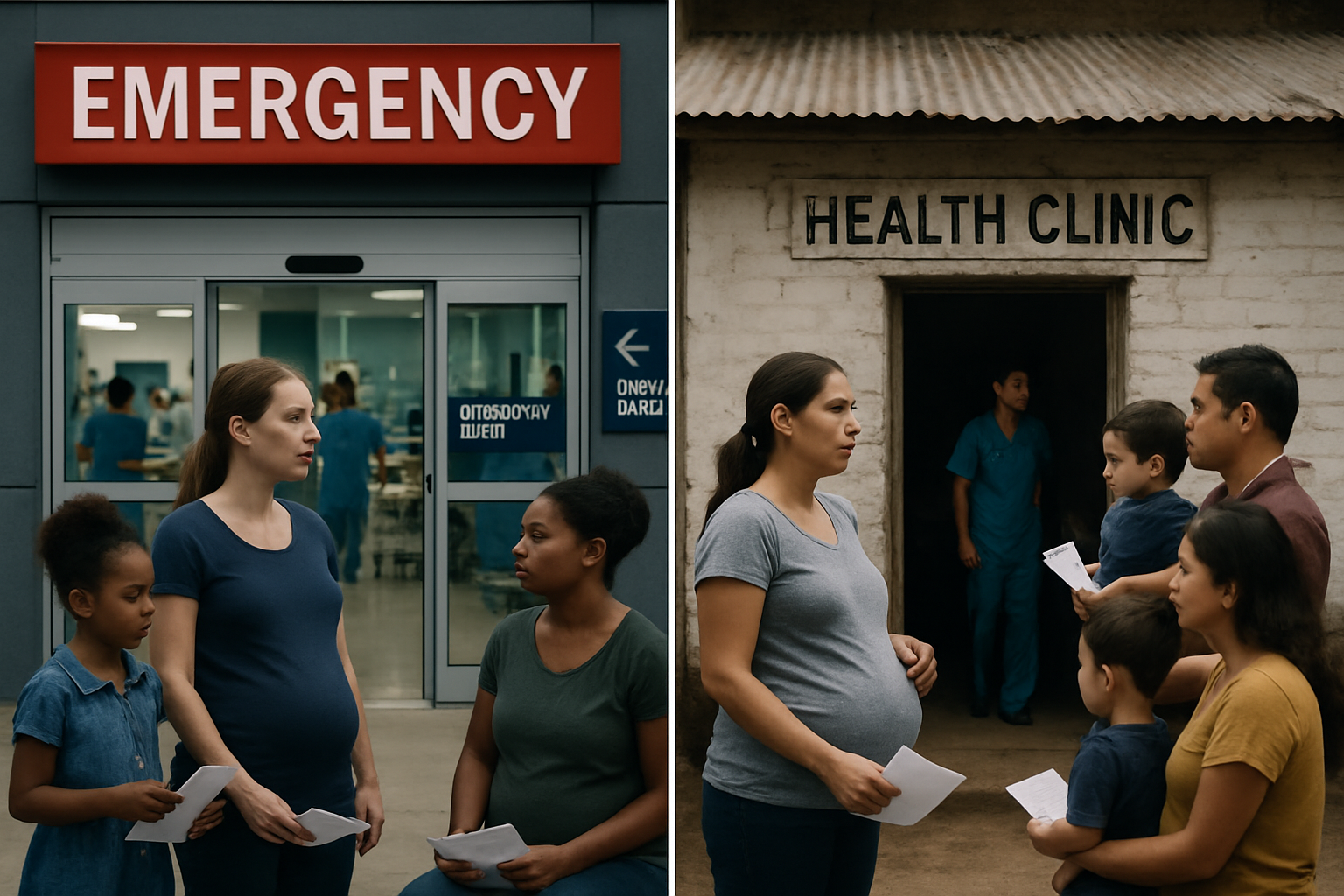
Two alarming reports from opposite sides of the globe reveal the deepening crisis in healthcare access, with Afghanistan's rural women facing life-threatening barriers to maternal care while UK dentists abandon NHS patients in unprecedented numbers during what experts call the "Therapeutic Revolution of 2026."
The United Nations Population Fund (UNFPA) delivered a stark warning this week about severely limited healthcare access for women and pregnant mothers in Afghanistan's remote villages, while British dentists returned £900 million to the NHS for failing to meet patient care obligations – together highlighting systemic failures that threaten millions of lives globally.
Afghanistan: Maternal Healthcare in Crisis
In rural Afghanistan, pregnant women face an increasingly desperate situation. The UNFPA report, released Wednesday, documents how poor road conditions, vast distances to medical facilities, and the absence of nearby health centers often force women to give birth at home without skilled medical assistance.
The crisis has been exacerbated by what UN Women condemned as Taliban Order No. 12, which bans women from working in national and international civil society organizations. Special Representative Susan Ferguson described this as a "serious violation of human rights" that deepens gender-based violence and worsens humanitarian conditions.
UN Special Rapporteur Richard Bennett warned that Afghanistan's health system faces an acute shortage of female medical professionals due to systematic restrictions on women's participation in healthcare roles. This shortage is particularly severe given cultural and religious norms that require female patients to be treated by female healthcare providers.
The numbers paint a grim picture: according to the UN Development Programme, 88% of female-headed households cannot meet minimum living requirements, compared to 75% of the general population. This affects approximately half of Afghanistan's workforce since the Taliban's August 2021 employment restrictions took effect.
UK: NHS Dental Services Abandon Patients
Meanwhile, in the United Kingdom, a different but equally troubling healthcare access crisis is unfolding. British dentists returned £900 million to the NHS – representing £1 out of every £7 they received – for failing to see NHS patients as contracted providers increasingly pursue private work instead.
This represents a fundamental breakdown in the UK's dental care system, where millions of patients struggle to access basic dental services. The exodus of dentists from NHS work has created what healthcare experts describe as a "dental desert" across large swaths of the country, particularly affecting low-income families who cannot afford private dental care.
The crisis reflects broader challenges within the NHS, which recently experienced unprecedented strain with 50,000 people waiting over 24 hours in emergency department corridors due to acute bed shortages. This "corridor care" phenomenon has compromised both patient safety and dignity, according to a BBC investigation.
Global Healthcare System Vulnerabilities
These crises exemplify what healthcare experts identify as common global vulnerabilities: administrative complexity barriers, chronic workforce shortages, aging infrastructure, and funding pressures that affect healthcare systems worldwide. The World Health Organization faces its own funding challenges following major contributor withdrawals, limiting international coordination precisely when global cooperation is most needed.
Dr. Richard Bennett emphasized that "sweeping restrictions and sharp international funding cuts are severely undermining Afghan women's access to essential healthcare services, deepening an already fragile health system." In Afghanistan, these cuts have forced hundreds of health center closures, while the WHO delivered medical oxygen to only 23 hospitals to address critical shortages in devastated infrastructure.
In contrast, the UK's crisis stems from systemic underfunding and workforce management failures rather than conflict, yet the result is similarly inadequate access to essential care. Dutch healthcare shows parallel problems, with over half of outpatient clinics operating with long waiting lists, creating significant delays for specialist treatment access.
The "Innovation-Infrastructure Gap"
Healthcare experts describe a growing "innovation-infrastructure gap" where medical advances continue at breakneck speed while basic service delivery fails. This "wellness paradox" sees technological sophistication contrasting sharply with fundamental healthcare failures.
Despite revolutionary advances in 2026 – including Japan's breakthrough iPS cell approvals, precision medicine developments, and AI-assisted diagnostics – millions cannot access basic healthcare services. The gap between what's medically possible and what's practically accessible has never been wider.
Prevention-first healthcare strategies are showing promise in some regions. Montana's mobile crisis teams achieved an 80% reduction in police mental health calls through proactive community intervention, while comprehensive prevention programs in various countries report improved community resilience and reduced social service demands.
International Cooperation Under Pressure
Traditional multilateral health frameworks face unprecedented challenges, but bilateral partnerships and regional cooperation continue driving medical innovation through peer-to-peer knowledge sharing. This distributed cooperation model allows flexible, culturally responsive approaches while maintaining evidence-based medical standards.
The International Federation of Red Cross and Red Crescent (IFRC) provided health services to over 2 million people in Afghanistan during 2025, supporting 128+ healthcare centers during the country's worst humanitarian crisis in 25 years. Such efforts demonstrate humanitarian medicine's ability to transcend political boundaries when lives are at stake.
Economic Implications and Reform Requirements
The economic implications extend far beyond immediate medical costs. Healthcare system failures undermine workforce productivity, international competitiveness, and quality of life. Prevention-focused strategies demonstrate substantial cost reductions through decreased crisis interventions while achieving superior population health outcomes.
Reform requirements are clear: administrative simplification, sustainable funding mechanisms, workforce development, equipment-training integration, and strengthened international cooperation. Success depends on sustained political commitment, adequate resource allocation, and comprehensive professional training.
Climate change adds another layer of complexity, with January 2026 marking the 18th consecutive month of temperatures exceeding 1.5°C above pre-industrial levels. Healthcare systems must address immediate medical needs while building long-term environmental resilience.
Human Cost and Urgent Action Needed
Behind these statistics lie human tragedies: Afghan mothers dying in childbirth without skilled care, British families unable to access dental treatment, patients worldwide caught between medical innovation and system dysfunction. These represent preventable suffering that demands immediate coordinated action.
Healthcare transformation requires balancing scientific innovation with systematic integrity, ensuring medical advances benefit all populations regardless of geographic or economic constraints. The diversity of approaches across countries provides complementary models for strengthening global healthcare ecosystems through shared learning and adaptation.
As we progress through 2026's "Therapeutic Revolution," the central challenge remains clear: translating remarkable medical advances into accessible, effective treatments for all. Success will determine whether this year marks a turning point toward truly universal healthcare access or a deepening of existing inequalities.
The stakes could not be higher. With millions of lives hanging in the balance, the international community must act decisively to bridge the growing gap between medical possibility and healthcare reality. The time for half-measures has passed – only comprehensive, sustained action can address the scale of this global healthcare access crisis.