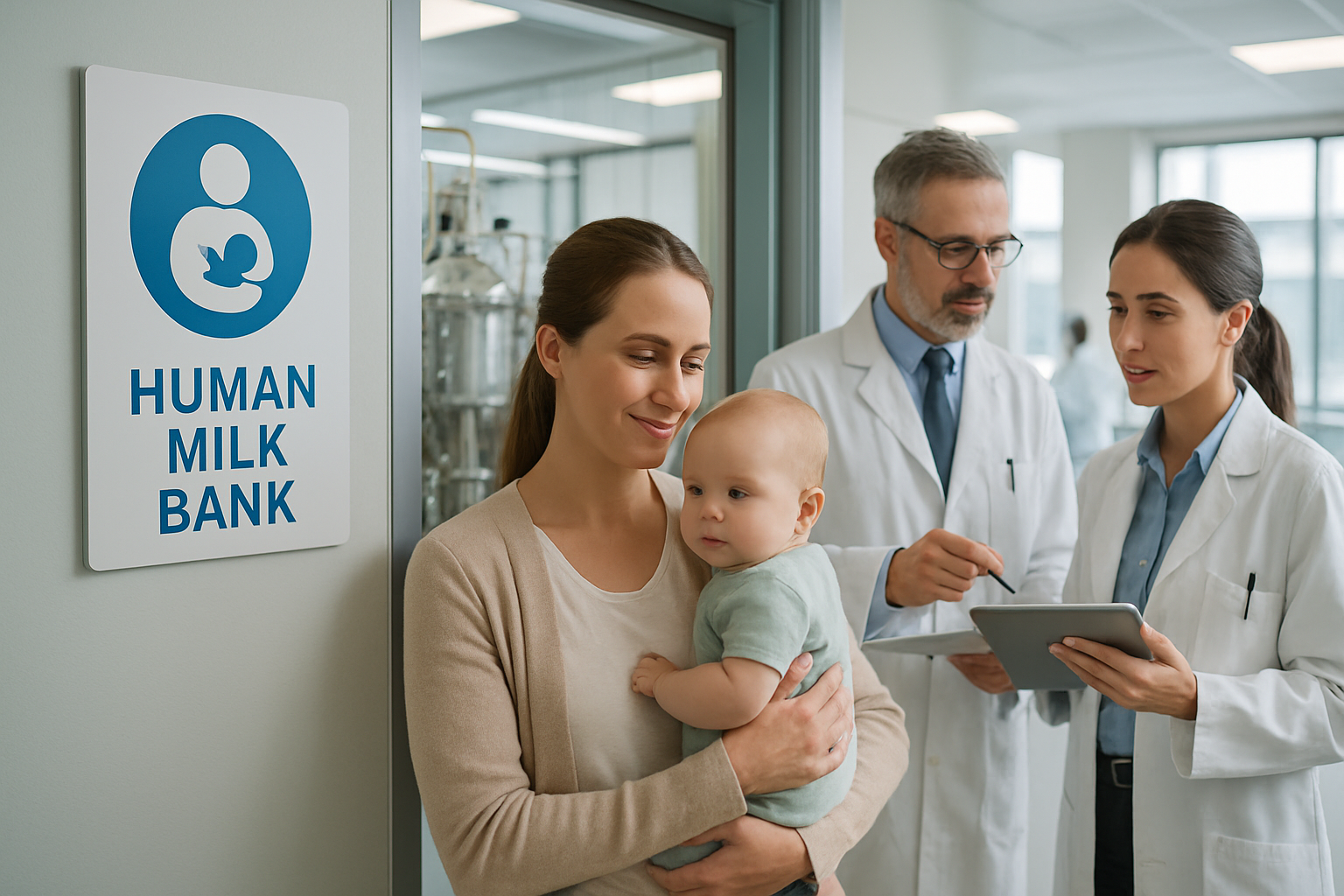
A revolutionary wave of healthcare innovations spanning breast milk banking, pharmaceutical sovereignty, and groundbreaking nutrition research is reshaping the global medical landscape, as three major developments across India, Colombia, and Taiwan demonstrate the accelerating transformation toward prevention-focused, accessible healthcare systems.
India's Life-Saving Human Milk Bank Initiative
The Post Graduate Institute of Medical Education and Research (PGI) in India has achieved a remarkable milestone in neonatal care, with over 1,700 mothers donating surplus breast milk to the institution's Human Milk Bank over four years, providing a crucial lifeline for 1,600 vulnerable neonates. This groundbreaking initiative represents one of the most successful maternal-infant health programs in South Asia, directly addressing the critical needs of premature babies and infants whose mothers cannot provide adequate nutrition.
The program's success reflects a broader global recognition of breast milk banking as essential healthcare infrastructure. According to medical experts familiar with the initiative, donated breast milk provides irreplaceable nutritional and immunological benefits that formula cannot replicate, particularly for premature infants whose digestive systems require the specialized proteins and antibodies found in human milk.
"Every donation saves lives," emphasized healthcare officials overseeing the program. The milk bank has become a model for other medical institutions across India and internationally, demonstrating how community-based healthcare initiatives can address critical gaps in neonatal care while building social support networks among new mothers.
Colombia's Historic Pharmaceutical Sovereignty Initiative
Colombia has achieved a historic breakthrough in pharmaceutical independence through a groundbreaking alliance between the University of Antioquia (UdeA) and the National Government to manufacture essential HIV and malaria medications domestically. This landmark agreement represents a "giant step toward pharmaceutical sovereignty" that promises to make life-saving drugs significantly more affordable and accessible to Colombian citizens.
The initiative addresses a critical vulnerability many developing nations face: dependence on expensive imported medications for treating infectious diseases. HIV treatment costs have historically created insurmountable barriers for patients in Latin America, while malaria medications remain prohibitively expensive despite the disease's endemic nature in tropical regions.
"This partnership will transform how we approach public health in Colombia," according to government officials familiar with the agreement. The domestic manufacturing program is expected to reduce drug costs by 40-60% while ensuring reliable supply chains that are not subject to international market fluctuations or geopolitical disruptions.
The University of Antioquia brings significant research and manufacturing expertise to the partnership, having developed capabilities in pharmaceutical chemistry and bioengineering over decades. The collaboration represents a new model for South-South cooperation, where academic institutions partner with governments to achieve health independence rather than relying on traditional aid relationships.
Taiwan's Revolutionary Nutrition Research
Taiwanese researchers have unveiled groundbreaking findings about pecans—often confused with walnuts—revealing their extraordinary potential for cardiovascular health and appetite regulation based on 20 years of comprehensive scientific analysis. The research challenges common misconceptions about nut varieties while providing evidence-based guidance for heart disease prevention through dietary modifications.
The study, published in Taiwan's leading health journals, demonstrates that pecans contain unique compounds that significantly improve lipid profiles and help regulate appetite mechanisms. Unlike the brain-shaped walnuts commonly consumed in Taiwan, pecans are smooth and elliptical, containing higher concentrations of monounsaturated fats and specific antioxidants that provide superior cardiovascular protection.
Taiwanese nutritionists emphasize that the research represents a shift toward precision nutrition, where specific foods are recommended based on rigorous scientific evidence rather than general dietary guidelines. The pecan research particularly addresses Taiwan's growing concerns about cardiovascular disease, which has become a leading health challenge as the population ages and dietary patterns change.
"We've discovered that not all nuts provide the same health benefits," explained researchers involved in the study. "Pecans offer unique advantages for heart health that distinguish them from other tree nuts, particularly for individuals at risk of cardiovascular disease."
Global Healthcare Transformation Context
These three developments occur within the broader context of what health experts are calling the "2026 Therapeutic Revolution"—a coordinated global shift toward prevention-first healthcare strategies that emphasize community engagement, technological innovation, and pharmaceutical sovereignty. The convergence of maternal health infrastructure, drug manufacturing independence, and evidence-based nutrition research represents a new paradigm in global health policy.
International health cooperation continues to accelerate despite funding challenges facing traditional multilateral organizations. Bilateral partnerships and regional cooperation models, exemplified by Colombia's university-government alliance, are increasingly driving medical innovation while ensuring that breakthrough research translates into accessible, effective treatments for local populations.
Prevention-focused approaches are emerging as economic necessities as healthcare systems worldwide face mounting cost pressures. Programs like India's milk banking initiative demonstrate how community-based preventive care can deliver superior health outcomes while reducing long-term healthcare expenditures compared to crisis intervention models.
Economic and Social Implications
The economic impact of these healthcare advances extends far beyond immediate medical benefits. Colombia's pharmaceutical sovereignty initiative could save the country millions of dollars annually in medication imports while creating high-skilled manufacturing jobs and building technological capabilities that attract international investment.
India's milk banking program not only saves infant lives but also strengthens social cohesion by creating support networks among mothers and reducing the psychological burden on families facing neonatal health challenges. The program's success has inspired similar initiatives across South Asia, demonstrating the potential for scalable community health interventions.
Taiwan's nutrition research provides actionable health guidance that could reduce cardiovascular disease burden significantly, translating into substantial healthcare cost savings while improving quality of life for aging populations. The findings are particularly relevant for Asian countries experiencing rapid dietary transitions and rising chronic disease rates.
Implementation Challenges and Opportunities
Despite their promise, these healthcare innovations face significant implementation challenges. Colombia's pharmaceutical manufacturing program requires substantial initial investment in equipment, training, and regulatory compliance while building quality control systems that meet international standards.
India's milk banking initiative, while successful, needs expansion to reach rural communities where neonatal mortality rates remain highest. This requires infrastructure investment, professional training, and community education programs that address cultural concerns about milk donation.
Taiwan's nutrition research must be translated into practical dietary guidelines and public health campaigns that change eating behaviors across diverse populations with varying economic circumstances and food access.
Healthcare experts emphasize that success depends on sustained political commitment, adequate resource allocation, comprehensive professional training, and continued international cooperation for knowledge sharing and technology transfer.
Future Healthcare Trajectory
These developments provide a template for resilient healthcare systems that combine scientific excellence with community engagement, technological innovation with cultural sensitivity, and local capacity building with international cooperation. The integration of maternal health infrastructure, pharmaceutical sovereignty, and evidence-based nutrition represents a mature understanding that effective healthcare requires comprehensive approaches addressing social, economic, and environmental health determinants.
February 2026 represents a critical juncture where healthcare innovations demonstrate the potential for transformative change when scientific precision meets practical implementation strategies. The success of these initiatives offers hope that global health challenges can be addressed through coordinated action that respects local contexts while leveraging international expertise and cooperation.
As healthcare systems worldwide face mounting pressures from aging populations, climate change impacts, and emerging infectious diseases, these breakthrough programs provide evidence that sustainable, equitable healthcare transformation is achievable through innovation, political commitment, and community engagement. The convergence of technological advancement with human-centered care approaches offers a roadmap for future global health development that prioritizes accessibility, affordability, and effectiveness for all populations.