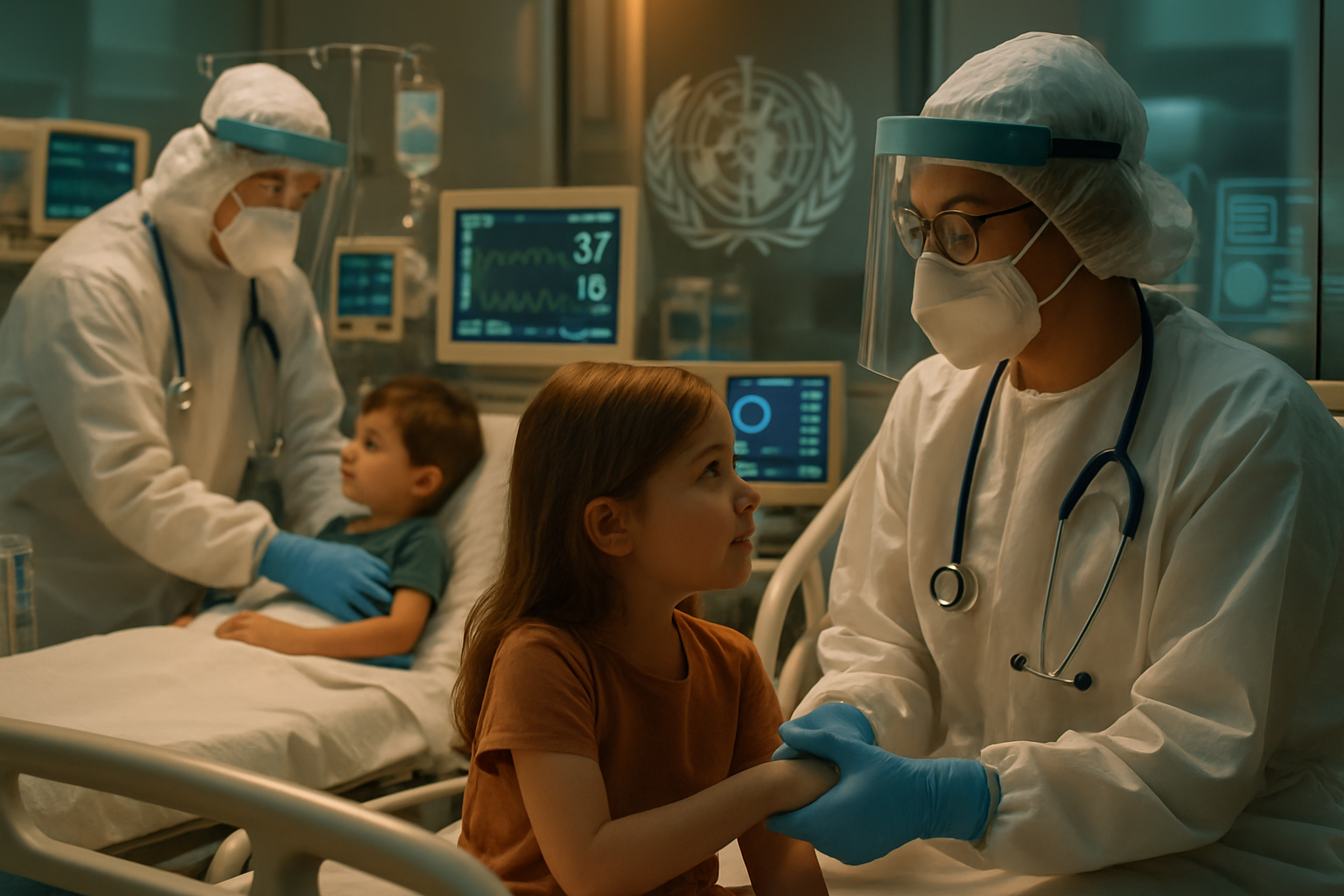
A devastating measles outbreak in Bangladesh has killed at least 143 people, primarily children, while a meningitis crisis in the UK spreads across borders, highlighting critical vulnerabilities in global healthcare systems despite the ongoing "Therapeutic Revolution of 2026."
The convergence of these infectious disease emergencies reveals a troubling paradox: as medical science achieves unprecedented breakthroughs in precision medicine, AI-assisted surgery, and regenerative therapies, basic public health protections are failing millions worldwide due to vaccination coverage gaps and healthcare infrastructure strain.
Bangladesh Measles Outbreak: A Preventable Tragedy
In Bangladesh's hardest-hit regions, 18-year-old Rubia Akhtar Brishti rocks her fevered one-year-old son Minhaz, whose body was covered in characteristic measles rashes just days before. "The boy had high fever and found it hard to breathe," Brishti recounted, describing the terrifying progression of symptoms that nearly claimed her child's life.
The outbreak, which began on March 15, 2026, has now documented more than 12,000 suspected cases across the South Asian nation, making it the worst measles crisis in the region's recent history. The vast majority of victims are children under five, with malnutrition and overcrowded living conditions accelerating transmission rates.
Health officials confirm that 78% of cases involve individuals with inadequate vaccination coverage, highlighting systemic failures in immunization programs that had previously shown progress. The crisis particularly affects urban slums and rural areas where access to healthcare services remains limited despite national vaccination campaigns.
UK Meningitis Crisis Goes Global
Simultaneously, the United Kingdom faces an unprecedented meningitis B outbreak that has already crossed international borders. Health authorities in Kent have confirmed 29 cases linked to a nightclub exposure event, with the death toll standing at two victims including a University of Kent student and a Year 13 student from Faversham.
The outbreak's international dimension became clear when French health officials confirmed a cross-border case involving someone who had visited the University of Kent campus. This development prompted enhanced surveillance protocols across Europe and demonstrated how modern mobility can rapidly transform local health emergencies into global concerns.
British health authorities have distributed over 700 preventive antibiotic doses and launched massive vaccination campaigns targeting university students and school pupils in affected areas. However, the response has been hampered by nationwide vaccine shortages and an NHS system already operating beyond capacity, with over 50,000 patients waiting more than 24 hours in emergency department corridors.
Palestinian Healthcare Under Siege
Adding to global healthcare pressures, the Palestinian Ministry of Health reports that more than 21,000 patients are waiting for medical treatment outside Gaza, with Israeli border closures blocking access to essential care. The ministry has refuted allegations about its medical referral operations, emphasizing that bureaucratic and political barriers, rather than administrative failures, are preventing critically ill patients from accessing life-saving treatments abroad.
This situation illustrates how conflict zones create unique healthcare vulnerabilities, where medical needs become secondary to political considerations, leaving thousands of patients in medical limbo during health emergencies.
The Innovation-Infrastructure Paradox
These concurrent crises expose what healthcare experts are calling the "wellness paradox" of 2026 – a phenomenon where remarkable technological advances coexist with fundamental healthcare delivery failures. While researchers develop breakthrough treatments for cancer, Alzheimer's disease, and genetic disorders, basic vaccine-preventable diseases continue to claim lives due to system breakdowns.
The "Therapeutic Revolution of 2026" has produced extraordinary innovations including lab-grown organs, precision cancer treatments, and AI-powered diagnostics. Yet these advances remain inaccessible to millions affected by preventable diseases that vaccines eliminated decades ago in well-resourced health systems.
This disparity reflects broader challenges in global health equity, where cutting-edge medical capabilities exist alongside poverty, conflict, and infrastructure failures that leave vulnerable populations exposed to diseases that should no longer pose significant threats.
Climate Change as Health Threat Multiplier
The healthcare crises unfold during unprecedented environmental stress, with January 2026 marking the 18th consecutive month of global temperatures exceeding 1.5°C above pre-industrial levels. Climate change is fundamentally altering disease transmission patterns, creating optimal conditions for pathogen survival and enabling diseases that typically peak during different seasons to co-circulate simultaneously.
Public health experts warn that traditional healthcare systems designed to handle sequential health challenges are increasingly overwhelmed by multiple concurrent disease outbreaks facilitated by changing environmental conditions.
Prevention-First Strategies Show Promise
Despite system failures, some regions demonstrate the effectiveness of prevention-focused approaches. Countries implementing comprehensive prevention programs report 40% cost reductions through decreased crisis interventions while achieving superior population health outcomes.
Montana's mobile crisis teams achieved an 80% reduction in police mental health calls through proactive community intervention. Finland's educational reforms successfully balance academic achievement with psychological wellbeing, preventing depression patterns that emerge in adulthood.
These success stories provide a roadmap for transformation: sustainable prevention requires consistent political commitment, adequate resources, community engagement, and international cooperation rather than reactive emergency responses after crises develop.
International Cooperation Under Strain
The concurrent healthcare emergencies occur amid a funding crisis at the World Health Organization, with major contributor withdrawals limiting international coordination capabilities precisely when global cooperation is most needed. However, innovative bilateral partnerships and regional collaboration networks continue driving medical innovation through peer-to-peer knowledge sharing.
This distributed cooperation model allows flexible, culturally responsive approaches while maintaining evidence-based medical standards. Countries are transitioning from healthcare aid recipients to regional medical innovators, developing expertise that benefits neighboring nations through direct partnerships rather than traditional multilateral frameworks.
Economic Implications Beyond Healthcare
The healthcare crises carry economic implications extending far beyond immediate medical costs. Educational disruption, increased social service demands, and long-term productivity losses affect workforce development and international competitiveness.
Prevention-focused strategies demonstrate measurable economic benefits through enhanced community resilience, reduced emergency care demands, and improved workforce productivity. However, these approaches require sustained investment during crisis periods when political pressure favors immediate emergency responses over long-term prevention infrastructure.
Reform Requirements Critical
Healthcare experts emphasize that overcoming current crises requires comprehensive reform including administrative simplification to reduce bureaucratic barriers, massive healthcare education investment for workforce development, infrastructure modernization for facilities and equipment, and technology integration that enhances rather than complicates care delivery.
Success depends on sustained political commitment to healthcare investment beyond electoral cycles, comprehensive professional training for new technologies and approaches, authentic community engagement that builds trust and cultural appropriateness, and continued international cooperation through knowledge sharing and resource optimization.
Critical Juncture for Global Health
April 2026 represents a critical juncture in healthcare evolution. The choices made in coming months will determine whether global health systems overcome institutional crises to realize the promise of the Therapeutic Revolution, or whether mounting pressures fragment systems that millions depend upon.
The convergence of precision medicine advances, international cooperation models, and prevention-focused strategies provides the foundation for resilient healthcare systems addressing 21st-century challenges. However, success requires coordinated action ensuring that medical advances translate into accessible, effective treatments for all populations regardless of geographic or economic constraints.
The stakes extend beyond healthcare costs, affecting educational achievement, workforce productivity, social stability, and international competitiveness for decades ahead. The current crisis serves as both a warning about the fragility of health systems and a call to action for comprehensive reform prioritizing human health as a fundamental right requiring robust international cooperation and sustained commitment.
As medical science continues advancing at unprecedented speed, the fundamental challenge remains integrating these advances with human-centered care delivery that serves all populations effectively. The tragedy of preventable deaths from vaccine-preventable diseases amid remarkable medical innovations demands urgent action to bridge the gap between medical possibility and healthcare reality.