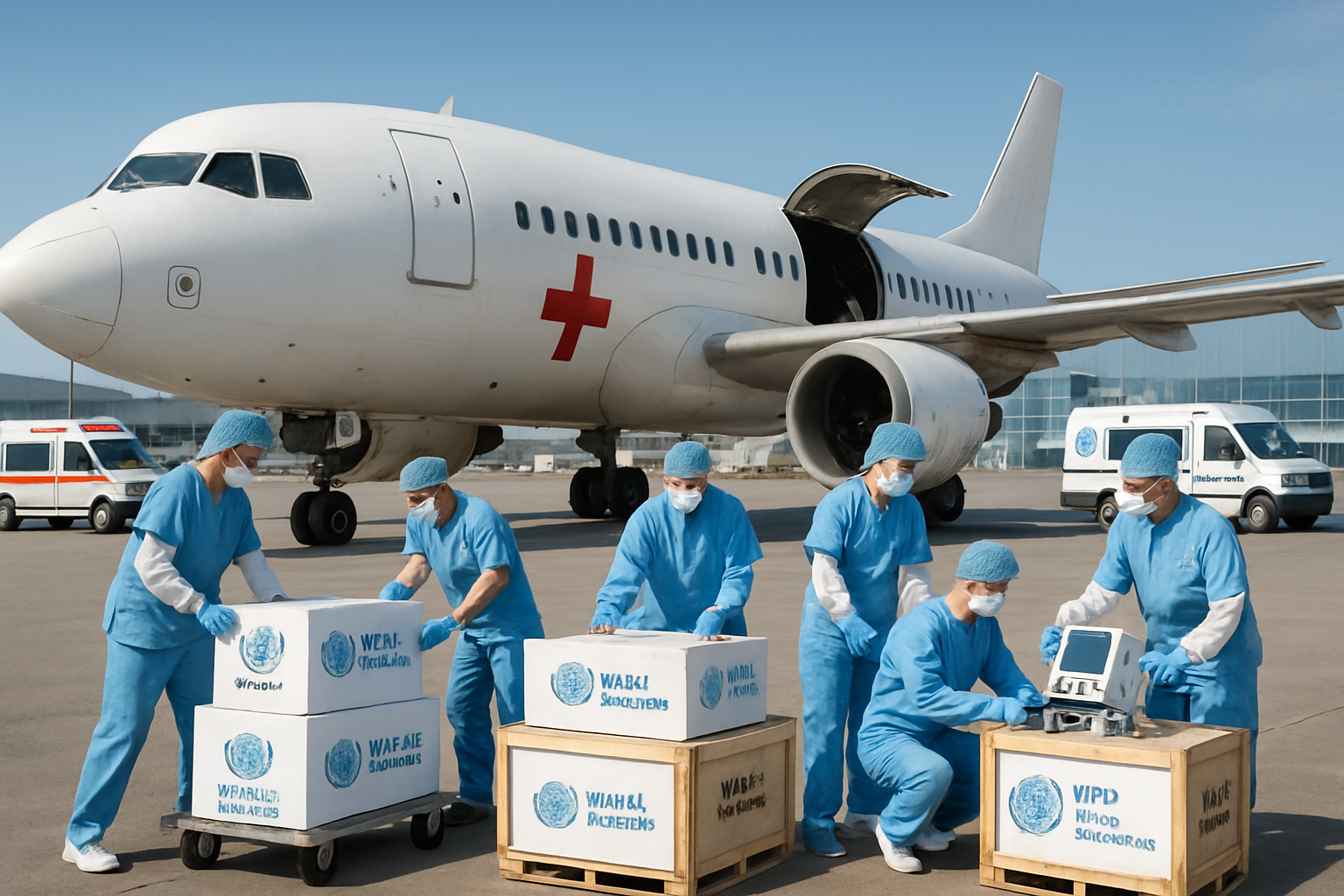
The World Health Organization has delivered 78 tonnes of life-saving medical supplies to Afghanistan from Dubai, providing urgent support for hundreds of thousands of people as the country faces its worst humanitarian crisis in 25 years, highlighting the severe strain on global healthcare systems amid overlapping international emergencies.
The massive air shipment includes measles treatment kits, pneumonia supplies, and nutrition support for malnourished children, arriving at a time when Afghanistan's health system remains under unprecedented pressure. The delivery comes as UNICEF announced it needs $949.1 million in 2026 to respond to mounting humanitarian needs, warning that millions of children and families remain trapped in overlapping crises driven by poverty, climate shocks, and weak services.
Afghanistan Healthcare Emergency Reaches Crisis Point
The WHO's latest delivery underscores the severity of Afghanistan's medical emergency, where systematic restrictions have created acute shortages of female medical professionals at a time when cultural and religious norms require female providers to treat female patients. UN Special Rapporteur Richard Bennett has repeatedly warned that these sweeping restrictions, combined with sharp international funding cuts, are severely undermining Afghan women's access to essential healthcare services.
According to WHO assessments, medical oxygen has been delivered to only 23 hospitals across the country—12 in Kabul and 11 in the provinces—while hundreds of health centers have closed due to aid cuts during what the UN describes as the worst humanitarian crisis in 25 years. The International Federation of Red Cross and Red Crescent (IFRC) has provided health services to over 2 million people in 2025, supporting 128+ healthcare centers, but the scale of need far exceeds available resources.
"The devastating disease impact on vulnerable communities requires urgent collective action,"
— Edwin Ceniza Salvador, WHO Representative
The healthcare crisis is compounded by economic devastation, with 88% of female-headed households unable to meet minimum living requirements compared to 75% of the general population. Systematic workforce exclusion affects approximately half of Afghanistan's potential labor force, creating structural economic damage that affects the entire population.
Global Healthcare System Strain Intensifies
While Afghanistan faces its acute emergency, healthcare systems worldwide are experiencing unprecedented strain. In British Columbia, Canada, healthcare workers are grappling with regulation overhauls following tragic incidents, including concerns raised by a nurse whose 11-year-old son died at a Vancouver Island hospital after two misdiagnoses during emergency room visits.
The case highlights broader questions about transparency and accountability in healthcare systems, with workers questioning whether new regulatory frameworks will actually improve patient outcomes or perpetuate systemic problems. These concerns reflect a global pattern of healthcare infrastructure challenges that extend far beyond any single country or region.
In Papua New Guinea, the harsh reality of rural healthcare access has been starkly illustrated by reports of women being carried on stretchers for hours to reach medical facilities, exposing the severe gaps in rural health service delivery that affect millions worldwide.
International Response and Funding Challenges
UNICEF's $949.1 million appeal for Afghanistan represents just one component of a massive global humanitarian funding gap. The agency's appeal is intended to support 12 million people, including 6.5 million children, with life-saving assistance including healthcare, nutrition, education, child protection, and water and sanitation services.
The funding crisis occurs against a backdrop of reduced international aid and competing global emergencies. The World Health Organization itself faces severe funding constraints from major contributor withdrawals, limiting international coordination precisely when global cooperation is most needed to address shared health challenges.
Despite these constraints, innovative bilateral partnerships and regional collaboration networks are emerging as alternative cooperation models. Countries are developing peer-to-peer knowledge sharing networks, with smaller nations contributing research methodologies while larger countries offer technological innovations and implementation resources.
Prevention-First Healthcare Revolution
Amidst these crises, a fundamental transformation is occurring in global healthcare approaches. The "Therapeutic Revolution of 2026" represents a shift from reactive treatment to prevention-first strategies that emphasize early intervention, community engagement, and proactive health maintenance.
Countries implementing comprehensive prevention programs are reporting improved community resilience, reduced emergency care demands, and superior population health outcomes. Economic analyses demonstrate that prevention-focused strategies achieve better results with reduced long-term costs through decreased crisis interventions.
This transformation is particularly relevant as healthcare systems face additional pressures from climate change, with January 2026 marking the 18th consecutive month of temperatures exceeding 1.5°C above pre-industrial levels. Climate change is fundamentally altering traditional disease patterns and creating new health challenges that require immediate response while building long-term environmental resilience.
Cardiovascular Health Focus Amid System Challenges
Adding to the complex healthcare landscape, cardiologists are warning about specific dietary risks that could worsen heart health outcomes. Lithuanian health experts have identified certain types of processed meats as particularly harmful to cardiovascular health, representing the kind of preventable health risks that strain already overburdened healthcare systems.
These warnings underscore the importance of prevention-first approaches, where addressing dietary and lifestyle factors before they lead to serious medical conditions can significantly reduce the burden on healthcare infrastructure. Such preventive strategies are becoming increasingly crucial as healthcare systems struggle to meet existing demand.
The Path Forward
The convergence of humanitarian crises, system strain, and innovative healthcare approaches represents a critical juncture for global health policy. Success in addressing these overlapping challenges requires sustained political commitment to healthcare investment, comprehensive professional training, authentic community engagement, and international cooperation that respects local autonomy while sharing resources and knowledge.
The integration of advanced medical technologies with fundamental healthcare principles—compassionate care, community engagement, and recognition of health as a universal human right—represents the foundation for building resilient healthcare systems capable of addressing 21st-century challenges.
As the WHO's delivery to Afghanistan demonstrates, immediate humanitarian response remains essential even as longer-term systemic reforms are pursued. The challenge lies in ensuring that medical advances translate into accessible, effective treatments for all populations, regardless of geographic or economic constraints, while building systems capable of preventing rather than merely responding to health crises.
The stakes extend beyond healthcare itself, affecting educational achievement, workforce productivity, social stability, and international competitiveness. The choices made regarding prevention strategies, infrastructure investment, and international cooperation in the coming months will determine whether healthcare systems can achieve sustainable universal access or face continued fragmentation that leaves millions vulnerable.