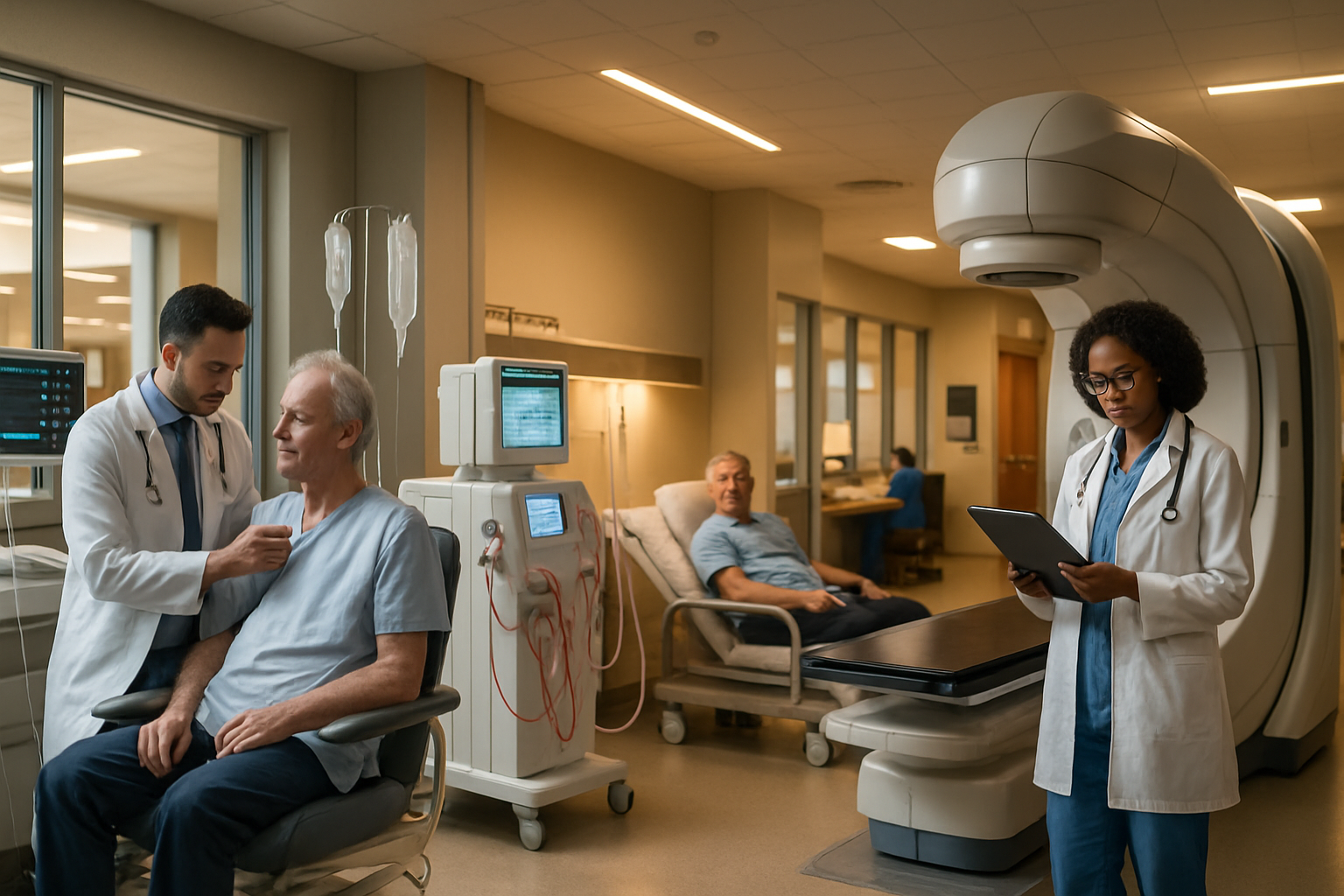
Countries worldwide are accelerating massive healthcare infrastructure investments, with Cyprus launching a national cancer institute, Ireland opening a €59 million community hospital, and Guyana expanding critical dialysis services as part of the ongoing "Therapeutic Revolution of 2026."
These developments represent a coordinated global shift toward prevention-first healthcare strategies, demonstrating how nations are prioritizing medical infrastructure as a cornerstone of economic development and social stability. The investments span from specialized cancer treatment facilities to community-based care centers, marking a fundamental transformation in how countries approach healthcare delivery.
Cyprus Establishes National Cancer Institute
In a landmark decision that fulfills a key campaign promise, President Nikos Christodoulides announced Wednesday that Cyprus will create its own national cancer institute, with the Cabinet approving comprehensive legislation for its establishment. The initiative addresses long-standing demands from patient advocacy groups and medical professionals across the Mediterranean nation.
"This was something I had promised during the pre-election period. It was a permanent request of all the stakeholders involved, and especially of the federation of Cyprus patients' associations Osak," Christodoulides stated following the Cabinet meeting.
The new institute will serve as "a body which will undertake the coordination of all actions, policies, and plans concerning the prevention, diagnosis, and treatment of cancer," the President explained. Crucially, the facility will also "have the responsibility to promote cancer research in Cyprus," positioning the nation as a regional leader in oncology research and treatment.
"This is the most important thing, because we are talking about a sector in which prevention is the most important thing."
— President Nikos Christodoulides, Cyprus
The cancer institute represents Cyprus's commitment to building specialized medical capabilities that can serve both domestic and regional populations, potentially establishing the country as a medical tourism destination while reducing the need for costly international medical referrals.
Ireland's €59 Million Healthcare Investment
Ireland's healthcare infrastructure expansion continues with significant progress on Letterkenny's new €59 million, 110-bed community nursing unit, which remains on schedule for completion in the third quarter of 2026. The project represents one of the largest single healthcare investments in County Donegal's history.
Minister of State for Sport and Postal Policy Charlie McConalogue expressed satisfaction with the project's progress following this week's Oireachtas and Health Forum Donegal meeting. "This new community hospital in Letterkenny represents one of the largest single investments in healthcare in Donegal. Once it is up and running to its full capacity it will be a tremendous asset to the people of Letterkenny and Donegal," the Minister commented.
The facility has entered its commissioning phase, with furniture procurement underway and key medical positions receiving approval for recruitment. The Health Service Executive (HSE) management is currently developing a strategic plan for the facility's sequential opening, ensuring optimal staffing levels and service delivery from the first day of operations.
"The period of commissioning has commenced, so things like furniture are being ordered ahead. In relation to recruitment, approval has been given for a number of key posts and the HSE management is currently looking at how it can sequence the opening," McConalogue noted.
Guyana's Dialysis Service Expansion
In response to rising kidney disease rates, Guyana's government is implementing a comprehensive expansion of dialysis services across the country, with new machines and enhanced treatment capacity planned for regional hospitals. The initiative addresses expert warnings that kidney disease is projected to become a leading cause of death in the coming decades.
The expansion includes deployment of advanced dialysis equipment to regional medical facilities, significantly improving access to life-saving treatment for patients with kidney failure. The government's commitment extends beyond equipment provision to include comprehensive training programs for medical staff and the development of sustainable maintenance protocols.
According to government sources, the dialysis expansion represents part of a broader strategy to strengthen nephrology services nationwide, including financial assistance programs for patients and improvements to transplant care capabilities. An international grant is specifically supporting pediatric nephrology care, ensuring that children with kidney conditions receive specialized treatment.
"Persons with kidney problems can now look forward to some measure of relief as the Government of Guyana has stated that it will be intensifying efforts to strengthen nephrology services," according to a Department of Public Information release. The comprehensive approach includes "expanding dialysis access, providing financial assistance and improving transplant care for patients living with kidney disease."
Global Context: The Therapeutic Revolution of 2026
These infrastructure developments occur within the broader context of what healthcare experts term the "Therapeutic Revolution of 2026" – a global transformation characterized by prevention-first healthcare strategies, enhanced international cooperation, and sophisticated technology integration with human-centered care approaches.
Economic analyses consistently demonstrate that prevention-focused healthcare strategies offer substantial cost reductions through decreased crisis interventions while achieving superior population health outcomes. Countries implementing comprehensive prevention programs report improved community resilience, reduced emergency care demands, and enhanced international competitiveness.
International Cooperation and Knowledge Sharing
Despite funding challenges facing traditional multilateral health organizations, innovative bilateral partnerships and regional collaboration networks continue driving medical innovation through peer-to-peer knowledge sharing. This distributed cooperation model represents a potential evolution in international health coordination, allowing flexible, culturally responsive approaches while maintaining evidence-based medical standards.
The Cyprus cancer institute, Ireland's community hospital expansion, and Guyana's dialysis program all demonstrate how countries are adapting global best practices to local contexts and needs. This approach avoids the "wellness paradox" where technological solutions create healthcare inequality, instead ensuring medical advances benefit diverse populations regardless of geographic or economic constraints.
Economic Implications and Medical Tourism Potential
Healthcare infrastructure investments generate significant economic multiplier effects extending far beyond immediate medical benefits. Medical tourism potential, cost efficiency improvements, and enhanced healthcare reputation create substantial economic opportunities for investing nations.
Cyprus's national cancer institute positions the country to attract patients from across the Eastern Mediterranean and Middle East regions, potentially generating substantial foreign currency earnings while building regional medical expertise. Similarly, Ireland's community hospital investments support rural population retention and economic development, while Guyana's dialysis expansion reduces expensive international medical referrals.
Prevention-focused strategies demonstrate measurable benefits through decreased crisis intervention costs, improved workforce productivity, and enhanced community resilience. These approaches create positive feedback loops where initial healthcare investments generate economic returns that support additional medical infrastructure development.
Climate Resilience and 21st-Century Challenges
Healthcare infrastructure improvements are occurring during a period of unprecedented environmental challenges, with January 2026 marking the 18th consecutive month of temperatures exceeding 1.5°C above pre-industrial levels. This context makes healthcare system resilience particularly crucial for addressing both immediate medical needs and long-term climate-related health challenges.
Prevention-first strategies become economically essential for addressing heat-related illnesses, changing disease vector patterns, and climate-induced population displacement. The new facilities being developed across Cyprus, Ireland, and Guyana incorporate climate-resilient design principles and operational protocols adapted to changing environmental conditions.
Success Factors and Implementation Challenges
Healthcare infrastructure experts identify several critical success factors for these ambitious projects: sustained political commitment to healthcare investment, adequate resource allocation balancing immediate needs with long-term capacity building, comprehensive professional training programs, and continued international cooperation for knowledge sharing and resource optimization.
Implementation challenges include addressing regulatory approval processes, ensuring sustainable financing mechanisms, developing effective maintenance systems, creating robust referral networks, and building comprehensive capacity building programs. Success depends on balancing technological innovation with patient safety protocols, systematic integrity, and equitable access principles.
Workforce Development and Training
Each of these infrastructure projects requires parallel investments in healthcare workforce development. Cyprus's cancer institute necessitates specialized oncology training programs, Ireland's community hospital requires comprehensive geriatric care expertise, and Guyana's dialysis expansion demands technical training for equipment operation and patient care protocols.
International cooperation in professional training has become particularly important, with countries developing exchange programs, shared certification standards, and collaborative research initiatives. This approach ensures that infrastructure investments are supported by appropriately trained medical professionals capable of delivering world-class patient care.
Future Implications and Global Significance
March 2026 represents a critical juncture in global healthcare evolution, demonstrating how coordinated action can achieve transformative improvements through innovation balanced with patient safety, systematic integrity, and equitable access principles. The convergence of precision medicine advances, international cooperation models, and prevention-focused strategies provides a foundation for resilient healthcare systems addressing 21st-century challenges.
The diversity of approaches across Cyprus, Ireland, and Guyana provides complementary models strengthening the global healthcare ecosystem through shared learning and adaptation. Cyprus focuses on specialized cancer care and research, Ireland emphasizes community-based care for aging populations, and Guyana addresses critical infrastructure gaps in kidney care – together representing comprehensive strategies for different healthcare system needs.
These developments offer templates for other nations pursuing healthcare system strengthening through evidence-based innovations, technological integration with healthcare principles, and human-centered approaches. Success in scaling these innovations globally depends on sustained political commitment, adequate resource allocation, comprehensive professional training, and continued international cooperation.
As countries worldwide observe these healthcare infrastructure investments, the outcomes will likely influence future medical policy decisions and international cooperation frameworks. The success of these initiatives may determine whether healthcare innovation momentum continues globally or fragments under resource constraints, making March 2026 a decisive moment for the future of international healthcare development.