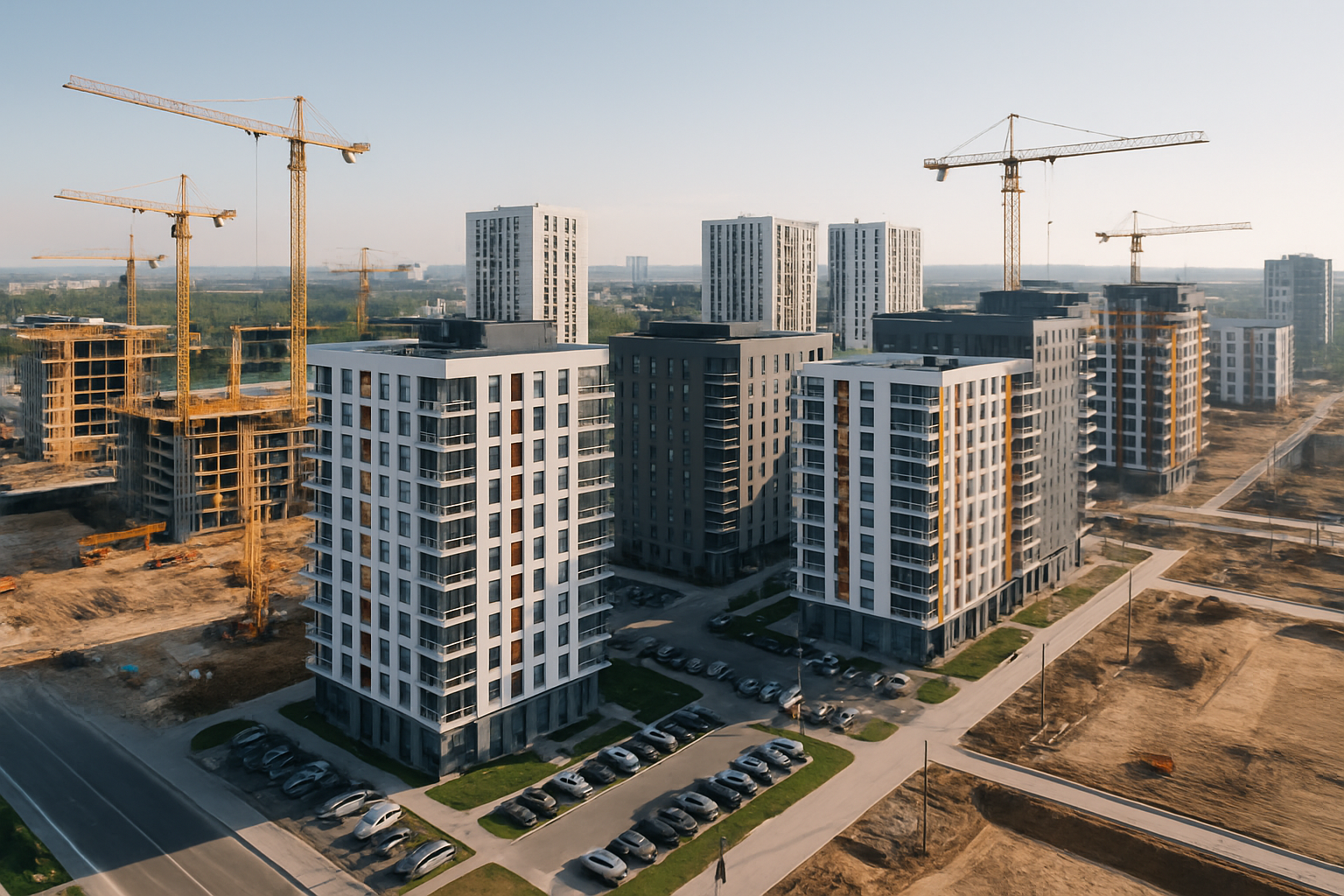
Housing markets across four nations are experiencing fundamental transformations as major development projects advance against a backdrop of deepening affordability challenges, construction industry pressures, and innovative policy responses reshaping urban landscapes worldwide.
Halifax's municipal council has approved one of Canada's most ambitious urban housing projects, clearing the path for the M District development that will transform the parking lots surrounding Mic Mac Mall in Dartmouth into a comprehensive residential neighborhood housing approximately 2,800 families. The project represents a new model of transit-oriented development, leveraging existing commercial infrastructure to address critical housing supply shortages in Atlantic Canada's largest metropolitan region.
European Markets Grapple with Structural Changes
Ireland's property market continues to demonstrate resilience amid systemic challenges, with housing developments proceeding despite broader voter frustration over policy effectiveness. The phenomenon of "starter homes becoming forever homes" has emerged as a defining characteristic of the Irish market, where families are increasingly adapting three-bedroom properties into four-bedroom configurations through Dermot Bannon-style family spaces rather than moving to larger properties.
This trend reflects broader affordability constraints that have fundamentally altered traditional housing progression patterns. With stamp duty costs varying dramatically across counties—from €1,950 in Donegal to €6,799 in Dun Laoghaire-Rathdown—geographical disparities are creating complex regional housing markets within the same national framework.
Nordic Innovation and Market Adaptation
Norway's rental market has reached a critical inflection point, with Oslo economists reporting that rental investments are beginning to generate positive returns after years of challenging conditions. The shift represents a fundamental rebalancing of supply and demand dynamics that could influence rental housing development across Scandinavia.
Meanwhile, Oslo's rental market transformation demonstrates the complex interplay between interest rates, construction costs, and housing policy that characterizes modern European housing markets.
Pacific Region Housing Diversity
New Zealand's housing market showcases remarkable diversity in both pricing and architectural innovation. A unique 45-square-meter dome home hidden in Waiheke's bush represents the growing market for distinctive, environmentally integrated properties that appeal to buyers seeking alternatives to conventional housing models.
However, the market also faces significant challenges, as illustrated by cases of unlawful occupation of former institutional buildings, highlighting gaps in housing policy and property management that affect vulnerable populations.
Construction Industry Under Pressure
The global construction industry continues to face unprecedented challenges, with rising material costs creating negative profit margins for developers worldwide. Memory chip shortages have driven semiconductor prices up sixfold, affecting smart building technologies and adding 20-30% to construction costs for modern developments until new fabrication facilities come online in 2027.
"The construction crisis extends beyond traditional supply-demand imbalances to fundamental questions about project viability when costs consistently outpace revenues."
— Industry Analysis Report, March 2026
These supply-side constraints are creating market dynamics where existing properties gain value due to limited new competition, while simultaneously restricting options for new buyers and creating barriers to homeownership for younger demographics.
Technology Integration and Sustainability
Despite cost pressures, technology integration is advancing across all markets. Smart city systems, sustainable materials, and community-centered design are becoming standard requirements rather than premium options. This evolution reflects growing environmental consciousness and government mandates that are reshaping property valuations and investment decisions.
Investment patterns are increasingly favoring localized strategies that emphasize clear regulatory frameworks and transparent governance over geographic diversification, as policy predictability becomes crucial when traditional economic indicators prove insufficient.
Regional Policy Coordination Emerges
European Union initiatives demonstrate growing recognition that housing challenges require transnational responses rather than isolated national policies. The Mediterranean region is leading coordination efforts, with Croatia targeting 600,000 empty homes for affordable rental conversion, Cyprus advancing foreign investment restrictions, and Greece analyzing regional price variations between Athens and Thessaloniki markets.
This coordination reflects an understanding that housing markets are increasingly interconnected through migration patterns, investment flows, and economic spillovers that affect neighboring regions.
Demographic and Social Implications
The current housing crisis is creating generational and gender disparities that extend beyond immediate affordability concerns. Young women across Australia and New Zealand are falling behind in homeownership rates despite expressing stronger desires for property ownership than their male counterparts, representing systematic exclusion from traditional wealth-building pathways.
Under-30 investors are turning away from property investment, creating a generational divide where over half believe children born today will be financially worse off than their parents—a reversal of post-war economic optimism.
Strategic Implications for Urban Development
Housing accessibility is increasingly determining whether cities remain accessible to diverse populations or become exclusive enclaves for the wealthy. This has profound implications for social mobility, regional development, and economic competitiveness in the global innovation economy.
Success in addressing these challenges requires sophisticated frameworks that balance housing supply adequacy, affordability for middle and lower-income populations, and construction industry viability amid rising global cost pressures.
Future Outlook and Policy Innovation
The window for effective action is narrowing due to demographic pressures, urbanization trends, and climate adaptation complexity. International cooperation is essential for knowledge sharing and coordinated policy responses as housing challenges prove increasingly interconnected.
The March 2026 developments establish precedents at the intersection of affordability, sustainability, and community preservation that will influence global housing policy for decades ahead. The stakes extend beyond individual homeownership to broader questions of social and economic stability that require continued innovation in financing mechanisms and governance frameworks.
As these diverse markets demonstrate, locally-adapted strategies incorporating community input, environmental considerations, and sustainable urban development principles offer the most promising pathways toward addressing universal housing challenges through regionally-specific solutions.