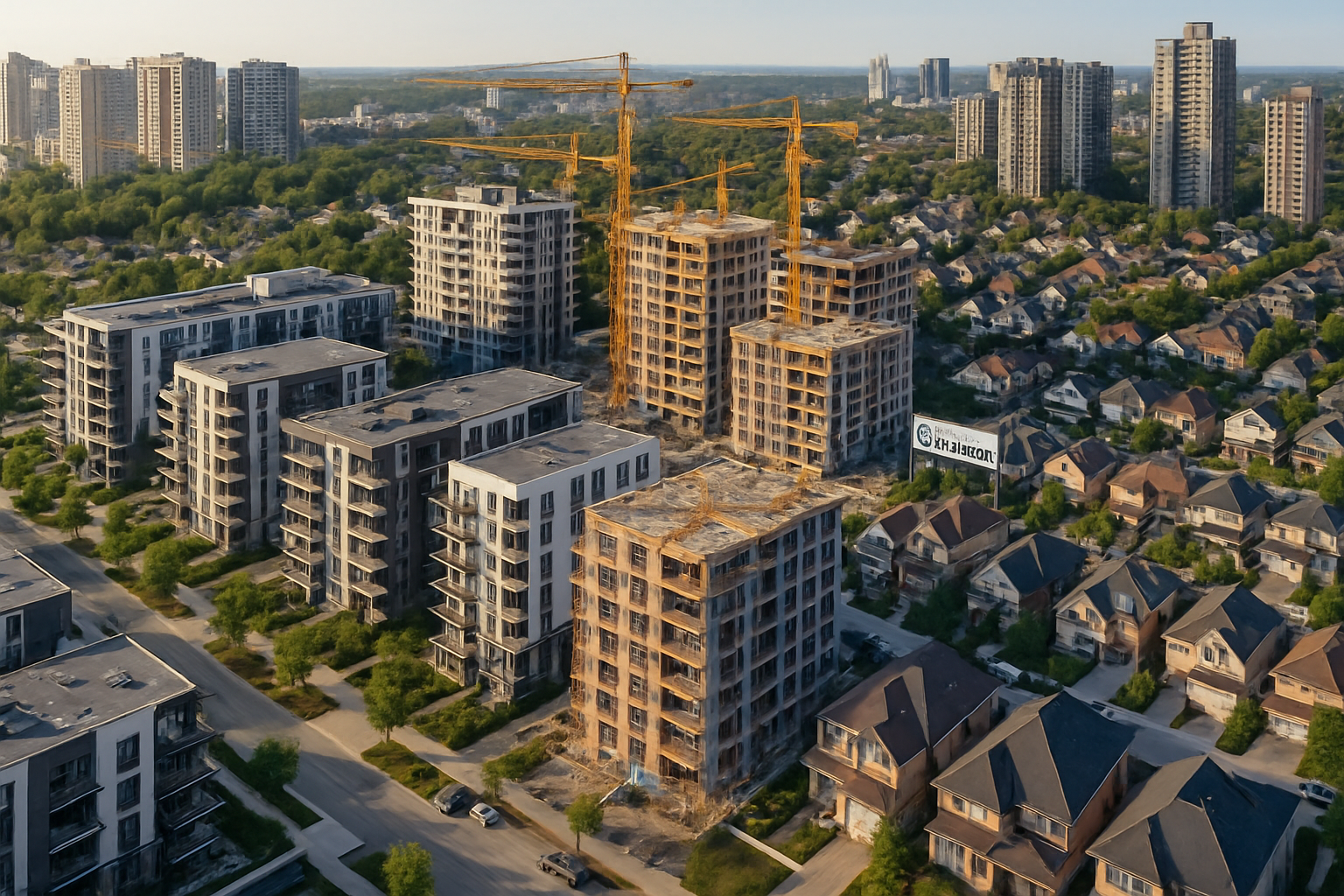
A comprehensive investigation across three developed nations reveals a synchronized global housing crisis that continues to intensify, with German metropolitan areas experiencing rental increases of 43% over the past decade while thousands of derelict properties remain unchanged despite severe housing shortages.
The crisis manifests differently across regions but shares common themes of construction industry collapse, regulatory failures, and increasingly desperate policy responses. From Berlin's unaffordable rental market to Dublin's abandoned buildings and New Zealand's experimental property conversions, the global housing emergency has reached unprecedented proportions affecting hundreds of millions worldwide.
German Cities Hit by Decade of Rental Inflation
New data from Germany's Building Ministry reveals that metropolitan rental prices have surged 43% over the past ten years, creating an affordability crisis that has fundamentally transformed urban living. The Frankfurter Allgemeine Zeitung reports that even middle-income Germans who can afford market rents are struggling to find available housing, indicating that the crisis extends beyond financial capacity to basic supply constraints.
This dramatic increase outpaces wage growth significantly, with major German cities now experiencing what housing experts describe as "structural exclusion" where entire professional classes find themselves priced out of urban centers. The situation represents a fundamental shift from Germany's historically stable rental market to one characterized by extreme volatility and scarcity.
The crisis has particular implications for Germany's position as Europe's economic powerhouse, potentially affecting its ability to attract and retain international talent necessary for maintaining competitive advantage in the global innovation economy.
Ireland's Derelict Property Paradox
Despite Ireland's severe housing shortage and 7% annual house price inflation, all 20 derelict properties highlighted by The Irish Times one year ago remain in decrepit condition, exposing the slow pace of property rehabilitation efforts. This represents a critical failure in policy implementation, where identified solutions remain unused while housing demand continues to exceed supply dramatically.
The persistence of these abandoned buildings occurs within the context of Dublin housing prices approaching €600,000 for average homes, creating a paradoxical situation where usable properties lie dormant while families struggle to secure basic accommodation. Irish rental laws including six-year tenancy rules with inflation-limited rent increases have provided some tenant protections, but implementation challenges persist with recent eviction crises affecting vulnerable populations.
This regulatory disconnect between identifying problems and implementing solutions reflects broader challenges facing European governments attempting to balance property rights, development incentives, and housing accessibility within complex legal frameworks inherited from more stable economic periods.
New Zealand's Creative Property Solutions
In contrast to the European experience, New Zealand demonstrates innovative approaches to unconventional property development with a commercial building in Dunedin's residential zone being converted for potential residential use. The former masonic hall and dance studio, priced at $600,000, represents creative thinking about adaptive reuse of existing structures to address housing shortages.
This example illustrates how regulatory flexibility can enable innovative solutions during housing crises. New Zealand's approach to secondary dwelling units ("granny flats") shows both promise and challenges, with new rules reducing some bureaucratic barriers while maintaining extensive restrictions that limit practical effectiveness for homeowners seeking additional rental income or family accommodation options.
The property's transformation from masonic hall to dance studio to potential residence demonstrates how buildings can evolve to meet changing community needs when regulatory frameworks accommodate creative solutions rather than rigid zoning enforcement.
Global Construction Industry Collapse
Underlying the housing crisis across all regions is a fundamental breakdown in construction industry economics. Rising material costs have created negative developer profit margins worldwide, constraining new housing supply despite persistent demand. Memory chip shortages have driven semiconductor prices sixfold due to AI development demand, affecting smart building technologies and adding 20-30% to construction costs until new fabrication facilities come online in 2027.
Samsung, SK Hynix, and Micron are operating at full capacity but remain unable to meet demand for building management systems, creating a technology bottleneck that affects modern developments requiring advanced infrastructure. This crisis extends beyond traditional building materials to the digital infrastructure necessary for contemporary housing standards.
The supply-side constraints create market dynamics where existing properties gain value due to limited new competition while simultaneously restricting options for new buyers, creating a two-tier market that exacerbates inequality between established property owners and those seeking entry into housing markets.
European Policy Coordination Emerges
The European Union has recognized housing as a transnational challenge requiring coordinated responses rather than isolated national policies. Mediterranean countries are leading with innovative approaches including Croatia's program targeting 600,000 empty homes for affordable rental conversion, Cyprus advancing foreign investment restrictions on residential property, and Greece conducting comprehensive regional price analysis between Athens and Thessaloniki markets.
These initiatives represent unprecedented regional coordination in housing policy, acknowledging that housing markets are increasingly interconnected through migration patterns, investment flows, and economic spillovers that affect neighboring countries. The Vienna social housing model, covering 60% of the rental market through sustained public investment, provides a template demonstrating that affordable housing remains achievable in prosperous cities through comprehensive policy frameworks.
Investment patterns are shifting toward localized strategies emphasizing clear regulatory frameworks and transparent governance over geographic diversification, reflecting the importance of policy predictability when traditional economic indicators prove insufficient for housing market analysis.
Demographic and Generational Impacts
The housing crisis has created unprecedented demographic challenges, with young women in Australia and New Zealand falling behind in homeownership despite having stronger ownership desires than their male counterparts. This represents systematic exclusion from traditional wealth-building pathways that could create long-term financial disadvantages extending well beyond immediate housing concerns.
Under-30s are increasingly turning away from property investment as deposit requirements extend beyond reasonable saving timelines, creating generational wealth divides that threaten social mobility patterns established in post-war economies. More than half of surveyed populations believe children born today will be financially worse off than their parents, reversing decades of economic optimism.
In Ireland, housing shortages are directly influencing fertility rates, with young couples viewing homeownership as a prerequisite for family formation. This demographic impact could have profound long-term consequences for national population trends and economic sustainability.
Technology Integration Amid Constraints
Despite supply chain disruptions, smart city systems, sustainable materials, and community-centered design are transitioning from premium options to standard requirements in modern developments. Digital infrastructure has become critical for attracting remote workers to secondary cities and rural areas, creating new residential demand patterns that are reshaping urban-suburban dynamics.
Environmental consciousness and government mandates are increasingly influencing property valuations and investment decisions, with properties featuring visible energy-saving upgrades commanding higher sale prices. This includes solar panels, advanced insulation, heat pumps, and renewable energy features that buyers view as economic assets reducing operating costs.
The 20-30% cost increases from semiconductor shortages create implementation challenges for margin-pressured developers, forcing difficult decisions about which technologies to prioritize in new constructions and renovations.
Strategic Implications for Urban Development
Housing accessibility is increasingly determining whether cities remain diverse and accessible to various populations or transform into exclusive enclaves for the wealthy. This has profound implications for social mobility, regional development, and economic competitiveness in the global innovation economy, where cities depend on diverse talent pools for continued growth and prosperity.
The window for effective policy action is narrowing due to demographic pressures, urbanization trends, and climate adaptation complexity. Current housing policy choices are shaping regional competitiveness and social stability for decades ahead, making this period critical for establishing sustainable urban development patterns.
Success requires sophisticated frameworks balancing housing supply adequacy, affordability for middle and lower-income populations, and construction industry viability. Traditional approaches may prove insufficient for the current crisis scale and complexity, demanding innovative financing mechanisms and governance frameworks.
International Cooperation Essential
The interconnected nature of global housing challenges requires unprecedented international cooperation for knowledge sharing and coordinated policy responses. Migration patterns, investment flows, and economic spillovers mean that housing policies in one country increasingly affect neighboring markets, making isolated national policies insufficient for addressing transnational challenges.
The April 2026 developments represent template-setting precedents at the intersection of affordability, sustainability, and community preservation that could influence global housing policy for generations. Stakes extend beyond individual homeownership to broader social and economic stability affecting hundreds of millions seeking secure, affordable housing.
Success depends on locally-adapted strategies incorporating community input, environmental considerations, and sustainable development principles rather than universal policy templates that fail to account for diverse regional conditions and cultural contexts.