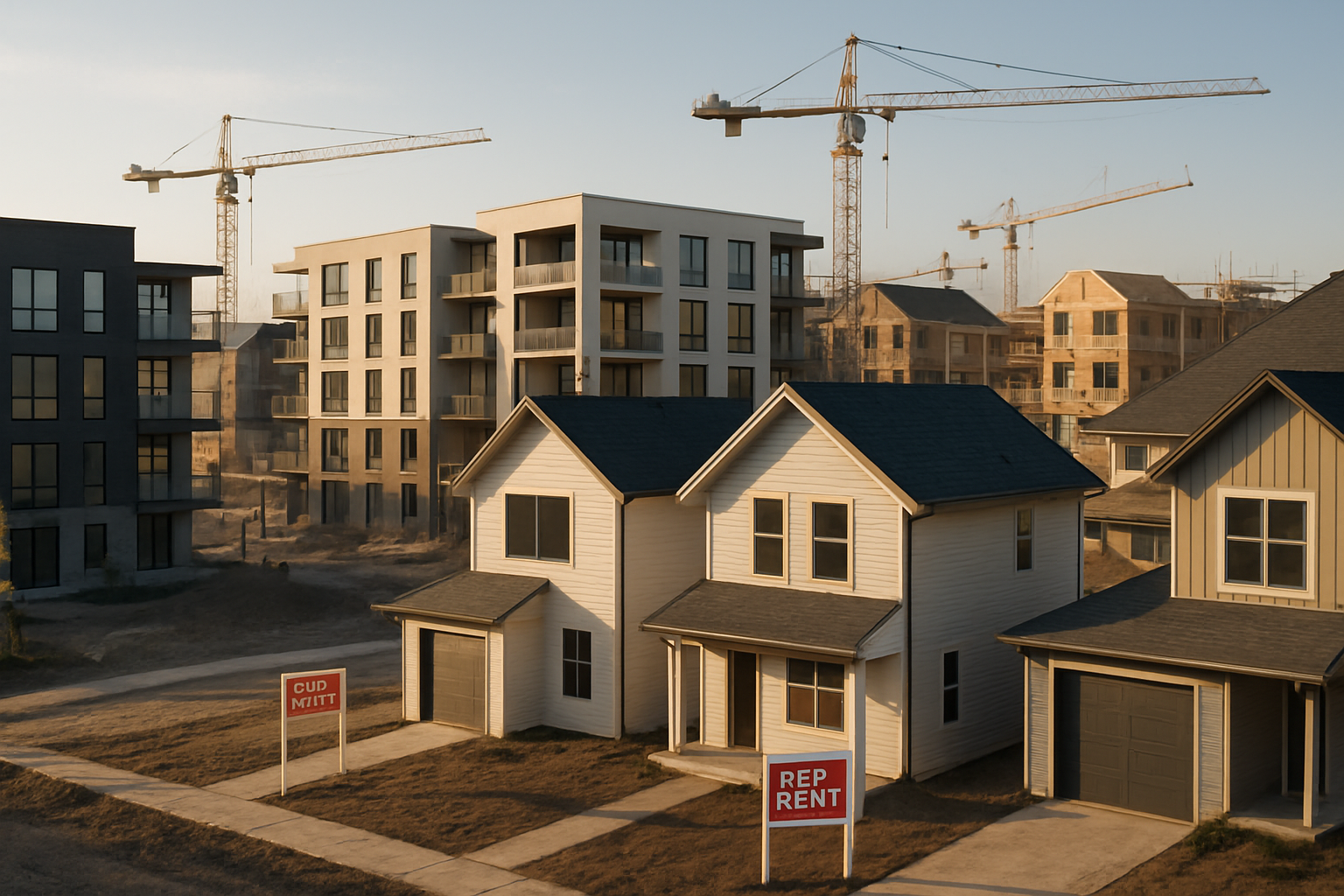
Seven years after purchasing two derelict houses in Dublin's Phibsborough for social housing development, Dublin City Council now admits it has "no plans" for the properties, highlighting systemic failures in housing policy implementation across multiple countries as construction costs spiral beyond viable levels.
A Planet News investigation across Ireland, New Zealand, and Portugal reveals a deepening global housing crisis characterized by policy paralysis, soaring construction costs, and growing tensions between local and national governments over housing strategies.
Ireland: €1.7 Million Price Tag Kills Social Housing Dreams
The Dublin case exemplifies broader housing policy failures plaguing developed nations. The two Phibsborough homes, purchased seven years ago for social housing regeneration, have been abandoned due to what officials describe as "excessive costs" reaching €1.7 million for renovation work.
This represents a 700% cost increase from original estimates, reflecting the global construction crisis that has seen material costs rise dramatically while creating negative profit margins for developers worldwide. The failure underscores how well-intentioned policies can become victims of economic realities when implementation timelines stretch across multiple years.
"The regeneration of two derelict homes for social housing has been scrapped over the excessive €1.7 million cost."
— Dublin City Council Statement
Ireland's housing challenges extend beyond individual project failures. Recent polling shows half the Irish electorate believes the country's problems are worsening rather than improving, creating unprecedented appetite for radical housing policy changes over incremental approaches.
New Zealand: Political Battles Over Housing Direction
In New Zealand, housing policy has become a battleground between local and national authorities. Auckland Mayor Wayne Brown has taken direct aim at Wellington's housing policy changes, declaring his council "will decide what Auckland does" and criticizing what he describes as "enough influence" from the national government.
Brown's confrontational stance with Deputy Prime Minister reflects deeper tensions about housing governance in a country facing severe affordability challenges. The mayor's assertion that the deputy PM is trying to "screw" him on housing highlights the political dysfunction hampering coordinated responses to the crisis.
Meanwhile, Auckland's skyline tells its own story of housing market dysfunction. The Seascape tower, described as a "half-finished ghost tower that looms over the skyline," has become "a distinct feature" of the city's appearance while remaining incomplete—a stark symbol of construction industry challenges and planning failures.
The incomplete tower represents broader issues affecting New Zealand's housing supply, where ambitious projects face financing difficulties, regulatory delays, and construction cost pressures that make completion financially unviable.
Portugal: Geographic Inequality and Public Housing Scarcity
Portugal's housing crisis reveals stark geographic inequalities that mirror patterns across Europe. The country's "1.º Direito" housing finance program heavily concentrates in wealthier municipalities, while interior regions with high percentages of vacant homes and population decline remain neglected.
This geographic disparity in housing policy implementation exacerbates territorial inequalities, creating a two-tier system where wealthy coastal areas receive most public housing support while inland communities face continued abandonment.
"Wealthier municipalities concentrate the majority of houses financed by 1.º Direito, while interior territories with high percentages of empty houses and population loss are forgotten."
— Portuguese Housing Policy Analysis
Portugal's public housing sector represents just 2% of total housing stock, contrasting sharply with European averages and reflecting decades of state policy favoring homeownership support over direct provision. Between 2011 and 2024, only 1,586 public housing units were constructed—a staggeringly low number for a European Union member state.
The housing shortage has forced young Portuguese professionals into extreme commuting patterns. Many now live in Santarém while working in Lisbon, with remote work options and rising metropolitan property prices driving this geographic displacement. As one professional noted: "When I was younger, I wanted to live in Lisbon. Now I don't."
Construction Industry in Crisis
Underlying housing policy failures across all three countries is a construction industry facing unprecedented challenges. Material costs have risen substantially, creating negative profit margins for developers and constraining housing supply despite strong demand.
The crisis extends beyond traditional building materials. Memory chip shortages have driven semiconductor prices up sixfold, affecting smart building technologies that are becoming standard in modern developments. This technological supply constraint adds 20-30% to construction costs, further complicating project viability.
Global supply chain disruptions mean these constraints will persist until 2027, when new semiconductor fabrication facilities come online. Until then, construction projects incorporating advanced building management systems face additional cost pressures that make many developments financially unviable.
European Policy Coordination Efforts
Recognizing housing as a transnational challenge, European Union initiatives demonstrate growing coordination efforts. Croatia has launched an ambitious program targeting 600,000 empty homes for affordable rental conversion, addressing a shortage of 230,000 residential properties through dormant vacation and investment properties.
Cyprus Parliament has committed to May 2026 legislation restricting foreign nationals' real estate acquisition, reflecting growing European trends protecting domestic housing affordability from international capital pressures. Greece reveals significant regional price variations between Athens and Thessaloniki, demonstrating increasing complexity in national housing markets.
These coordinated Mediterranean responses represent recognition that isolated national policies prove insufficient for addressing interconnected housing challenges affecting multiple jurisdictions simultaneously.
Technology Integration Despite Constraints
Despite supply chain challenges, technology integration continues advancing in housing development. Smart city systems, sustainable materials, and community-centered design are becoming standard requirements rather than premium options, reflecting evolved understanding of environmental and economic impacts.
However, semiconductor shortages create implementation challenges for margin-pressured developers. The 20-30% cost increases from technology constraints force difficult decisions between incorporating modern systems and maintaining project financial viability.
Digital infrastructure has become critical for attracting remote workers to secondary cities and rural areas, creating new residential demand patterns that further complicate housing market dynamics.
Investment Pattern Evolution
Investment patterns increasingly favor localized strategies emphasizing clear regulatory frameworks and transparent governance over geographic diversification. Policy predictability has become crucial when traditional economic indicators prove insufficient for assessing housing market viability.
Success requires sophisticated approaches balancing immediate housing supply needs with long-term sustainability goals. This includes innovative financing mechanisms and governance frameworks serving regional conditions while maintaining market stability and accessibility across income levels.
The Path Forward
The housing crisis across Ireland, New Zealand, and Portugal demonstrates that traditional policy approaches may prove insufficient for current challenges' scale and complexity. Success depends on innovative frameworks balancing adequate housing supply, affordability for middle and lower-income populations, and construction industry viability amid global cost pressures.
International cooperation remains essential for knowledge sharing and coordinated responses as housing challenges prove increasingly interconnected through migration patterns, investment flows, and economic spillovers affecting regional markets globally.
The window for effective action continues narrowing due to demographic pressures, urbanization trends, and climate adaptation complexity requiring continued innovation and adaptive management approaches.
As Dublin's abandoned Phibsborough houses demonstrate, good intentions without sustainable financing and realistic cost assessment can leave communities without promised housing improvements. The challenge now is developing policies that acknowledge economic realities while maintaining commitment to housing accessibility for all income levels.