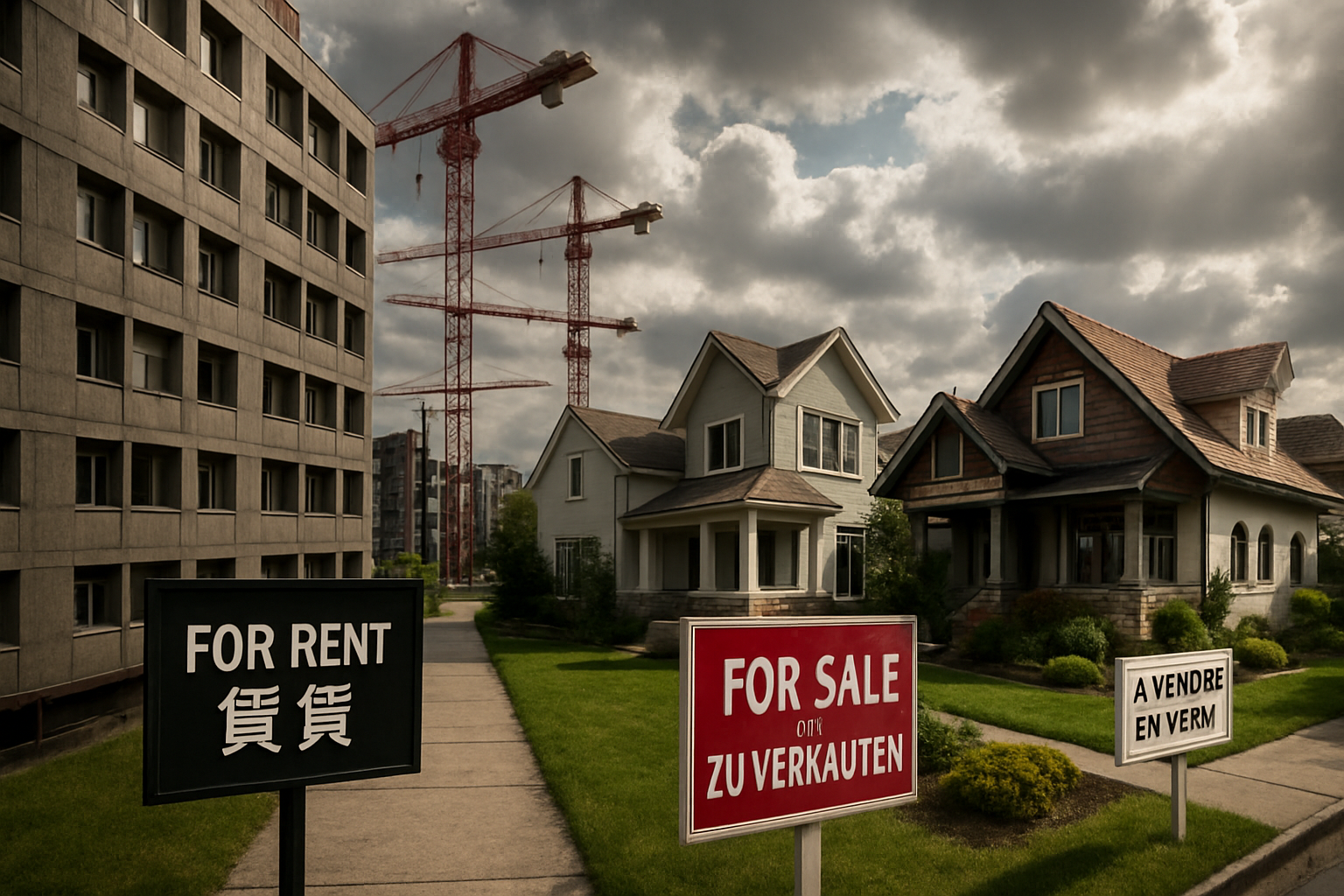
Housing markets across the globe are painting a complex picture of recovery, crisis, and transformation as February 2026 data reveals stark regional differences in affordability, development trends, and government intervention strategies.
From Australia's legal battles over public housing to Switzerland's surprising rent declines, the latest market data underscores how deeply local factors influence global housing trends. While some regions experience renewed market confidence, others confront fundamental questions about housing as both a human right and an investment asset.
Australia's Public Housing Legal Battle Intensifies
Victoria's Court of Appeal issued a temporary injunction halting Homes Victoria from evicting remaining residents at three Melbourne public housing towers in Flemington and North Melbourne. The legal intervention represents a critical moment in Australia's ongoing struggle with public housing provision amid broader affordability challenges.
The court action comes as Australia's broader housing market remains under pressure from the Reserve Bank's February 2026 interest rate environment. Previous analysis showed the RBA's 25 basis point hike to 3.85% in February significantly impacted variable rate mortgage holders, with payments increasing over $100 monthly for many borrowers.
European Markets Display Divergent Trends
Switzerland is experiencing an unexpected cooling in rental prices after years of rapid increases, according to the latest Neue Zürcher Zeitung analysis. The moderation in Swiss rental costs appears linked to reduced expatriate migration and changing labor market dynamics, offering rare relief in one of Europe's most expensive housing markets.
Meanwhile, Slovakia's central bank reports renewed confidence among households and investors, driven by more accessible financing options. The TREND.sk analysis indicates double-digit housing price growth in 2025, suggesting a market revival after previous stagnation periods.
Spain presents a contrasting picture, with El País reporting that rental policies have taken on "classist" characteristics. The analysis suggests government housing interventions may inadvertently disadvantage the most vulnerable populations they aim to protect, creating new barriers for families with modest incomes.
"The reality appears different from the government's stated intention to protect vulnerable citizens - the most humble families or people with low salaries risk having fewer opportunities to access housing."
— El País Housing Analysis
Ireland's Landlord-Tenant Relations Under Strain
The Irish Times highlights growing tensions in the private rental sector, with landlord Eoghan O'Malley describing his experience as "traumatic" after attempting to gain possession of his property since 2024 when the tenant stopped paying rent. The case illustrates broader challenges in Ireland's rental market, where legal protections for tenants can create complex situations for property owners.
This development occurs against the backdrop of Ireland's persistent housing shortage and rising rental costs, which have made property investment increasingly attractive yet operationally challenging for individual landlords.
Pacific Region Infrastructure Challenges
Papua New Guinea Deputy Prime Minister John Rosso emphasized the urgent need to redefine "affordable housing" as infrastructure costs continue climbing. Rosso highlighted that the country is "playing catch-up" as infrastructure development fails to match rapid population growth.
The PNG situation exemplifies broader challenges facing developing economies, where urbanization pressures coincide with limited infrastructure investment capacity. Rising construction costs globally have created negative profit margins for developers, reducing incentives for new housing supply across multiple markets.
Argentina's Design Innovation Amid Market Recovery
Argentine publications are showcasing innovative approaches to residential design, with La Nación featuring homes where gardens serve as the "true center of daily life" rather than decorative backgrounds. This architectural trend reflects changing lifestyle preferences that emerged during the pandemic and persist into 2026.
The design focus comes as Argentina's rental market showed 2.7% growth in January 2026 following a stable 2025, with small apartments demonstrating the highest year-over-year increases. The market recovery aligns with growing economic confidence under the Milei administration, despite construction sector challenges.
Global Context: Crisis Patterns Emerge
February 2026 housing developments build on established crisis patterns identified throughout 2025 and early 2026. The global housing shortage, estimated between 2-20 million homes in the United States alone, reflects broader supply-demand imbalances affecting multiple continents.
Recent memory data shows Spain experienced dramatic 20% year-over-year property price increases, representing an average €40,000 increase per second-hand home. This surge creates significant affordability barriers for young adults and families across Europe.
Construction industry pressures remain universal, with rising material costs creating negative profit margins for developers worldwide. This trend reduces housing supply incentives precisely when demand continues growing due to urbanization, population growth, and changing work patterns.
Policy Responses and Regional Variations
Government responses vary significantly across regions. Some countries pursue direct market intervention through rent controls and public housing programs, while others focus on regulatory reforms and development incentives.
The crisis manifestation differs regionally - some areas face acute supply shortages while others confront affordability challenges despite adequate housing stock. Historical patterns suggest dramatic price increases may face significant corrections, though timing remains uncertain.
International cooperation emerges as essential for knowledge sharing and developing locally adapted solutions. The European Union actively seeks continent-wide approaches, recognizing housing as a transnational challenge requiring coordinated policy responses.
Infrastructure and Technology Integration
Beyond traditional housing provision, markets are incorporating smart home technologies and sustainable design principles. The integration reflects evolving consumer expectations for energy efficiency, connectivity, and environmental responsibility.
However, technology adoption varies significantly based on local economic conditions and regulatory frameworks. Developed markets focus on modernization and smart systems, while developing regions prioritize basic infrastructure establishment.
Future Market Outlook
The housing sector faces continued pressure from multiple factors: climate change adaptation requirements, aging infrastructure replacement needs, demographic shifts, and evolving work patterns following remote work adoption.
Success increasingly depends on coordinated approaches combining government policy, private sector innovation, and international cooperation. Markets providing secure, transparent environments attract larger investment commitments, while those with governance challenges face capital flight.
As February 2026 data demonstrates, the global housing crisis requires innovative solutions beyond traditional policy tools. The sector's evolution reflects broader economic transformation affecting labor markets, urban development patterns, and social equity considerations worldwide.