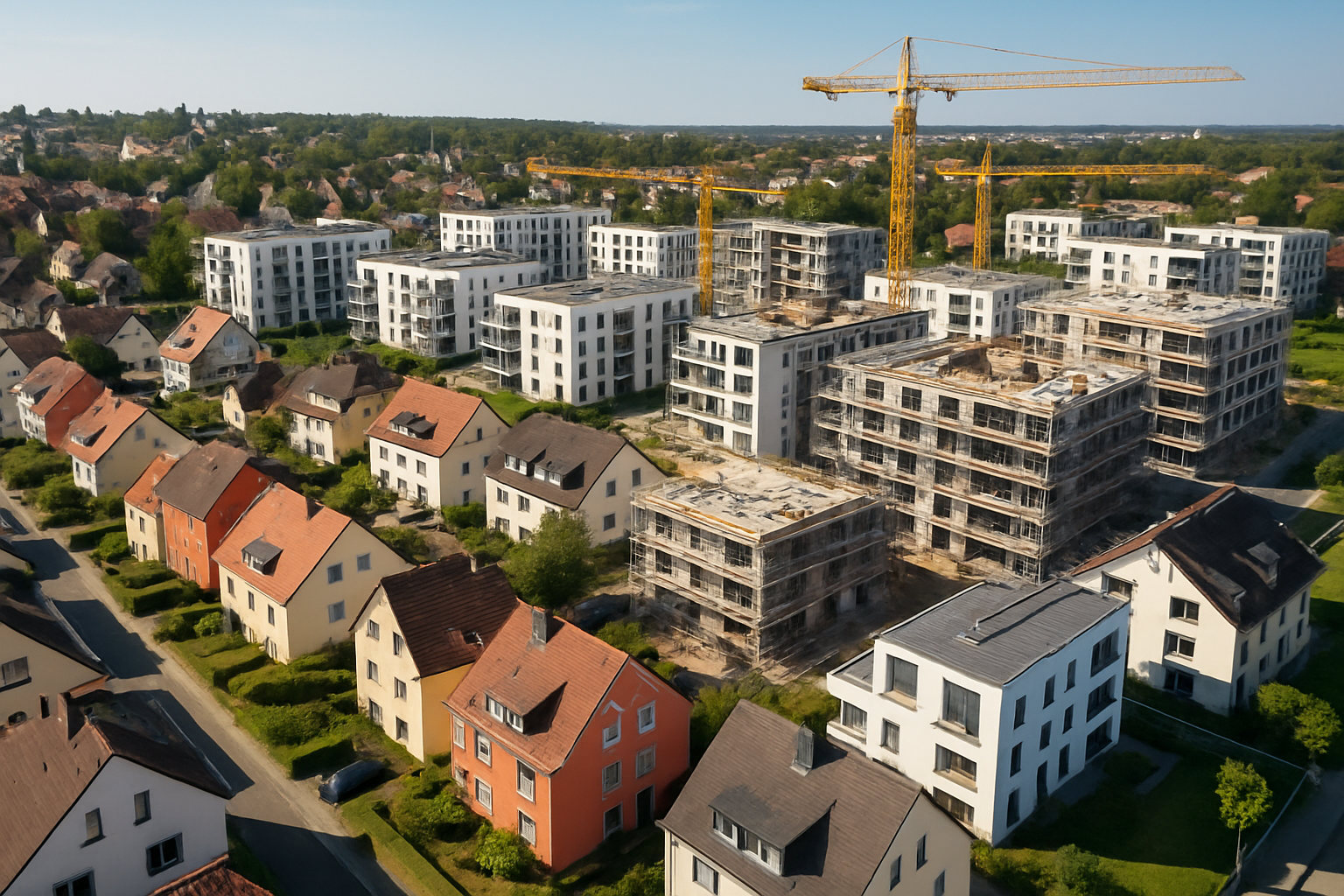
Housing markets across six nations reveal the stark reality of a global crisis that is reshaping how millions live, work, and invest, with divergent responses from governments struggling to balance affordability with market viability.
From Zagreb's ambitious affordable housing project to New Zealand's property price surge, the latest developments in global real estate markets demonstrate the complex interconnection of local policies and international economic pressures. As construction costs soar and rental disputes escalate across multiple continents, housing has become the defining policy challenge of 2026.
Zagreb Leads European Affordable Housing Charge
Croatia's capital is advancing one of Europe's most significant affordable housing initiatives, with construction progressing on 300 affordable apartments in the Podbrežje neighborhood. This development represents a crucial component of Croatia's broader strategy to convert 600,000 empty homes into affordable rental accommodation, addressing a critical shortage of 230,000 residential properties nationwide.
The Podbrežje project, scheduled for completion in 2027, exemplifies the innovative approaches European cities are adopting to address housing shortages. Unlike traditional public housing models, the initiative leverages existing vacant properties—many previously used as vacation homes or investment properties—to create permanent residential stock for local families.
"This is not just about building homes; it's about revitalizing communities and ensuring that working families can afford to live in the cities where they work."
— Zagreb Housing Development Official
Construction Industry Crisis Creates Global Bottlenecks
Across all surveyed markets, the construction industry is experiencing what experts describe as a perfect storm of challenges. Rising material costs have created negative profit margins for developers, fundamentally altering project viability calculations worldwide.
The crisis extends beyond traditional building materials. Memory chip shortages have driven semiconductor prices up sixfold, severely impacting smart building technologies that have become standard in modern developments. These technological components, essential for energy management systems and automated building controls, now add 20-30% to construction costs—increases that will persist until new fabrication facilities come online in 2027.
In the Netherlands, this crisis manifests in a particularly acute way. Dutch municipalities have failed to complete over 25% of planned housing construction in the past four years, representing systemic implementation failure despite government commitments to address housing shortages. The situation has become so dire that experts suggest splitting larger existing homes would address shortages more quickly than waiting for new construction timelines.
Rental Market Tensions Escalate
The Netherlands faces an additional crisis in its rental sector, where tenants increasingly struggle to recover deposits at the end of tenancy agreements. According to rental rights groups, more renters than ever are not receiving their full deposits back, or sometimes any portion of them, creating additional financial barriers for housing mobility.
This trend reflects broader rental market dysfunction across Europe, where protective legislation often clashes with practical implementation challenges. Ireland's experience with six-year tenancy rules and inflation-limited rent increases demonstrates the complexity of regulatory responses—while providing tenant protections, implementation challenges persist, as evidenced by recent mass eviction notices affecting approximately 100 people, including children.
Pacific Markets Show Resilience Amid Global Uncertainty
New Zealand's housing market presents a contrasting narrative, with property asking prices rising in most regions despite global economic uncertainty. Average listings reached $883,800 in February, driven by increased demand while supply remained relatively flat. However, Wellington bucked this trend, demonstrating the regional variations that characterize New Zealand's diverse property landscape.
The strength in New Zealand's market comes despite broader construction industry challenges affecting the region. Like their European counterparts, New Zealand developers face material cost pressures and supply chain disruptions that are constraining new development while existing properties gain value due to limited new competition.
Mediterranean Innovation in Development Oversight
Malta's experience illustrates the growing tensions between development pressure and community preservation. The Manoel Island controversy, where Gżira United Football Club proceeded with padel court construction without planning permits, has sparked broader debates about development governance.
The Post Għalina campaign's concerns about illegal development on land designated as a future national park reflect growing sophistication in community resistance to unregulated development. This trend represents a shift from traditional NIMBY responses toward more nuanced evaluations of long-term community character and environmental impacts.
"One of the core values emerging from community workshops was that this should be a place where wellbeing and health are celebrated, but these activities must still follow the law."
— Manoel Island: Post Għalina Campaign Statement
Educational Infrastructure Reflects Broader Planning Challenges
Ireland's submission of plans for a landmark three-school campus in Buncrana demonstrates how educational infrastructure development mirrors broader housing market challenges. The shared education campus project, featuring facilities for 800 students across multiple schools, represents the kind of integrated planning approach that housing developments increasingly require.
The project's design—incorporating an eight-classroom primary school, post-primary facilities with special educational needs accommodation, and extensive outdoor activity spaces—reflects the evolution toward community-centered development that prioritizes long-term sustainability over short-term cost minimization.
Investment Patterns Shift Toward Localization
Across all markets surveyed, investment patterns are shifting dramatically toward localized strategies that emphasize clear regulatory frameworks and transparent governance over geographic diversification. This trend reflects investor recognition that policy predictability has become more crucial than traditional economic indicators in uncertain global conditions.
The European Union's recognition of housing as a transnational challenge has sparked unprecedented regional coordination. Cyprus's advancing foreign investment restrictions, Greece's regional price analysis between Athens and Thessaloniki, and Croatia's empty homes conversion program represent coordinated Mediterranean responses to universal challenges.
Technology Integration Despite Constraints
Despite supply chain constraints and cost pressures, technology integration continues advancing across global housing markets. Smart city systems, sustainable materials, and community-centered design are becoming standard requirements rather than premium options. However, the semiconductor shortage has created implementation challenges for margin-pressured developers who must balance modern amenities with project viability.
Digital infrastructure has become particularly critical for attracting remote workers to secondary cities and rural areas, creating new residential demand patterns that are reshaping traditional urban-suburban dynamics. This shift offers potential solutions for housing pressure in major metropolitan areas while revitalizing smaller communities.
Policy Implications and Future Outlook
The March 2026 housing developments reveal that traditional policy approaches may prove insufficient for addressing the current crisis's scale and complexity. Success requires sophisticated frameworks that balance three critical objectives: adequate housing supply, affordability for middle and lower-income populations, and construction industry viability.
Vienna's social housing model continues to demonstrate that affordable housing remains achievable in prosperous European cities through comprehensive policy frameworks that treat housing as essential infrastructure rather than commodity. The Austrian capital's success in covering 60% of its rental market through public provision offers a template for other European cities grappling with similar challenges.
International cooperation has become essential for knowledge sharing and coordinated responses, as housing challenges prove increasingly interconnected through migration patterns, investment flows, and economic spillovers affecting neighboring markets. The window for effective action is narrowing due to demographic pressures, urbanization trends, and climate adaptation complexity.
Regional Success Models Emerge
Croatia's vacant property conversion program represents one of the most innovative approaches to housing supply challenges. By targeting 600,000 empty homes for conversion to affordable rental properties, the initiative addresses both housing shortages and property market inefficiencies simultaneously.
Portugal's experience offers lessons in both innovation and caution. While the country successfully reclaimed 6,765 accommodation licenses (a 40% reduction) in Lisbon by targeting "phantom licenses" for inactive properties, implementation of the "1.º Direito" housing finance program has concentrated benefits in wealthier municipalities while neglecting interior regions with vacant homes and population decline.
These varied approaches provide valuable templates for markets navigating similar transitions amid global construction cost pressures and evolving urban development needs. Success increasingly depends on locally-adapted strategies that incorporate community input, environmental considerations, and sustainable urban development principles.
The Path Forward
The housing market developments of March 2026 establish critical precedents for addressing the intersection of affordability, sustainability, and community preservation. As construction costs continue rising and regulatory responses evolve, the next phase of housing policy will determine whether European and global cities can maintain accessibility for diverse populations or transform into exclusive enclaves for the wealthy.
The stakes extend beyond individual homeownership to encompass social mobility, regional development, and economic competitiveness in the global innovation economy. Housing accessibility will determine whether cities can attract and retain the diverse talent necessary for 21st-century development, making current policy choices crucial for regional competitiveness and social stability in the decades ahead.
The interconnected nature of global housing markets requires continued innovation in financing mechanisms, governance frameworks, and development approaches that serve diverse regional conditions while maintaining market stability and accessibility across all income levels. As the crisis deepens, the need for sophisticated, coordinated responses has never been more urgent.