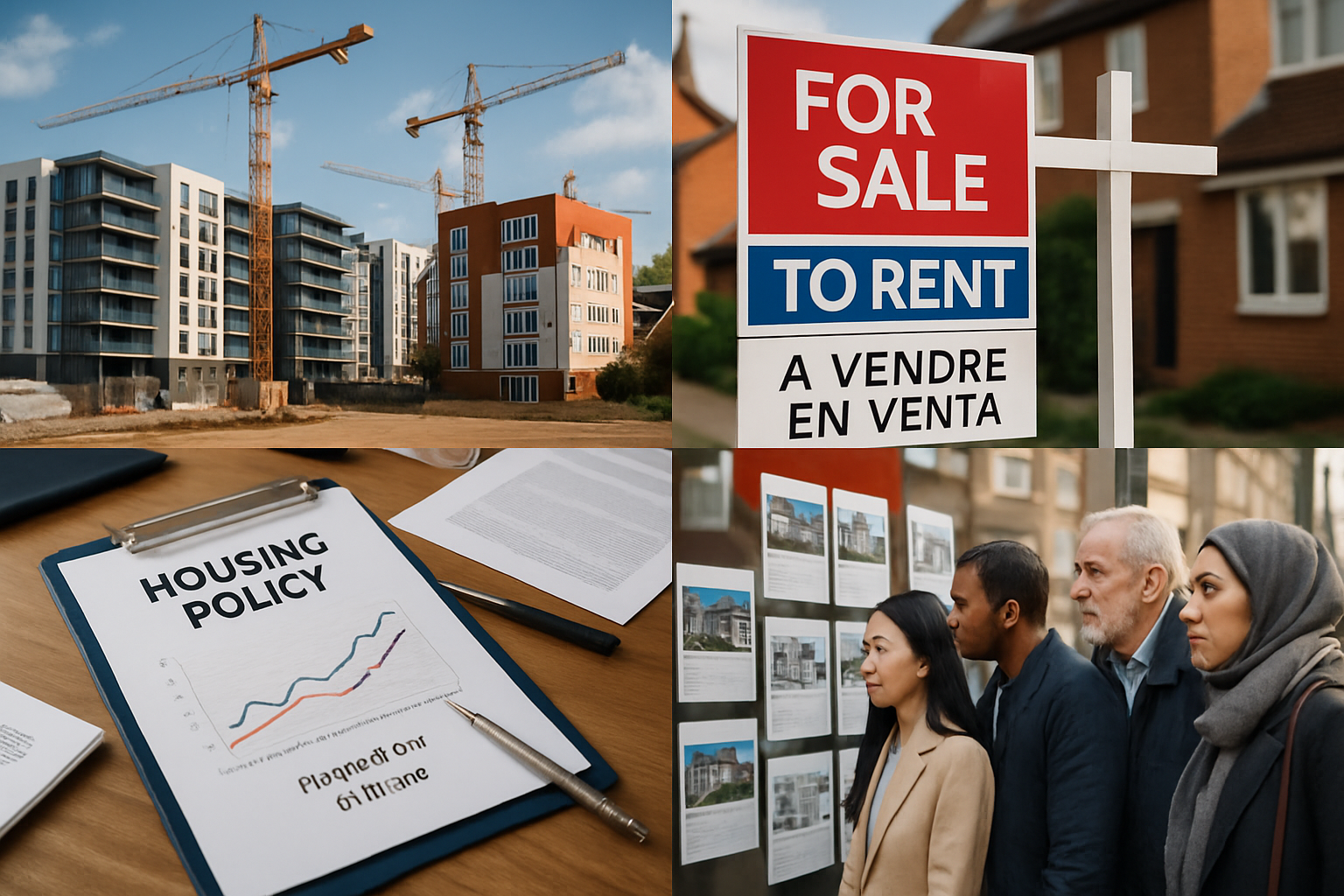
Housing markets across five nations are experiencing fundamental transformations as governments implement unprecedented policy shifts to address mounting affordability pressures and economic challenges, revealing both coordinated international responses and distinctly local solutions to the global housing crisis.
Egypt's Strategic Downsizing Revolution
Egypt's real estate sector is undergoing a dramatic strategic shift as developers adapt to economic pressures by fundamentally altering their product offerings. Naguib Sawiris, Chairman and CEO of Ora Developer, announced that the industry has adopted a new strategy emphasizing significant flexibility in both execution and product development to navigate current economic challenges.
The Egyptian approach centers on reducing unit sizes to maintain affordability for a broader segment of buyers, acknowledging that the property market requires adaptation to shifting purchasing power and consumer preferences. This "downsizing strategy" represents a practical response to rising construction costs and broader inflationary trends affecting the entire regional market.
"As one of the major real estate developers, we are working to introduce practical solutions to sustain market momentum and continue attracting both investors and end-users. Maintaining market stability now depends on adapting to shifting purchasing power and consumer preferences."
— Naguib Sawiris, Chairman and CEO, Ora Developer
Sawiris emphasized that Egypt's real estate sector faces mounting pressures affecting buying and selling activity, requiring developers to maintain market viability through innovative approaches rather than traditional expansion models.
Ireland's Rental Market Upheaval
Ireland is experiencing a housing crisis of unprecedented scale with two major developments highlighting the severity of market conditions. In Wexford, 36 eviction notices affecting approximately 100 people including children were issued on Friday, creating widespread fear among residents and demonstrating the human cost of housing market pressures.
Simultaneously, Ireland implemented comprehensive new rental laws including revolutionary six-year tenancy rules designed to provide greater security for tenants. Under the new framework, rent can still be raised annually by 2 percent or the rate of inflation, with the ability to reset to market rent every six years, representing a fundamental shift in landlord-tenant relationships.
These developments occur within a broader context of Irish voter frustration, with recent polling showing half the electorate believes the country's problems are worsening rather than improving, creating political appetite for radical housing policy changes over incremental approaches.
New Zealand's First-Home Policy Innovation
New Zealand announced a significant policy change allowing service tenancy workers to access KiwiSaver funds for first-home purchases. Finance Minister Nicola Willis confirmed the government would make technical amendments to enable rural workers living in service tenancies to withdraw their KiwiSaver funds for home ownership.
This targeted policy intervention addresses a specific gap in New Zealand's housing accessibility framework, where rural workers faced unique barriers to homeownership due to their accommodation arrangements. The change represents the government's recognition that traditional housing policies may inadvertently exclude certain employment categories from wealth-building opportunities.
Regional Market Pressures and Geopolitical Impacts
Romania faces international market pressures affecting its property investments, particularly regarding Romanian property holdings in Dubai. Real estate brokers and developers in Dubai expect recent property sales increases to decline in coming weeks due to the conflict between the United States, Israel, and Iran, highlighting how geopolitical tensions directly impact international real estate investment flows.
The Dubai property market, which has attracted Romanian investors as a niche but growing market, demonstrates the interconnected nature of global real estate markets where regional conflicts can immediately affect property values and investment confidence across continents.
Construction Industry Crisis Deepens Global Impact
All these regional developments occur within a broader global construction crisis characterized by rising material costs creating negative profit margins for developers worldwide. The industry faces unprecedented challenges with memory chip shortages driving semiconductor prices up sixfold due to AI development demand, affecting smart building technologies that have become standard requirements for modern developments.
This construction crisis extends beyond simple supply-demand imbalances to fundamental questions about project viability when costs consistently outpace revenues, creating supply-side constraints that affect housing availability and pricing across all surveyed markets regardless of local policy interventions.
Policy Coordination and International Responses
The housing challenges revealed in these five nations align with broader international policy coordination efforts. European initiatives include Croatia's program targeting 600,000 empty homes for affordable rental conversion, Cyprus foreign investment restrictions, and Greece's regional price analysis between Athens and Thessaloniki markets.
These coordinated Mediterranean responses demonstrate growing recognition that housing challenges increasingly require transnational solutions rather than isolated national policies, as housing markets prove interconnected through migration patterns, investment flows, and economic spillovers affecting neighboring regions.
Technology Integration Amid Constraints
Despite supply chain challenges and cost pressures, technology integration continues advancing across international housing markets. Smart city systems, sustainable materials, and community-centered design are becoming standard requirements rather than premium options, though implementation faces significant cost increases from semiconductor shortages and material inflation.
Investment patterns increasingly favor markets with clear regulatory frameworks and transparent governance structures over those offering geographic diversification, reflecting investor prioritization of policy predictability during uncertain economic conditions.
Market Adaptation Strategies
Success in current housing market conditions requires sophisticated approaches balancing immediate housing supply needs with long-term sustainability goals. The Egyptian downsizing model, Irish rental security provisions, and New Zealand targeted accessibility improvements represent different strategic approaches to the same underlying challenge: maintaining housing market functionality while addressing affordability concerns.
These adaptations demonstrate that housing markets require locally-tailored strategies incorporating community input, environmental considerations, and sustainable urban development principles rather than universal policy templates applied across different economic contexts.
Future Outlook and Policy Implications
The housing market transformations documented across these five nations suggest that traditional approaches to housing policy may prove insufficient for addressing the scale and complexity of current challenges. Success increasingly depends on innovative policy frameworks that can balance multiple competing objectives: adequate housing supply, affordability for middle and lower-income populations, construction industry viability, and environmental sustainability.
International cooperation for knowledge sharing and coordinated policy responses becomes essential as housing challenges prove increasingly interconnected. The window for effective action may be narrowing due to demographic pressures, urbanization trends, and climate adaptation complexity requiring continued policy innovation and adaptive management approaches.
As March 2026 unfolds, these housing market developments represent early indicators of broader structural adjustments required across the global economy, with success or failure in housing policy likely to influence economic competitiveness, social stability, and international investment flows for years to come.