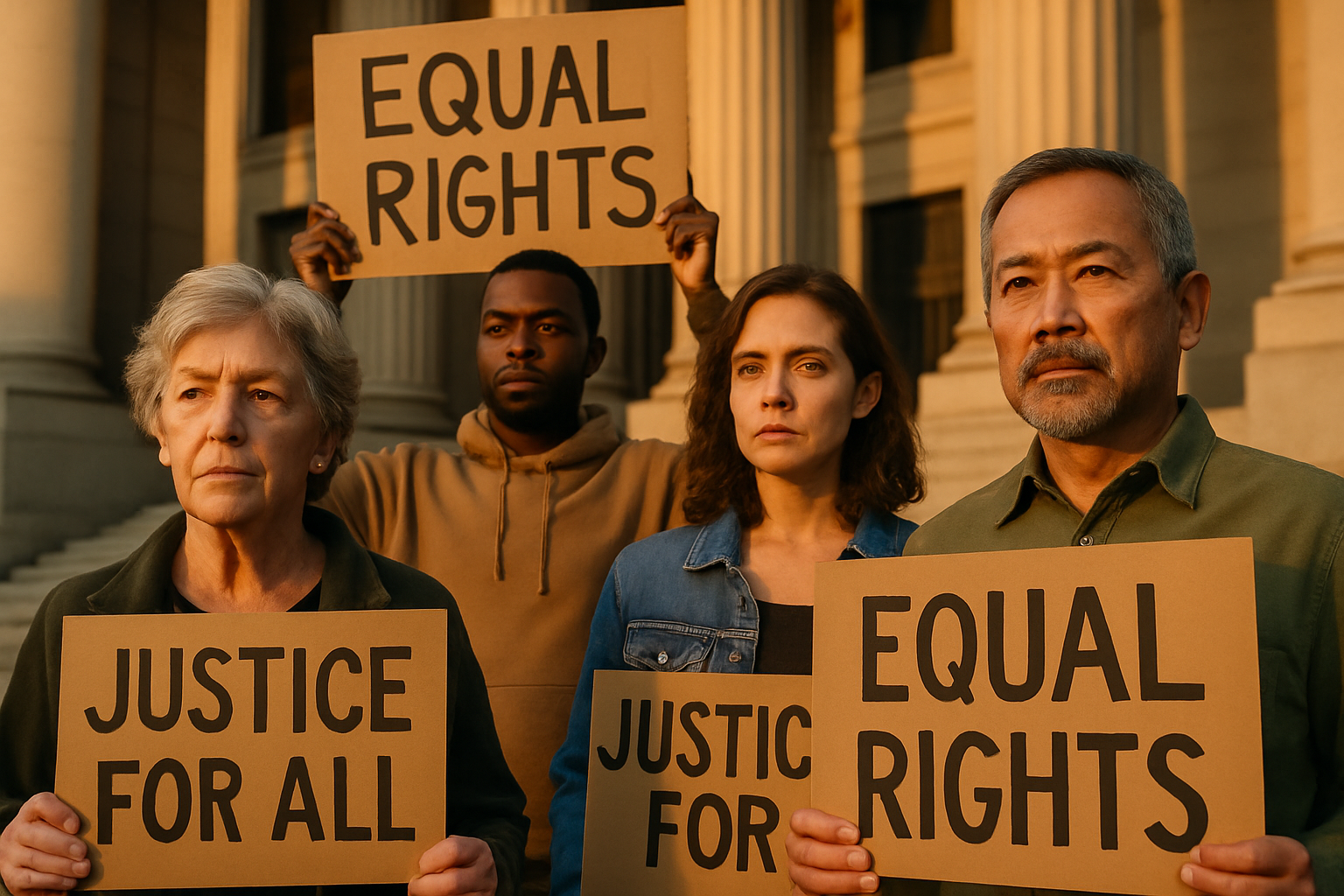
Human rights advocates across the globe are confronting an increasingly complex landscape of challenges as they pursue justice and equality through legal channels, public awareness campaigns, and grassroots organizing, with developments in Sierra Leone, Estonia, and France highlighting both the urgency and obstacles facing the movement.
Sierra Leone: Women's Political Participation Under Siege
In Sierra Leone, the detention of cultural activist-turned-politician Zainab Sheriff has become a flashpoint in discussions about democratic participation and women's rights in the young democracy. Sheriff, chairperson of the "Wi Duti" organization and a prominent All People's Congress (APC) member, was arrested following a political speech at an opposition rally on January 31 and charged with incitement and threatening language.
Despite constitutional protections that typically favor bail for such offenses, Sheriff was ordered to the female wing of Pademba Road Prison after pleading not guilty at Pademba Road Magistrate Court No. 1 on February 23. The case has drawn significant attention from civil rights advocates who argue it represents a broader pattern of silencing women in Sierra Leone's political sphere.
"Freedom of speech must be applicable to everyone, and the law must be consistently applied. The continued detention of Zainab Sheriff is a serious cause for concern in a democracy."
— Yvonne A. Sawyerr, Mayor of Freetown
Mayor Sawyerr's statement reflects growing concerns among democratic institutions about the message being sent to women considering political participation. The case has become emblematic of what many observers describe as the broader challenges facing women seeking to engage in public life in Sierra Leone, a country still working to reconcile its democratic aspirations with institutional realities.
European Parliament Spotlights Rohingya Genocide
Meanwhile, in Europe, human rights advocacy is taking a different but equally important form through institutional channels. Urmas Paet, Vice-Chair of the European Parliament's Committee on Foreign Affairs, is hosting an exhibition dedicated to Rohingya genocide victims at the European Parliament, bringing international attention to one of the world's most persecuted minorities.
The exhibition represents a sustained effort by European lawmakers to maintain focus on the plight of the Rohingya people, whose persecution by Myanmar's military has been recognized by international bodies as genocide. The timing of the exhibition underscores the European Parliament's commitment to using its platform to amplify marginalized voices and maintain pressure for accountability.
This institutional approach to human rights advocacy demonstrates how established democratic bodies can serve as powerful platforms for raising awareness about global injustices, even when direct intervention capabilities are limited.
Grassroots Housing Rights in France
In Marseille, France, a different kind of human rights struggle is unfolding as residents of the Bel Ombre housing development fight for basic dignity and living conditions. Facing broken elevators, crumbling facades, and massive debt, both property owners and tenants have organized themselves into an association to combat what they describe as "poor management" by the court-appointed administrator.
Their campaign, framed as "the struggle for dignity," highlights how human rights advocacy often begins at the most basic level—ensuring people have safe, habitable living conditions. The residents' organizational response to their housing crisis demonstrates the grassroots nature of much human rights work, where communities must advocate for themselves when institutional systems fail.
Legal Channels and Public Awareness
These cases illustrate the diverse approaches human rights advocates must employ in their pursuit of justice. In Sierra Leone, the legal challenge to Sheriff's detention represents an attempt to use constitutional protections to safeguard democratic participation. The case has generated significant public discussion about the application of law and the protection of political speech, particularly for women activists.
The European Parliament exhibition on Rohingya victims demonstrates how institutional platforms can be leveraged to maintain international attention on human rights crises. By hosting such events, lawmakers ensure that global atrocities remain in the public consciousness and continue to influence policy discussions.
In Marseille, the residents' association represents community-level organizing that seeks to hold institutions accountable for basic service delivery and living standards. Their approach combines direct advocacy with public pressure to demand better treatment from those in positions of authority.
Challenges Facing the Movement
These contemporary cases reflect broader challenges facing human rights advocates worldwide. The Sierra Leone situation demonstrates how legal systems can be weaponized against political participation, particularly affecting women and opposition voices. Despite constitutional guarantees, the practical application of law can create barriers to democratic engagement.
The Rohingya exhibition underscores the ongoing challenge of maintaining international attention on protracted human rights crises. While institutional support is crucial, advocates must continuously work to prevent global fatigue and ensure sustained engagement with long-term justice issues.
The housing rights struggle in Marseille illustrates how human rights advocacy must often focus on fundamental needs—safe housing, basic services, and institutional accountability. These seemingly local issues connect to broader questions about economic rights and social dignity.
Strategies and Impact
Human rights advocates are employing increasingly sophisticated strategies that combine legal action, public awareness campaigns, and institutional advocacy. The Sierra Leone case has mobilized both local and international attention, with Mayor Sawyerr's statement providing institutional legitimacy to concerns about democratic participation and women's rights.
The European Parliament's Rohingya exhibition demonstrates how established institutions can amplify marginalized voices and maintain pressure for accountability on the international stage. This approach leverages institutional credibility to ensure continued attention to human rights violations.
The Marseille housing campaign shows how community organizing can create pressure for institutional change, with residents refusing to accept substandard conditions and demanding accountability from those responsible for their living situation.
Global Context and Historical Significance
These developments occur within a broader global context of human rights challenges, from political prisoner releases in Venezuela to ongoing struggles for press freedom worldwide. The diversity of approaches—from legal challenges to institutional advocacy to community organizing—reflects the multifaceted nature of contemporary human rights work.
The historical significance of these efforts lies in their demonstration that human rights advocacy remains resilient despite mounting challenges. Whether facing political persecution, institutional indifference, or systemic neglect, advocates continue to pursue justice through available channels while adapting their strategies to changing circumstances.
As these cases develop, they will serve as important indicators of the health of democratic institutions and the space available for civil society engagement. The outcomes will influence not only the immediate situations but also set precedents for how similar challenges are addressed in the future, making the work of these human rights advocates crucial for the broader global movement toward justice and equality.