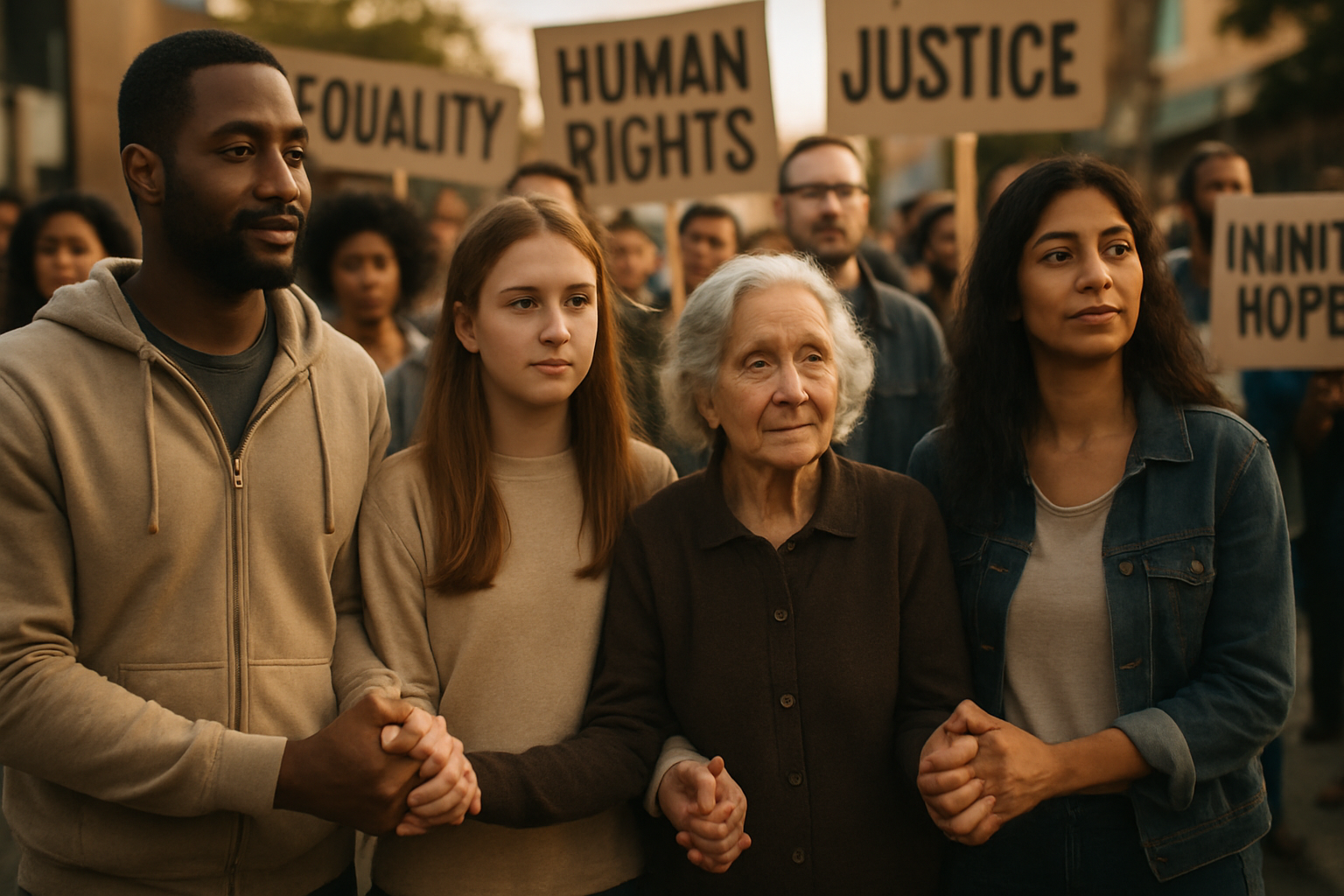
As April 2026 unfolds, a disturbing pattern of human rights violations and social discrimination is emerging across the globe, threatening the foundations of democratic society and human dignity from the Balkans to the Caribbean, from Oceania to North America.
Our comprehensive investigation across Bosnia and Herzegovina, Guyana, New Zealand, and Sweden reveals a troubling convergence of violence, discrimination, and institutional failures that collectively represent one of the most serious challenges to human rights protection in decades.
Bosnia: A Nation Arming Itself in Fear
In Bosnia and Herzegovina, a dramatic surge in both legal and illegal weapons ownership has authorities and human rights advocates deeply concerned. The past five years have witnessed an unprecedented escalation in gun ownership, with citizens citing deteriorating security conditions as justification for taking protection into their own hands.
"When you read about everything that's happening, then you can understand people," one Bosnian official noted, reflecting the sentiment driving this alarming trend. The proliferation of weapons threatens to undermine post-conflict stabilization efforts and raises serious questions about the effectiveness of institutional security measures.
"This represents a fundamental breakdown in the social contract between citizens and state institutions, where people no longer trust official security mechanisms to protect them."
— Regional Security Analyst
The weapons surge occurs against the backdrop of broader regional instability and economic uncertainty, creating a dangerous cycle where fear drives armament, which in turn increases the potential for violence and further insecurity.
The Invisible Discrimination: Language and Identity in Guyana
Thousands of miles away in South America, Guyana faces its own human rights challenge in the form of subtle but pervasive linguistic discrimination. A growing awareness campaign has highlighted how accent-based prejudice creates barriers to equal opportunity and social inclusion.
The phenomenon represents what researchers call "the subtle discrimination we don't talk about" – a form of bias that operates below the surface of public discourse but has profound impacts on individuals' life chances and social mobility. This linguistic discrimination particularly affects rural populations and those from lower socioeconomic backgrounds, creating invisible barriers to advancement.
Cultural identity advocates emphasize that accent represents far more than speech patterns – it embodies ancestral heritage, community belonging, and cultural continuity. When societies penalize certain accents, they effectively marginalize entire communities and their contributions to national development.
New Zealand's Healthcare Crisis: When Systems Fail the Vulnerable
In New Zealand, a tragic case has exposed critical gaps in the healthcare system's ability to protect vulnerable populations. The death of Reinhild Langwald, who was unable to cope with hospital stress due to childhood wartime trauma, has prompted calls for mandatory mental health assessments in medical facilities.
Mark Lagerstedt, Langwald's widower, describes how his wife's World War II childhood experiences created lasting psychological wounds that healthcare providers failed to recognize and accommodate. The case highlights the intersection of historical trauma, mental health needs, and institutional care protocols.

"Her starvation death was preventable," Lagerstedt argues, calling for systematic reforms that would ensure all patients receive appropriate psychological screening and support during medical treatment. The case has become a catalyst for broader discussions about trauma-informed care in healthcare settings.
Institutional Blind Spots
The New Zealand case exemplifies a global pattern where healthcare systems, despite technological advances, struggle to address the complex psychological needs of trauma survivors. Historical trauma, whether from war, displacement, or other catastrophic events, can profoundly affect how individuals experience medical treatment.
Sweden: The Troubling Rise of Youth Antisemitism
Perhaps most alarming is the emergence of antisemitic sentiment among young Republican activists in the United States, a trend documented by Swedish media during coverage of American political developments. The phenomenon represents a dangerous departure from traditional conservative support for Israel and Jewish communities.
James Fishback, described as a 31-year-old internet phenomenon representing "the future of Trumpism," has emerged as a leading figure in this concerning movement. The shift appears to be driven by a complex mix of geopolitical tensions, social media influence, and generational change within conservative political circles.
This development is particularly troubling given the historical relationship between American conservative movements and pro-Israel advocacy. The erosion of this support base could have profound implications for both domestic civil rights and international relations.
"The normalization of antisemitic discourse among young political activists represents a fundamental threat to democratic values and minority rights protection."
— Civil Rights Monitor
The Therapeutic Revolution Context
These troubling developments occur during what experts have termed the "Therapeutic Revolution of 2026," a global shift toward prevention-first mental healthcare approaches. However, the cases documented in our investigation suggest that institutional responses to social trauma and discrimination are lagging behind the scale and complexity of emerging challenges.
Mental health professionals increasingly recognize that individual trauma cannot be separated from broader social conditions. The wellness paradox – where constant pursuit of individual improvement creates psychological exhaustion rather than genuine healing – applies equally to societies that address symptoms while ignoring systemic causes of discrimination and violence.
Prevention-First Approaches
Successful prevention models, such as Montana's mobile crisis teams that achieved an 80% reduction in police mental health calls, demonstrate the potential for community-based interventions. However, these approaches require sustained political commitment, comprehensive professional training, and international cooperation – resources that remain inadequate given the scale of current challenges.
International Cooperation and Response
The global nature of these human rights challenges demands coordinated international responses that transcend traditional diplomatic frameworks. Despite WHO funding challenges and shifting geopolitical relationships, bilateral partnerships and peer-to-peer knowledge sharing networks are emerging as viable alternatives to traditional multilateral approaches.
Evidence-based practices integrated with local cultural wisdom consistently yield better outcomes than standardized Western frameworks imposed without regard for cultural context. Success requires authentic community engagement rather than top-down interventions that fail to address root causes of discrimination and violence.
Economic Dimensions
The human rights crisis also carries significant economic implications. Countries with stronger human rights protections demonstrate more robust and sustainable economic growth, while discrimination and social fragmentation erode the social capital necessary for innovation and development.
Legal system independence, women's political participation, and minority inclusion all correlate with improved economic outcomes, suggesting that human rights protection is not merely a moral imperative but an economic necessity for sustainable development.
Technology and Human Rights
Digital platforms and artificial intelligence systems present both opportunities and threats for human rights protection. While technology can enhance monitoring and response capabilities, it also enables new forms of discrimination and harassment that transcend traditional jurisdictional boundaries.
The challenge lies in ensuring that technological solutions enhance rather than replace human-centered approaches to rights protection, avoiding what experts term "digital inequality" where technological advances benefit some while excluding others based on economic or geographic constraints.
Looking Forward: Critical Choices Ahead
April 2026 represents a critical juncture for global human rights protection. The convergence of armed violence in Bosnia, linguistic discrimination in Guyana, healthcare system failures in New Zealand, and rising antisemitism among American youth demonstrates how seemingly isolated incidents reflect broader systemic challenges.
Success in addressing these challenges will require unprecedented coordination between governments, civil society organizations, and international institutions. The stakes extend beyond immediate victims to affect the fundamental conditions that enable human dignity and social justice for generations to come.
"The path forward requires vigilance against democratic backsliding, innovative solutions to persistent challenges, and transformation from crisis response to sustained daily commitment to human rights protection."
— International Human Rights Advocate
The template for progress exists in the sustained commitment demonstrated by civil society organizations, the evidence-based approaches pioneered by mental health professionals, and the international cooperation networks that continue to function despite political constraints. However, translating these successes into comprehensive protection for vulnerable populations requires political will, adequate resources, and recognition that human rights protection is foundational to stable, prosperous societies.
The Road Ahead
As these cases demonstrate, human rights protection in the 21st century requires approaches that address both immediate threats and underlying social conditions that enable discrimination and violence. Whether through addressing Bosnia's security vacuum, combating accent-based discrimination in Guyana, reforming healthcare systems in New Zealand, or countering antisemitic movements in the United States, success depends on sustained commitment to human dignity as the foundation for just and equitable societies.
The choice before the international community is clear: organize societies around human flourishing and universal dignity, or accept the gradual erosion of rights and protections that took generations to establish. The decisions made in the coming months will determine which path the global community chooses to follow.