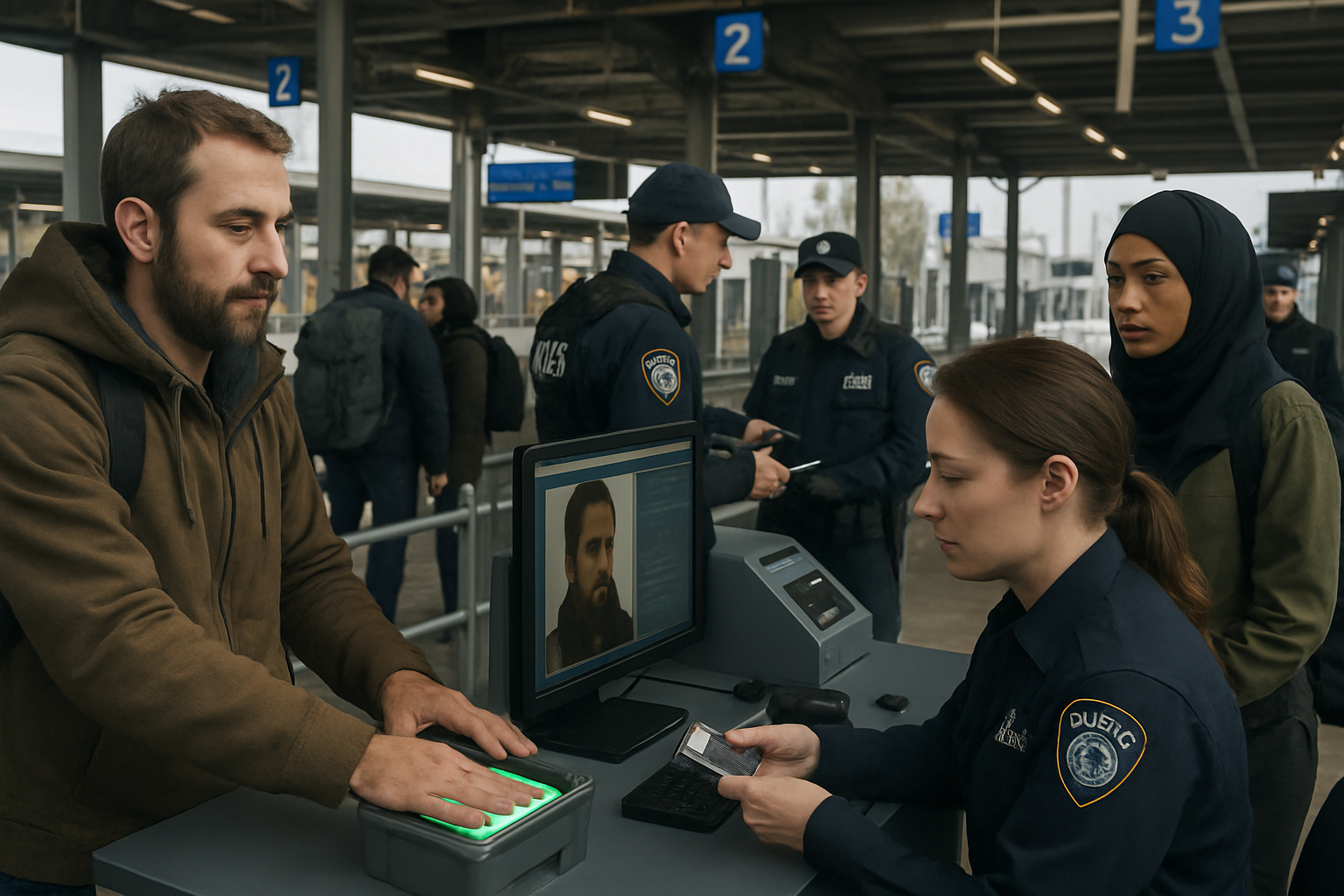
A confluence of immigration crises across multiple continents has prompted governments to implement increasingly stringent border controls and detention policies, fundamentally reshaping global migration management as countries grapple with rising asylum applications, security concerns, and political pressures.
Recent developments illustrate the scope and complexity of current immigration challenges. In Turkey, authorities detained 18 Afghan migrants hidden inside a cargo truck carrying dates and pistachio oil in Tokat province, believed to have entered irregularly through the Iranian border. This incident represents just one facet of the broader migration movements affecting the region.
European Border Security Evolution
Belgium has emerged as a new focal point in European migration patterns, with authorities discovering 28 transmigrants in sand dunes near the Zwin Nature Park in Knokke-Heist, West Flanders. The migrants were equipped with a folded-up small boat, outboard motor, and life jackets, marking the first time transmigrants have been found so close to the Dutch border, according to Chief Constable Steve Desmet.
This development comes amid a broader transformation of European immigration policy. The European Parliament's February 2026 approval of historic asylum procedure changes allowing deportation to "safe" third countries through a center-right/far-right alliance represents the most significant shift since the 2015-16 refugee crisis. The legislation enables a fundamental transformation from protection-based to deterrence-focused principles.
Greece is leading a coalition with Germany, Netherlands, Austria, and Denmark to establish African external processing centers for rejected asylum seekers whose home countries refuse readmission. These enhanced cooperation mechanisms allow smaller member groups to advance policies without unanimous consent, bypassing traditional humanitarian safeguards.
UK Implements Emergency Visa Restrictions
The United Kingdom has activated its first-ever "emergency brake" on immigration, suspending student visas for Afghanistan, Cameroon, Myanmar, and Sudan nationals. Home Secretary Shabana Mahmood cited a 470% surge in asylum applications from students of these countries between 2021-2025, with 39% of the UK's 100,000 asylum claimers in 2025 initially arriving via legal routes including study visas.
This unprecedented country-specific restriction affects thousands of prospective students and disrupts academic partnerships, raising questions about the UK's reputation as a global education destination. The policy occurs amid broader post-Brexit immigration overhaul including Electronic Travel Authorization requirements for 85 countries and 30-month limits on refugee protection.
Tragic Human Costs Mount
The human cost of current migration patterns continues to escalate dramatically. Data from the UK reveals that more than 50 young asylum seekers have died in the past decade, with 31 deaths by suicide according to figures gathered from children's services and health trusts. Of 54 deaths of unaccompanied children and young people who claimed asylum between 2015 and 2024, six suicides occurred among under-18s.
"The figures show 31 deaths were suicides, seven were homicides and eight were fatal accidents. Six deaths were due to health issues and in two cases the cause of death was unknown."
— UK Government Data on Young Asylum Seeker Deaths
These statistics underscore the vulnerability of young migrants within care systems and highlight the urgent need for enhanced mental health support and protection mechanisms for unaccompanied minors seeking asylum.
Technology and Enforcement Advances
The European Union's Entry/Exit System (EES) has demonstrated significant success in border management, detecting over 4,000 overstayers in its first four months of operation—exceeding expectations. However, the biometric system has also created operational challenges, with airlines warning of 4-hour queues during summer 2026, requiring European Commission authorization for partial suspensions.
This technological advancement represents Europe's largest border control upgrade in decades, creating comprehensive databases of non-EU movements that support law enforcement beyond immigration control. Yet implementation challenges persist, particularly at older European airports struggling with biometric infrastructure during high-volume periods.
Climate and Economic Pressures Intensify
The migration crisis unfolds against a backdrop of unprecedented climate challenges, with March 2026 marking the 19th consecutive month of global temperatures exceeding 1.5°C above pre-industrial levels—the longest sustained warming streak in recorded history. Environmental migration experts warn that current asylum categories are inadequate for addressing climate-induced displacement.
Economic contradictions complicate policy responses. While countries implement restrictive measures, many face severe labor shortages in healthcare, agriculture, and construction sectors. Germany's Bertelsmann Foundation research indicates the country requires 288,000 foreign workers annually to prevent a 10% workforce contraction by 2040, highlighting tensions between political restrictions and economic needs.
Albania provides a contrasting example, successfully integrating 27,000 foreign nationals to address workforce gaps, demonstrating that strategic immigration policies can benefit both migrants and host countries when properly managed.
International Cooperation Under Strain
Current developments reflect broader challenges to international cooperation on migration issues. While 89% of Europeans demand greater EU unity according to Eurobarometer polling, and 72% express border security concerns, traditional frameworks face unprecedented strain as nations prioritize unilateral approaches over multilateral coordination.
The success of enhanced cooperation mechanisms in advancing restrictive policies without unanimous consent potentially fragments unified humanitarian approaches. This represents a departure from post-World War II international refugee protection principles through external processing arrangements and systematic erosion of traditional asylum protections.
Looking Forward: Template-Setting Moment
April 2026 represents a watershed moment in global migration governance. The convergence of restrictive policies, technological enforcement capabilities, climate displacement pressures, and demographic transitions creates an unprecedented complex landscape that will influence migration patterns for decades.
Human rights organizations are preparing comprehensive legal challenges over non-refoulement violations and international humanitarian law concerns. Constitutional challenges are expected across multiple jurisdictions as courts examine the balance between enforcement authority and fundamental rights protections.
The current policy trajectory—emphasizing deterrence over protection, external processing over traditional asylum procedures, and bilateral agreements over multilateral frameworks—establishes templates that other democratic nations worldwide are monitoring closely. Success or failure of these approaches will determine precedents for managing complex migration flows driven by climate change, conflicts, and economic disparities.
As governments worldwide grapple with mounting pressures from public opinion, economic needs, and humanitarian obligations, the coming months will prove critical in determining whether democratic institutions can maintain their founding humanitarian principles while adapting to 21st-century migration realities. The human stories behind these policy developments—from young asylum seekers in the UK to detained migrants across Europe—serve as stark reminders that beneath the statistics and policy frameworks lie individual lives seeking safety, opportunity, and dignity in an increasingly interconnected yet restrictive world.