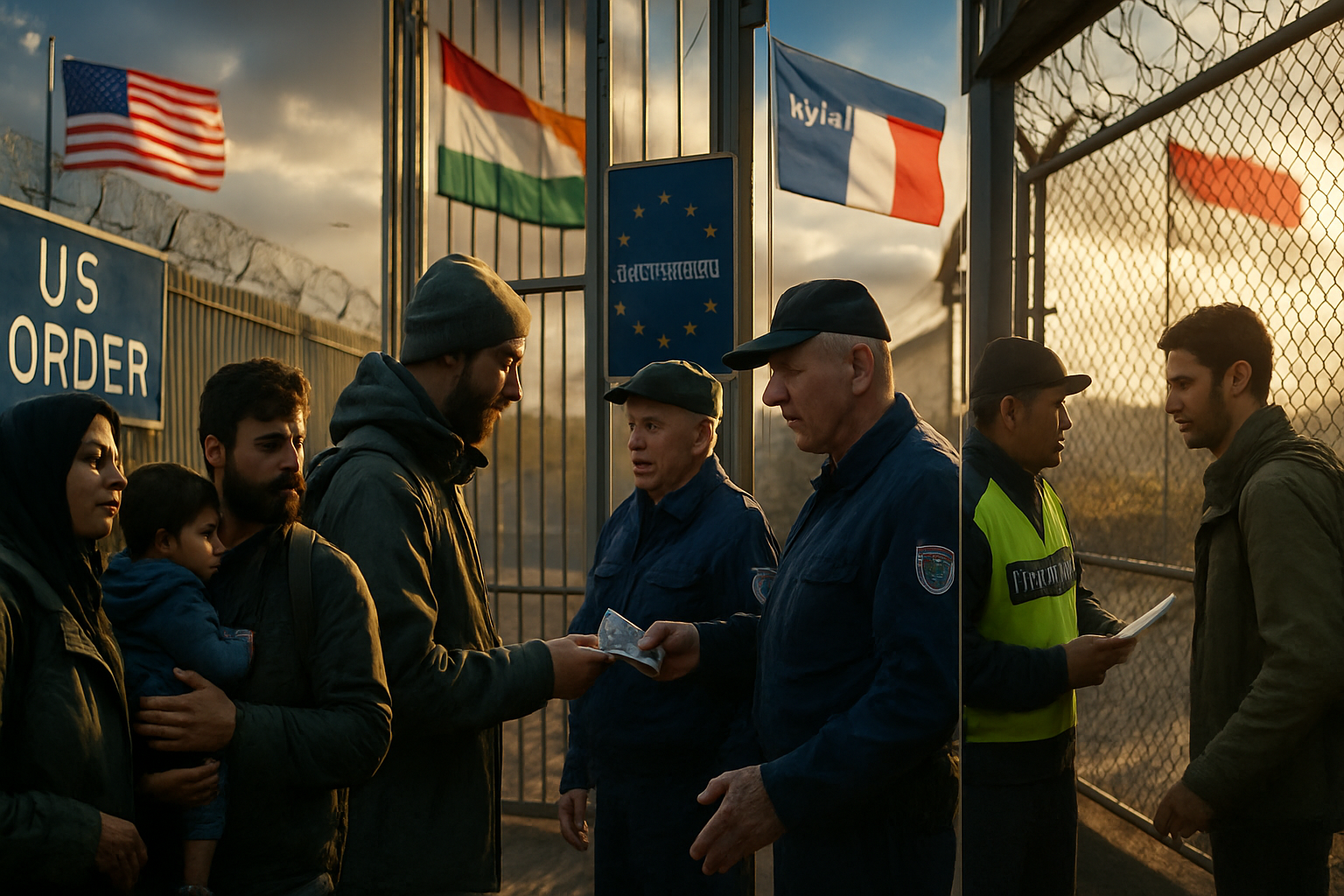
Immigration and migration policies are creating unprecedented global tensions as countries grapple with labor shortages, humanitarian crises, and enforcement challenges that span from Albania's surging demand for Asian workers to expanding U.S. deportation operations and international diplomatic interventions.
Recent developments across multiple continents reveal how migration pressures are fundamentally reshaping national policies, international relations, and the lives of millions seeking better opportunities or fleeing persecution.
Albania's Immigration Boom: Asian Workers Fill Critical Labor Gaps
Albania is experiencing an unprecedented immigration surge, with approximately 27,000 foreign nationals currently residing in the country as businesses struggle to fill positions abandoned by emigrating locals. Official data shows 19,321 residence permit applications were processed in the past year alone, with 16,651 approved, 343 rejected, and others still pending.
The surge is being driven primarily by workers from Asian countries, with more than 13,300 applications specifically for employment purposes, followed by 2,583 for family reunification. Countries leading this immigration wave include India, Nepal, the Philippines, Egypt, and Myanmar.
"The labor shortage created by the absence of local workers is being filled by foreign nationals, with Asian countries leading the way," according to official Albanian immigration data.
— Albanian Immigration Authorities
Foreign workers are predominantly concentrated in fishing, construction, manufacturing, and tourism sectors, with Tirana, Durrës, and Vlorë hosting the largest concentrations. In Vlorë alone, approximately 800 foreign nationals are now working, representing a dramatic shift in the country's demographic composition.
U.S. Immigration Enforcement Reaches Breaking Point
Meanwhile, the United States faces its most controversial immigration enforcement period in recent history, with federal court interventions blocking key Trump administration policies while deportation operations continue to expand across multiple states.
A federal judge recently ruled that migrants must be detained without bond during deportation proceedings, opening the door to mass deportations that have drawn international criticism. The ruling represents a significant judicial backing for the administration's hardline immigration stance.
Recent memory from our analysis reveals the scope of current enforcement: University of California studies show deportations have quadrupled during the first nine months of the current administration compared to previous levels, with ICE operations now extending to major public events including the Super Bowl.
Netherlands Provides Ukrainian Military Medical Care
In a demonstration of international humanitarian cooperation, the Netherlands is currently providing medical treatment and rehabilitation to over 130 Ukrainian military personnel. This includes dozens who have received care over recent years, showcasing sustained commitment to supporting Ukraine's military forces.
The medical assistance program represents part of broader European Union efforts to support Ukraine amid ongoing conflict, with multiple EU nations contributing specialized medical care for wounded Ukrainian soldiers.
Legal Challenges and Judicial Interventions
Courts across multiple countries are increasingly intervening in immigration enforcement, creating complex legal landscapes that challenge executive authority. Recent federal rulings in the United States have blocked the termination of Temporary Protected Status for 350,000 Haitians, citing discriminatory intent in policy decisions.
An Oregon federal judge now requires ICE to obtain warrants before arrests unless there is an escape risk, while civil rights lawsuits challenge visa suspensions affecting 75 countries. These judicial interventions represent growing court oversight of immigration enforcement practices.
Congressional and Public Opposition Grows
Political tensions around immigration enforcement have reached new heights, with Congressional Democrats threatening to block Department of Homeland Security funding unless "drastic changes" are implemented in ICE operations. Current DHS funding only extends through February 13, creating potential for another government funding crisis.
Public opinion polling shows two-thirds of Americans now believe ICE has "gone too far" in enforcement actions, representing a significant shift in public sentiment that crosses traditional political lines among Democrats and independents while Republicans maintain support.
International Diplomatic Responses
The global nature of current migration challenges has prompted coordinated international responses. Eight Arab and Muslim nations recently issued joint condemnations of immigration enforcement practices, while the EU continues developing comprehensive migration frameworks that balance security concerns with humanitarian obligations.
Historical context from recent events shows that migration issues are increasingly becoming flashpoints for international diplomatic tensions, with countries like Guatemala reporting over 5,000 nationals returned in January 2026 alone from the United States and Mexico.
Economic and Social Impacts
The economic implications of these migration developments are far-reaching. In Albania, foreign workers are filling critical gaps in industries that local workers have abandoned, potentially stabilizing sectors crucial to economic growth. However, this dependency on foreign labor raises questions about long-term economic sustainability and integration challenges.
Conversely, aggressive enforcement in other countries is creating workforce disruptions in agriculture, hospitality, and healthcare sectors, with major corporations facing pressure over workplace raid protocols and immigrant families avoiding essential services due to fear of enforcement actions.
Regional Security and Humanitarian Concerns
The intersection of migration policy with regional security has become increasingly complex. Recent Mediterranean migration tragedies, including deadly collisions between migrant boats and coast guard vessels, highlight the ongoing dangers faced by those seeking refuge or better opportunities.
Our analysis of recent events shows at least 15 migrants died in the Aegean Sea off the Greek island of Chios in early February, underscoring how enforcement policies affect dangerous migration routes and humanitarian outcomes.
Technology and Enforcement Evolution
Immigration enforcement is increasingly incorporating advanced technology, from biometric systems at borders to digital platforms for processing applications. The EU's Entry/Exit System represents a major technological shift in border management, requiring biometric data from non-EU citizens despite implementation delays due to processing bottlenecks.
"The integration of technology in migration management is creating new opportunities for efficiency while raising concerns about privacy and human rights."
— Immigration Policy Experts
Looking Forward: Policy Convergence and Divergence
The current global migration landscape reveals both convergence and divergence in national approaches. While some countries like Albania are actively welcoming foreign workers to address labor shortages, others are implementing increasingly restrictive enforcement measures that have drawn international criticism.
These contrasting approaches highlight fundamental questions about migration's role in 21st-century economic development, national security, and international cooperation. As labor markets become increasingly global and humanitarian crises persist, countries must balance domestic political pressures with economic needs and international obligations.
The coming months will likely see continued evolution in migration policies as countries respond to demographic pressures, economic needs, and public opinion shifts. Success in managing these challenges will require nuanced approaches that address both legitimate security concerns and humanitarian obligations while recognizing migration's essential role in global economic development.
Recent developments across Albania, the United States, Netherlands, and other nations demonstrate that migration issues have become central to contemporary governance, requiring sophisticated policy responses that balance multiple competing priorities in an increasingly interconnected world.