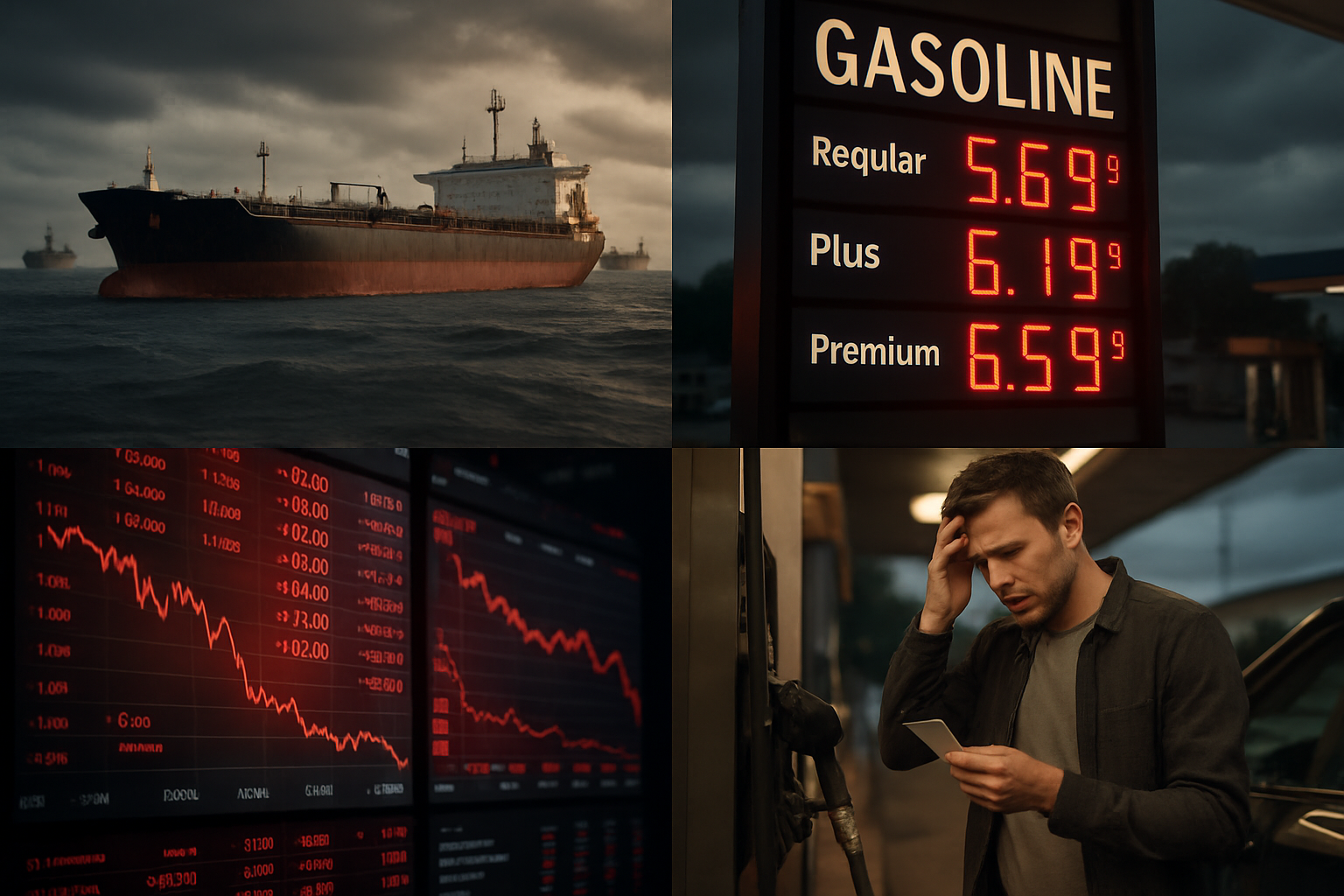
A dangerous convergence of geopolitical tensions and energy market disruption is threatening to drive global inflation to levels not seen since the early 2020s, as the ongoing Middle East crisis pushes oil prices above $80 per barrel while central banks worldwide scramble to contain the economic fallout.
The crisis, stemming from the dramatic escalation of US-Israeli military operations against Iran and subsequent Iranian retaliation, has created what economists are calling the most severe energy security threat in decades. The closure of the Strait of Hormuz—a critical chokepoint through which 40% of global seaborne oil transits—has sent shockwaves through energy markets and triggered widespread concerns about sustained inflationary pressure.
Energy Markets in Turmoil
Natural gas prices have exploded by 24% in Europe and 78% in the United States, while Qatar's decision to halt LNG production at key facilities has removed approximately 20% of global LNG exports from the market. Major shipping companies Maersk and MSC have suspended operations in the Persian Gulf, leaving over 150 oil and LNG tankers stranded with billions of dollars in cargo.
"We are witnessing the most severe energy security crisis in decades, with single-chokepoint vulnerabilities completely exposed," warned energy analyst Samuel Ciszuk. The crisis has forced governments from Japan to Sweden to consider emergency petroleum reserve deployments for the first time since major disasters.
Central Bank Responses Vary Globally
In Mauritius, the latest data from Statistics Mauritius shows annual inflation moderating to 3.5%, providing some relief as the Consumer Price Index increased marginally from 109.1 in January to 109.5 in February 2026. However, this relatively stable picture contrasts sharply with mounting pressures elsewhere.
Slovakia and Hungary have seen inflation in neighboring regions drop to multi-year lows in some categories, with February data showing the slowest year-over-year growth in food, clothing, footwear, and fuel prices in nearly a decade. Yet these improvements may prove temporary as energy costs surge globally.
"UK inflation could end the year close to 3% – a percentage point higher than expected before the war – because of the energy price shock triggered by the crisis in the Middle East."
— David Miles, Office for Budget Responsibility
The UK's official inflation target remains at 2%, but economists warn that sustained energy price pressures could push the rate significantly higher by the end of 2026, potentially forcing the Bank of England to reconsider its monetary policy stance.
Consumer Impact Spreads Worldwide
The inflationary pressures are being felt acutely by consumers across multiple continents. In Sweden, energy economists predict electricity costs will increase by 10-20 öre, while gasoline prices could rise by 1-2 kronor, with the southern Malmö region particularly vulnerable due to its integration with continental European energy markets.
Austrian consumers are facing fuel price increases of up to 20%, prompting labor union criticism of "war-driven price explosions." Meanwhile, Mexican authorities have issued warnings about potential "gasolinazo" fuel price surges, while Australian officials have prepared consumers for impending increases at the pump.
Supply Chain Vulnerabilities Exposed
The crisis has revealed the dangerous over-dependence of modern logistics on strategic chokepoints. The 21-mile-wide Strait of Hormuz represents a single point of failure for global oil distribution, with alternative Arabian Peninsula routes offering inadequate capacity and significantly higher time and cost penalties.
Supply chain disruptions extend far beyond energy, affecting consumer goods and industrial materials worldwide. Manufacturing sectors dependent on Gulf networks, including automotive, electronics, and textiles industries, are experiencing severe operational challenges.
Financial Market Contagion
Global financial markets have responded with alarm to the unfolding crisis. Pakistan's KSE-100 index crashed by 8.97% in its largest single-day decline in the exchange's history, while Dow futures fell by 400-570 points as investors fled risk assets.
Central banks, including the European Central Bank and Bank of Japan, are coordinating emergency liquidity provision to prevent broader financial contagion. However, traditional monetary policy tools are showing limited effectiveness against structural geopolitical disruptions.
"The financial markets may ultimately serve as the constraint on prolonged conflict," noted portfolio strategist Damien Boey, highlighting how economic pressures could influence political decision-making.
A Template-Setting Crisis
The current crisis represents what UN Secretary-General António Guterres has called "the greatest test of multilateral cooperation and crisis management in the modern era." The rapid transition from diplomatic breakthrough to military escalation demonstrates the fragility of crisis management mechanisms in an increasingly multipolar world.
Unlike weather-related disruptions with predictable timelines, recovery from this crisis depends entirely on military operations resolution and diplomatic normalization. The aviation industry cannot make long-term scheduling decisions with multiple airspaces closed, while energy markets remain volatile with critical transit routes blocked.
Long-Term Implications for Global Economy
Economists warn that the crisis could accelerate fundamental changes in global energy architecture. The over-dependence on volatile geopolitical regions for essential energy supplies has been starkly exposed, requiring years or decades of infrastructure development to address.
Strategic petroleum reserves, designed as temporary buffers for such disruptions, may face depletion if the crisis extends beyond current timelines. This has prompted urgent discussions about supply chain diversification and the acceleration of renewable energy transitions, though these solutions require substantial time and investment to implement.
The inflationary implications extend beyond immediate energy costs. As transportation and manufacturing costs rise, these increases typically propagate through supply chains, affecting the prices of goods and services across the economy. Central banks face the complex challenge of balancing inflation control with support for economic growth during a period of external shock.
Regional Variations in Impact
The crisis is affecting different regions with varying intensity. Countries with greater energy independence or alternative supply arrangements are better positioned to weather the storm. However, the interconnected nature of global markets means that even well-prepared nations face indirect effects through trade relationships and financial market linkages.
European nations, already managing energy security challenges from previous geopolitical tensions, are implementing emergency protocols and considering state aid for energy-intensive industries. Asian economies heavily dependent on Middle Eastern oil imports are particularly vulnerable, with some considering unprecedented measures such as strategic reserve releases.
The crisis has also highlighted the importance of regional cooperation in energy security. Countries with diverse energy partnerships and multiple supply routes are demonstrating greater resilience, while those overly dependent on single sources face severe vulnerabilities.
As the situation continues to evolve, the global economy faces a critical test of its ability to adapt to sudden supply shocks while maintaining price stability. The outcome will likely influence energy security planning and international cooperation frameworks for decades to come, potentially reshaping how nations approach economic resilience in an increasingly interconnected but volatile world.