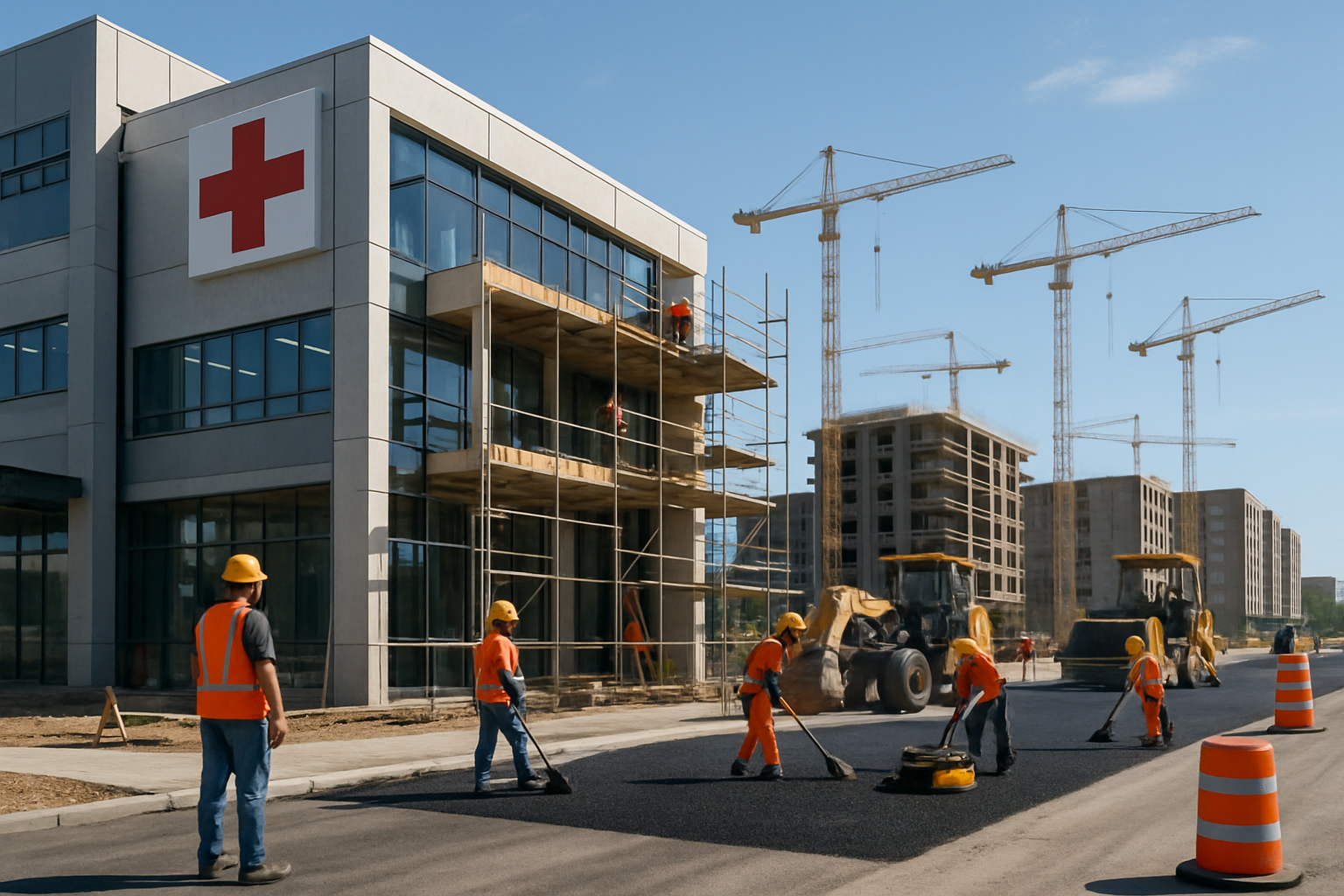
March 2026 marks a pivotal moment in global infrastructure development as nations worldwide grapple with unprecedented construction challenges while simultaneously launching ambitious projects. From Colombia's strategic hospital access road construction to Namibia's mounting N$4 billion housing crisis, these developments reflect the complex intersection of urban growth, aging infrastructure, and climate adaptation requirements.
Colombia's Healthcare Infrastructure Revolution
In the heart of Colombia's Coffee Region, the Gobernación de Risaralda has commenced construction of a critical 800-meter access road that will transform healthcare delivery in the region. The project, designed to connect with a new high-complexity hospital under development, represents more than just road construction—it symbolizes Colombia's commitment to improving healthcare accessibility in traditionally underserved areas.
The Eje Cafetero region, renowned for its coffee production, has long faced challenges in healthcare infrastructure due to its mountainous terrain and dispersed population centers. This new access road addresses a fundamental barrier to medical care: transportation infrastructure that can handle emergency vehicles and ensure reliable access during the region's frequent weather events.
"This infrastructure project is essential for ensuring that our communities have reliable access to advanced medical care, particularly during emergencies when every minute counts."
— Regional Infrastructure Official
Namibia's Housing Crisis Reaches Critical Point
Meanwhile, thousands of kilometers away in southern Africa, Windhoek faces a housing emergency of staggering proportions. The Namibian capital requires N$1 billion annually over the next four years to address a 60,000-unit housing backlog that has been exacerbated by rapid urban migration and persistent funding shortages.
The crisis reflects broader challenges facing many African cities experiencing rapid urbanization without corresponding infrastructure investment. Urban migration has accelerated as people seek economic opportunities in the capital, but housing supply has failed to keep pace with demand, creating informal settlements and overcrowding that strain existing infrastructure.
The N$4 billion total investment requirement represents approximately 15% of Namibia's annual GDP, highlighting the massive scale of infrastructure investment needed to address basic housing needs. This challenge is compounded by limited access to international capital markets and competing priorities for government spending.
Decades of Infrastructure Neglect Create Compounding Problems
Perhaps even more concerning for Windhoek residents is the revelation that the city has endured 35 years of inadequate road maintenance, resulting in aging road infrastructure that struggles to serve both current residents and anticipated population growth. This neglect has created a vicious cycle where poor road conditions increase transportation costs, reduce economic productivity, and make it more difficult to deliver essential services including healthcare and education.
The road maintenance crisis illustrates a common challenge facing developing nations: the tension between addressing immediate needs and investing in long-term infrastructure sustainability. Years of deferred maintenance have resulted in exponentially higher replacement costs, creating a financial burden that crowds out other essential investments.

Global Construction Industry in Crisis
These individual country challenges occur within a broader context of global construction industry stress. Material costs have risen substantially throughout 2025, creating negative profit margins for developers worldwide and constraining new housing supply despite persistent demand. The situation has been further complicated by memory chip shortages that have driven semiconductor prices sixfold higher, affecting smart building technologies that are becoming standard in modern developments.
The semiconductor shortage adds an estimated 20-30% to construction costs for projects incorporating advanced building management systems, smart energy controls, and integrated security systems. These technologies, once considered luxury features, are now baseline requirements for modern construction projects, making the supply chain disruption particularly problematic.
Major manufacturers including Samsung, SK Hynix, and Micron are operating at full capacity but remain unable to meet demand from both traditional technology sectors and the growing building management systems market. Industry experts don't expect relief until new fabrication facilities come online in 2027.
Regional Responses and Innovation
Despite these challenges, governments are developing innovative responses. The Colombian hospital access road project demonstrates how strategic infrastructure investment can multiply healthcare benefits across entire regions. By ensuring reliable access to a high-complexity medical facility, the 800-meter road investment potentially serves hundreds of thousands of residents across multiple municipalities.
Namibia's approach emphasizes the need for comprehensive planning that addresses housing and road infrastructure simultaneously. The country is exploring public-private partnerships and international development financing to bridge the funding gap, while also investigating innovative construction methods that can reduce costs and accelerate delivery.
Technology Integration Despite Constraints
Modern infrastructure projects are increasingly incorporating sophisticated technology integration from the design phase, including real-time monitoring systems, predictive maintenance capabilities, and environmental optimization features. However, the global semiconductor shortage is forcing project managers to prioritize which smart systems are truly essential versus those that can be deferred to future phases.
This has led to innovation in alternative approaches, with engineers developing more efficient algorithms and distributed processing solutions that require fewer specialized chips while still providing enhanced functionality compared to traditional infrastructure.
Economic Multiplier Effects
Infrastructure investments like these create substantial economic benefits beyond the immediate construction employment. The Colombian hospital access road is expected to reduce transportation costs for medical emergencies, enhance market access for rural communities, and improve overall business productivity in the region.
Similarly, addressing Namibia's housing backlog would create thousands of construction jobs, reduce urban poverty, and establish the foundation for sustained economic growth. However, the scale of investment required highlights the challenge many developing nations face in mobilizing sufficient capital for transformative infrastructure projects.
Climate Adaptation and Resilience
Contemporary infrastructure projects must also account for climate adaptation requirements, incorporating enhanced drainage systems, weather-resistant materials, and backup power systems designed for future rather than historical climate conditions. This adds complexity and cost to projects but is essential for ensuring long-term sustainability.
The Colombian road project, for example, must be engineered to withstand the increasing frequency of extreme weather events in the region, while Namibia's housing developments need to incorporate water conservation and extreme heat management features.
"We're not just building for today's needs—we're building infrastructure that must serve communities for the next 50 years under changing climate conditions."
— International Development Expert
International Cooperation and Knowledge Sharing
These infrastructure challenges require unprecedented international cooperation for knowledge sharing and coordinated responses. The problems facing Colombia and Namibia are reflected in similar challenges across Latin America and Africa, suggesting that regional approaches and technology transfer could accelerate solutions.
Technical assistance programs, coordinated procurement initiatives, and sharing of best practices in project management are becoming essential tools for addressing supply chain constraints and cost pressures that affect infrastructure projects globally.
Looking Forward: Strategic Implications
The infrastructure developments in March 2026 represent a critical juncture where current choices will influence urban development patterns, economic competitiveness, and social stability for decades ahead. The success of projects like Colombia's hospital access road and the resolution of challenges like Namibia's housing crisis will establish templates for addressing similar needs worldwide.
The window for effective action is narrowing due to demographic pressures, accelerating urbanization trends, and climate adaptation complexity. However, the combination of technological innovation, international cooperation, and adaptive management strategies offers the potential for transformative infrastructure development that serves immediate community needs while building foundations for sustainable prosperity.
As these projects advance, they demonstrate that modern infrastructure development requires sophisticated coordination between immediate mobility needs and long-term sustainability, national priorities and regional integration, technological advancement and community engagement. The success of these initiatives will determine whether nations can build the physical foundations necessary for thriving in an interconnected, climate-challenged world.