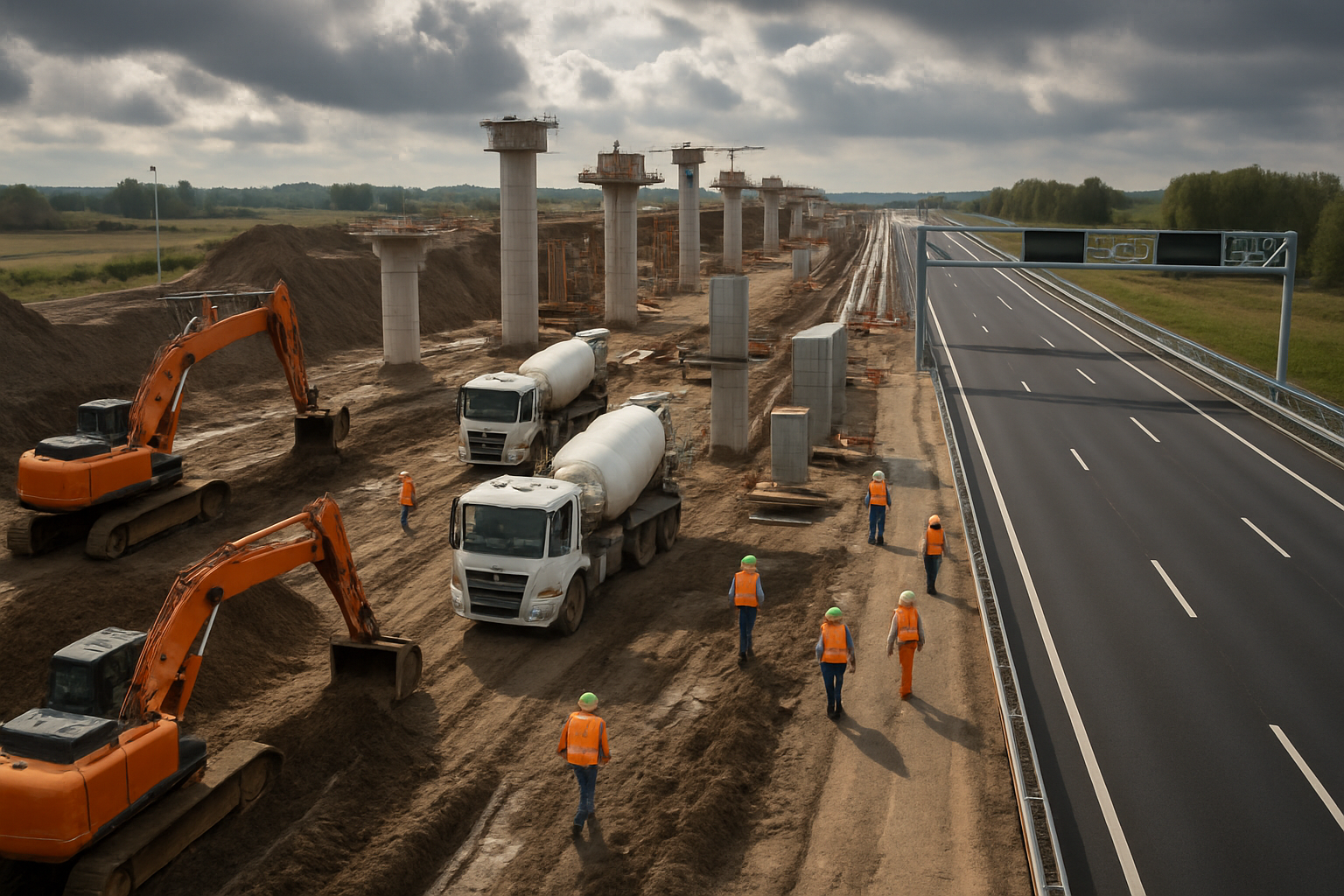
A comprehensive analysis of global infrastructure development reveals an extraordinary surge in transportation and connectivity projects spanning five continents, with investments totaling hundreds of billions of dollars and demonstrating unprecedented international coordination in modernizing critical infrastructure networks.
The Americas: Guyana Leads $604 Million Highway Revolution
Guyana emerges as a standout example of large-scale infrastructure transformation, with the government advancing a massive US$604 million project to convert the Corentyne Highway from Sheet Anchor to Crabwood Creek/Moleson Creek into a modern four-lane corridor. Minister of Public Works Bishop Juan Edghill has maintained an intensive stakeholder engagement program, conducting three major community meetings across Region Six on Tuesday, April 8, 2026.
The project spans approximately 80 kilometers and represents one of the most significant infrastructure investments in the country's history. Minister Edghill delivered a firm message to contractors during the stakeholder meetings, warning that "only the highest quality of work will be accepted" and emphasizing the government's commitment to transformational infrastructure development.
"We are not playing," Edghill stated during Tuesday's meetings, underscoring the administration's zero-tolerance approach to substandard construction. The minister also cautioned residents against creating encumbrances along road shoulders that could interfere with construction progress.
Africa: Kenya's Strategic Corridor Development
Kenya continues to demonstrate remarkable progress in transportation infrastructure, with multiple major projects advancing simultaneously across the country. The LAPSSET (Lamu Port South Sudan Ethiopia Transport) project has achieved 64% completion on the critical Garissa-Isiolo road segment, a 160-kilometer highway that will serve as a vital link connecting Kenya to Ethiopia.
This strategic route is designed to facilitate trade between Kenya, Ethiopia, and South Sudan through a comprehensive transport corridor that includes a deep-sea port at Lamu, highways, railways, pipelines, and planned resort cities. Upon completion, the road network is expected to significantly boost regional trade, ease the movement of people and goods, and create substantial economic opportunities for communities along the corridor.
Additionally, the World Bank has approved substantial funding to complete the ambitious 740-kilometer Isiolo-Mandera Highway project, while President William Ruto has issued direct orders to fast-track the Kenol-Karatina-Marua dual carriageway. This dual carriageway project carries an estimated cost of approximately Ksh 33 billion and is being co-financed by the Kenyan government and the African Development Bank.
Europe: Latvia's Massive Urban Infrastructure Investment
In the Baltic region, Latvia is undertaking one of the most significant urban infrastructure modernization programs in recent European history. Riga, the capital city, has announced plans to invest more than 300 million euros in street, pedestrian, and cycling infrastructure construction during the 2026 season, according to Kristaps Kauliņš, Director of the Riga Municipality's Outdoor Space and Mobility Department.
This massive investment represents a comprehensive approach to urban mobility, encompassing not just vehicle traffic but also sustainable transportation alternatives and pedestrian-friendly infrastructure. The program demonstrates Latvia's commitment to creating modern, climate-resilient urban environments that can accommodate growing populations while reducing environmental impact.
Simultaneously, significant road construction work will impact regional connectivity, with the Lapenieki-Ķekava-Ģūģi regional road (P137), formerly known as the Bauska highway (A7), scheduled for closure from Thursday, April 9, through October 2026. This closure affects the section from the Riga bypass (A5) to the intersection with the Ķekava-Skaistkalne regional road (P89), representing a major infrastructure modernization effort that will temporarily disrupt but ultimately enhance regional transportation networks.
Pacific Region: Tonga's Maritime Infrastructure Upgrade
In the Pacific, the Kingdom of Tonga is advancing critical maritime infrastructure improvements with the Nafanua Harbour upgrade project. Residents of 'Eua have been invited to participate in important community meetings with McConnell Dowell, the Australian international engineering and construction company contracted to carry out the comprehensive harbor modernization.
McConnell Dowell won the tender in late July 2025 to replace aging harbor infrastructure, reflecting the global trend toward modernizing critical transportation hubs to accommodate larger vessels and increased cargo volumes. This project represents not just local infrastructure improvement but also Tonga's strategic positioning within Pacific trade networks.
Technology Integration and Climate Adaptation
Contemporary infrastructure projects universally incorporate sophisticated technology from the design phase rather than as retrofitted additions. Real-time monitoring systems, predictive maintenance capabilities, digital payment integration, and environmental optimization have evolved from optional features to standard requirements for project approval and financing.
Climate adaptation measures represent a fundamental shift in infrastructure planning, with projects now designed for future climate conditions rather than historical patterns. Enhanced drainage systems, weather-resistant materials, and backup power infrastructure have become mandatory requirements as global temperatures continue to exceed 1.5°C above pre-industrial levels for consecutive months.
Economic Impact and Regional Integration
These infrastructure developments create substantial economic multiplier effects extending far beyond construction employment. Reduced logistics costs, enhanced market access, and improved business productivity support regional integration initiatives including the African Continental Free Trade Area (AfCFTA) and various Asian cooperation frameworks.
The financing mechanisms for these projects demonstrate increasing sophistication, combining public investment with international development partnerships, multilateral bank funding, and private sector expertise. This evolution enables major modernization while maintaining fiscal responsibility and national ownership of strategic assets.
Implementation Challenges and Success Factors
Universal challenges facing infrastructure projects include material cost inflation, skilled labor shortages, environmental compliance requirements, and coordination complexity across multiple stakeholders. The global semiconductor shortage has driven component prices up sixfold, affecting smart infrastructure implementations but accelerating innovation in alternative approaches.
Success factors consistently include sustained political commitment transcending electoral cycles, transparent governance frameworks, comprehensive stakeholder engagement, and adaptive management capabilities. International cooperation through technical assistance, knowledge sharing, and coordinated procurement has become essential for addressing supply chain disruptions and maintaining quality standards.
Strategic Significance for Global Development
The infrastructure renaissance of 2026 represents a watershed moment in global development, with coordinated international recognition that transportation networks serve as strategic foundations for economic competitiveness, climate adaptation, and international cooperation. These projects establish precedents that will influence worldwide transportation strategies for decades ahead.
The convergence of technological advancement, environmental awareness, and international cooperation is creating new development models that prioritize sustainability alongside economic growth. Success in these diverse approaches provides templates for addressing immediate community needs while building long-term competitiveness and environmental resilience.
As these projects advance throughout 2026, they represent a fundamental choice between transformative infrastructure adaptation and reactive crisis management. The decisions made and precedents established during this critical period will determine whether societies develop the adaptive capacity necessary to thrive in an interconnected, climate-challenged world.