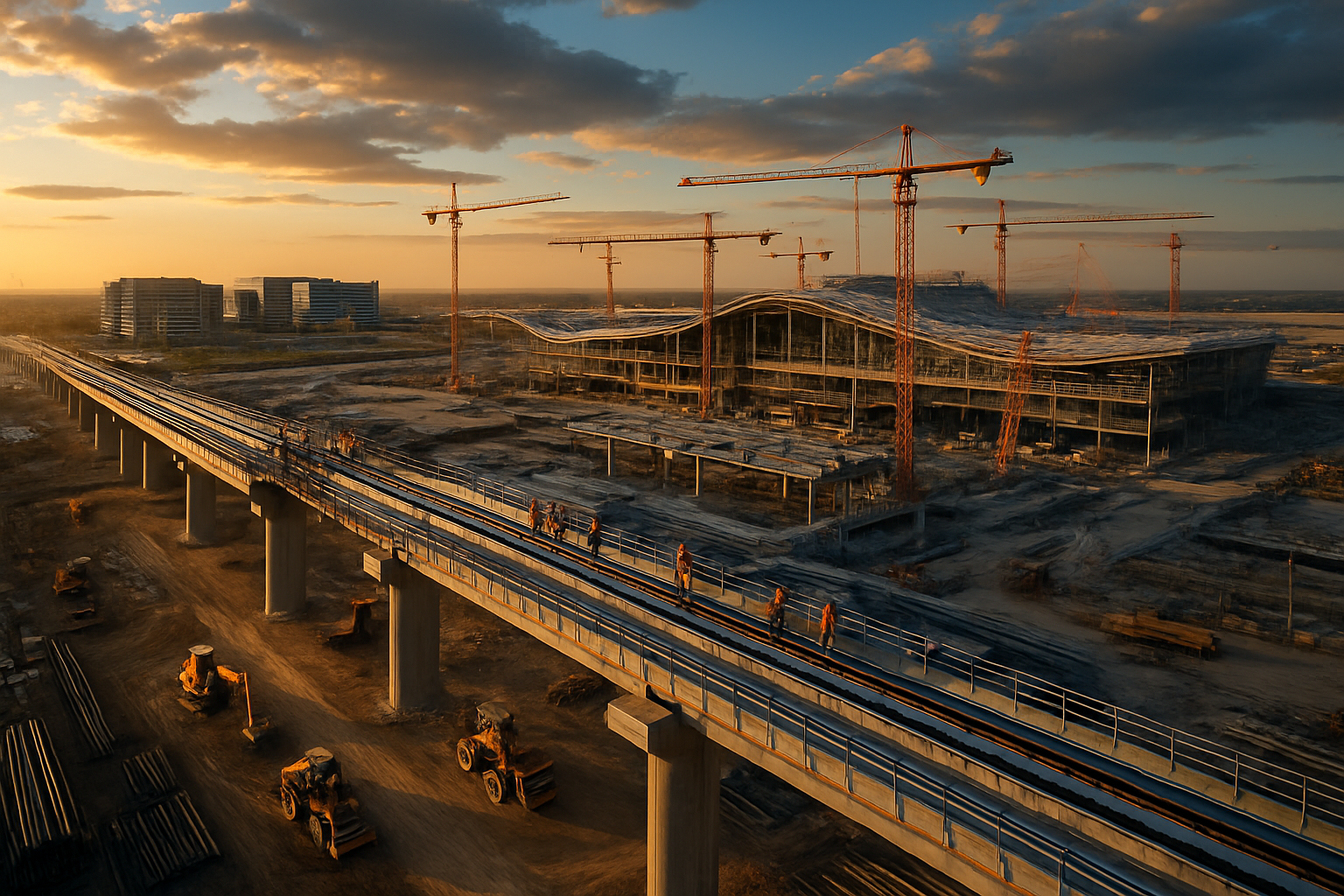
A sweeping infrastructure renaissance is reshaping global transportation networks as major projects advance across five continents, from Australia's troubled M6 motorway to ambitious tunnel projects spanning continents, marking March 2026 as a pivotal moment in worldwide connectivity development.
Australia Faces Infrastructure Standoff
Australia's most expensive road project has become a cautionary tale of infrastructure complexity. The $3.1 billion M6 motorway in Sydney has been delayed for years due to a standoff between contractors and the NSW government over sinkhole repairs that occurred two years ago. The dispute centers on who bears the cost of fixing the geological problems that opened up during construction, highlighting the risks inherent in major infrastructure projects.
The delays underscore broader challenges facing Australia's infrastructure sector, where ambitious projects must navigate complex geological conditions and cost overruns. The M6 represents a critical transportation link for Sydney's growing western suburbs, but the prolonged dispute demonstrates how unforeseen technical challenges can derail even well-funded projects.
World's Longest Underwater Tunnel Takes Shape
Meanwhile, engineering marvels are advancing elsewhere. The Fehmarn Tunnel between Denmark and Germany continues its historic construction, with massive concrete structures the size of buildings being positioned with millimeter precision along an 18-kilometer underwater trench. This project represents the world's longest combined road and rail tunnel beneath the sea, utilizing building-sized blocks in an unprecedented feat of marine engineering.
The tunnel project has attracted thousands of visitors to observation points in Denmark, demonstrating significant public interest in major infrastructure achievements. When completed, the Fehmarn connection will revolutionize transportation between Scandinavia and continental Europe, reducing travel times and enhancing regional economic integration.
European Cycling Infrastructure Expansion
Luxembourg is advancing sustainable transportation through its cycling infrastructure program. The groundbreaking ceremony for a new cycling path connecting Lellingen to Fouhren was officiated by Mobility and Public Works Minister Yuriko Backes. Construction began in January 2026 with completion scheduled for August 2027, representing Luxembourg's commitment to creating comprehensive cycling networks that connect urban centers with rural areas.
This project exemplifies Europe's broader shift toward sustainable transportation alternatives, integrating cycling infrastructure with existing transportation networks to reduce carbon emissions and improve public health outcomes. The initiative reflects Luxembourg's leadership in environmental sustainability and innovative urban planning approaches.
Panama's Revolutionary Canal Tunnel Vision
Perhaps the most ambitious project involves Panama's proposed tunnel beneath the Panama Canal, a venture that has attracted the attention of Elon Musk's Boring Company. This unprecedented project would combine underground passage with historical appreciation and educational tourism, transforming one of the world's most strategic waterways into a public, symbolic experience for residents and visitors.
The tunnel concept represents more than transportation infrastructure—it embodies a vision of making the Panama Canal, which concentrates global trade and geopolitical tension, accessible to Panamanians themselves. The project faces complex technical, environmental, and political challenges, but success could establish new paradigms for infrastructure development in strategically sensitive locations.
Technology Integration and Climate Adaptation
Contemporary infrastructure projects increasingly incorporate sophisticated technology integration from the design phase. Real-time monitoring systems, predictive maintenance capabilities, digital payment platforms, and environmental optimization have become standard requirements rather than optional additions. Climate adaptation measures, including enhanced drainage systems, weather-resistant materials, and backup power infrastructure, reflect the urgent need to build for future rather than historical climate conditions.
The global semiconductor shortage, with prices increasing sixfold, has created implementation challenges for smart infrastructure systems. However, these constraints have accelerated innovation in alternative approaches, including more efficient algorithms and distributed processing systems that reduce dependency on scarce components.
Economic and Regional Integration Impact
These infrastructure developments contribute to economic multiplier effects extending far beyond construction employment. Reduced logistics costs, enhanced market access, and improved business productivity support regional integration initiatives including the African Continental Free Trade Area (AfCFTA) and European Union connectivity objectives. Projects create permanent operational employment while generating tourism development and international investment attraction.
The diversity of approaches—from Australia's public-private partnerships to Luxembourg's government-led initiatives to Panama's innovative private sector engagement—demonstrates various financing models enabling previously impossible developments. Success requires sustained political commitment, comprehensive community engagement, and sophisticated project management combining international best practices with local expertise.
Implementation Challenges and Solutions
Material cost inflation, skilled labor shortages, environmental compliance requirements, and coordination complexity represent universal challenges requiring adaptive management strategies. International cooperation increasingly provides essential technical assistance, knowledge sharing, and coordinated procurement approaches for addressing supply chain disruptions and quality control standards.
Environmental sustainability has evolved from optional consideration to fundamental requirement for project approval and financing. Climate resilience planning, renewable energy integration, and waste reduction protocols are now standard components of modern infrastructure development, reflecting sophisticated understanding of long-term environmental and economic interdependencies.
Future Infrastructure Paradigms
March 2026 represents a watershed moment in global infrastructure development, demonstrating unprecedented coordination in addressing 21st-century connectivity challenges. The convergence of technological advancement, environmental awareness, and international cooperation is creating new development models that prioritize sustainability alongside economic development.
Success of these diverse projects will influence infrastructure strategies worldwide for decades ahead, determining whether societies develop adaptive capacity for thriving in an interconnected, climate-challenged world. The choice between reactive crisis management and transformative infrastructure adaptation represents one of the most significant policy decisions of the current decade.
These projects collectively demonstrate that infrastructure development has evolved beyond simple construction toward comprehensive systems supporting economic development, environmental protection, and social connectivity simultaneously. The global infrastructure renaissance of 2026 may well be remembered as the moment when humanity began building the physical foundations for sustainable prosperity in an uncertain but interconnected future.